

Maybe you told yourself you were just taking a short break from drinking.
Maybe you switched from liquor to beer. Maybe you promised yourself alcohol would stay a “weekends only” thing. Maybe you downloaded a sober-tracking app, poured the remaining bottles down the sink after a rough night, or swore this time would finally feel different.
And maybe part of you genuinely meant it every single time.
If you’re here reading this, there’s a good chance something still feels unsettled.
For many people exploring an alcohol addiction treatment center, the turning point isn’t dramatic. It’s not always losing a job, getting arrested, or waking up in a hospital bed.
Sometimes it’s quieter than that.
Sometimes it’s simply realizing how much of your emotional energy has started revolving around alcohol.
And honestly? That realization can feel both terrifying and relieving at the same time.
Step 1: Notice How Much Time You Spend Thinking About Drinking
One of the clearest signs that cutting back may not be enough is this:
Alcohol becomes mentally loud.
Not necessarily every hour of every day. But enough that it quietly starts organizing your life in the background.
You may notice yourself:
- Counting drinks before the night even starts
- Negotiating rules with yourself
- Thinking about when you’ll drink next
- Recovering emotionally after drinking
- Feeling guilt before you even pour the drink
- Promising yourself tomorrow will be different
Many sober-curious people dismiss this because they assume addiction has to look extreme to “count.”
But mental exhaustion matters too.
When alcohol starts becoming a constant internal conversation, it can slowly drain joy from everyday life. What once felt relaxing starts feeling complicated.
Like carrying groceries with a bag cutting into your hand, you adapt to the discomfort gradually—until one day you realize how heavy it’s become.
Step 2: Pay Attention to How Often You Restart
A lot of people try cutting back before considering treatment.
That’s normal.
In fact, many people spend months or years trying to regain control on their own first. You may have already experimented with:
- Dry January
- Drinking only socially
- Avoiding hard liquor
- Only drinking after a certain hour
- Limiting yourself to two drinks
- Taking weekdays off
- “Resetting” after difficult weekends
And sometimes those changes help temporarily.
But if you keep circling back to the same patterns, it may be time to ask yourself something gently but honestly:
Am I actually finding balance—or am I constantly trying to manage something that no longer feels manageable?
That distinction matters.
There’s a difference between making healthy adjustments and spending enormous emotional energy trying to contain something that keeps spilling over anyway.
Many people entering treatment aren’t weak or reckless. They’re exhausted from trying to white-knuckle moderation alone.
Step 3: Look at What Alcohol Is Costing Emotionally
People often focus only on quantity.
How much am I drinking?
How often?
Is it “bad enough” yet?
But emotional impact matters too.
Sometimes alcohol slowly changes how life feels long before obvious consequences appear.
You may notice:
- Increased anxiety after drinking
- Feeling emotionally flat during the week
- Difficulty sleeping
- Irritability
- Shame after social events
- Emotional numbness
- Trouble being fully present
- Pulling away from people
- Constant self-criticism
Many sober-curious people stay stuck because they compare themselves to stereotypes they don’t relate to.
They think:
- “I still go to work.”
- “I’m functioning.”
- “Other people have it worse.”
- “I’m not drinking every day.”
But struggling does not require catastrophe first.
A lot of people seek support simply because life stopped feeling emotionally sustainable.
That matters too.
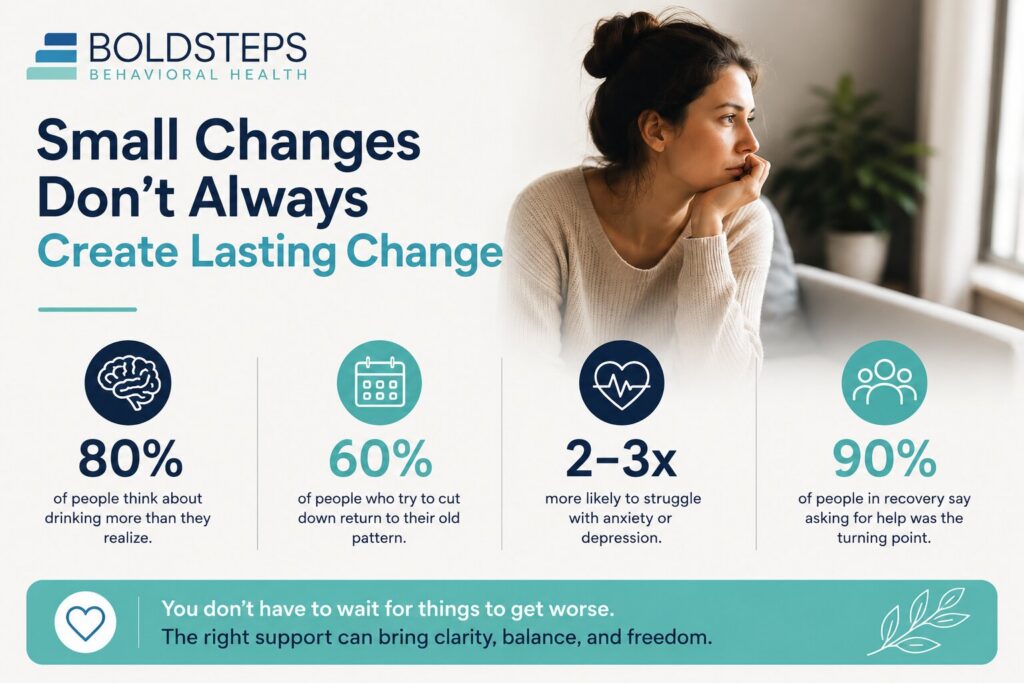
Step 4: Stop Waiting for a Dramatic Rock Bottom
This myth keeps people suffering longer than they need to.
Somewhere along the way, many people absorb the idea that treatment is only for people whose lives have completely fallen apart.
So they keep postponing help:
- “It’s not that bad yet.”
- “I should be able to handle this myself.”
- “I’m not like those people.”
- “I just need more discipline.”
But addiction doesn’t always announce itself dramatically.
Sometimes it shows up as quiet erosion:
- Less peace
- Less trust in yourself
- More emotional chaos
- More hiding
- More mental negotiation
- More exhaustion
Many people eventually realize they’ve spent more time trying to control drinking than actually enjoying their lives.
That realization is painful.
But it can also become the beginning of something healthier.
Step 5: Understand That Treatment Is More Flexible Than You Think
Fear keeps many people from reaching out.
A lot of sober-curious individuals imagine treatment as harsh, isolating, or life-ending. They picture disappearing for months, losing their identity, or being forced into a version of recovery that doesn’t feel like them.
But modern treatment often looks much more individualized than people expect.
Some people need live-in treatment with round-the-clock support and distance from daily triggers. Others benefit from structured daytime care or multi-day weekly treatment while continuing parts of work, school, or family life.
That’s why many people eventually start researching topics connected to inpatient vs outpatient alcohol rehab once they realize there are multiple paths forward.
The right level of support depends on:
- Drinking patterns
- Mental health
- Physical safety
- Daily responsibilities
- Relapse history
- Emotional stability
- Home environment
Treatment is not one-size-fits-all.
And needing support does not automatically mean your situation is “as bad as possible.” Sometimes it simply means your current coping strategies are no longer working the way they used to.
Step 6: Notice What Happens After the First Drink
This is often where things become emotionally confusing.
Many people don’t struggle with starting drinking.
They struggle with stopping once alcohol enters the system.
You may recognize experiences like:
- Planning to have one or two drinks but continuing anyway
- Feeling mentally different after the first drink
- Losing track of limits quickly
- Ignoring boundaries you genuinely intended to keep
- Feeling unable to slow down once drinking starts
That loss of control can feel frightening.
Especially because people often blame themselves for it:
- “Why can’t I just stop?”
- “What’s wrong with me?”
- “Why do I keep doing this?”
If you’ve had moments where you feel like you genuinely can’t stop drinking once the cycle starts, you are not alone.
Alcohol changes impulse control, emotional regulation, and reward systems in ways that can become increasingly difficult to manage through willpower alone.
And despite what shame says, struggling with that does not make you weak.
Step 7: Pay Attention if Recovery Content Feels Emotional
This surprises many people.
One quiet sign that support may help is emotional relief when reading about recovery.
Not fear. Relief.
Maybe sober stories hit harder lately. Maybe treatment no longer sounds ridiculous. Maybe part of you feels emotional hearing someone describe waking up without shame or anxiety.
That reaction matters.
Many people assume they need complete certainty before seeking help.
You don’t.
You can still have doubts. You can still feel attached to drinking socially. You can still feel scared of changing your life.
Ambivalence is incredibly normal.
In fact, many people entering treatment don’t arrive fully convinced. They arrive tired of fighting the same internal battle over and over again.
Step 8: Ask Yourself What You’re Protecting
This question can be uncomfortable—but powerful.
Sometimes people avoid support because they’re afraid recovery will take something away:
- Their social life
- Their confidence
- Their creativity
- Their ability to relax
- Their identity
- Their sense of fun
But alcohol often starts taking things too. Quietly. Gradually.
Energy.
Consistency.
Presence.
Sleep.
Self-respect.
Emotional stability.
Connection.
Many people discover recovery isn’t about becoming boring or losing themselves.
It’s about finally reconnecting with the version of themselves that got buried underneath coping and survival mode.
And for many sober-curious people, that realization feels surprisingly hopeful.
Step 9: Let Yourself Explore Support Before Crisis Happens
This is important.
You do not need to “earn” support through disaster.
You do not need a DUI, hospitalization, ruined relationship, or public collapse before asking questions about treatment.
Many people reach out simply because they’re emotionally tired of negotiating with alcohol all the time.
That counts.
And if anxiety, depression, trauma, or emotional overwhelm are tangled into your drinking too, finding compassionate care in Pennsylvania can help you feel less isolated while figuring out what kind of support fits your life best.
Sometimes the bravest thing someone says is:
“I don’t think I want to keep living like this anymore.”
Not because life is hopeless.
Because they’re finally ready for it to feel lighter.
FAQ: Knowing When It’s Time for Alcohol Treatment
How do I know if cutting back isn’t enough?
If you repeatedly return to the same drinking patterns despite trying to moderate, or if alcohol continues affecting your emotional health, relationships, sleep, or daily functioning, additional support may help.
Do I need to hit rock bottom before seeking treatment?
No. Many people seek help before major external consequences happen. Emotional exhaustion alone can be a valid reason to explore support.
What if I’m still functioning normally?
Many people struggling with alcohol maintain jobs, relationships, and responsibilities. Functioning externally does not always mean someone feels emotionally healthy internally.
What’s the difference between live-in treatment and outpatient support?
Some people benefit from full-time structured support away from daily triggers, while others do well attending treatment while continuing parts of everyday life. The right level of care depends on safety, support systems, and individual needs.
Is it normal to feel unsure about treatment?
Absolutely. Ambivalence is common, especially for sober-curious individuals. Many people entering treatment feel both hopeful and scared at the same time.
Can treatment help if I also struggle with anxiety or depression?
Yes. Many people drink to cope with stress, trauma, anxiety, depression, or emotional overwhelm. Treatment can help address both alcohol use and the emotional pain underneath it.
What if I don’t think I’m “bad enough” for treatment?
Many people entering treatment once believed the same thing. You do not need to completely lose everything before deserving support.
There’s Nothing Weak About Wanting a Different Relationship With Alcohol
You do not need a dramatic story before asking for help.
You do not need to convince anyone your pain is severe enough. And you do not need to keep carrying the same exhausting internal conversation by yourself.
Sometimes the clearest sign is simply this:
You’re tired.
Tired of bargaining with yourself. Tired of wondering whether next weekend will go differently. Tired of waking up anxious and trying to pretend everything feels manageable.
And despite what fear says, treatment is not the end of your freedom.
For many people, it’s the beginning of finally feeling present inside their own life again.
Call 717-896-1880 or visit our alcohol addiction treatment center services to learn more about our addiction treatment, alcohol addiction treatment center services in Lancaster County, PA.