

You’re showing up. To work. To dinner. To weekend plans. No one sees you unraveling beneath the surface—not because you’re fine, but because you’re good at looking that way. You think you’ll figure it out. You think you have time. You think you don’t need help yet.
But what if that belief is exactly what’s keeping you stuck?
If you’re reading this, you’re not alone—and more importantly, you don’t have to wait for a crisis before you seek change. As a clinician, I’ve watched too many high-functioning people tell themselves they’ll ask for help “when it gets worse.” You don’t have to wait. Bold Steps Behavioral Health’s intensive outpatient program was designed for exactly this: people who are still functioning, still intact, but quietly exhausting themselves.
When Functioning Hides Struggle
We’ve been taught to associate “need help” with “rock bottom.” Loss of job. Lost relationships. Emergency room. But human distress doesn’t always explode—it often seeps. Quietly. Insidiously.
High-functioning individuals often:
- Keep schedules tight to avoid processing feelings
- Mask anxiety with productivity
- Drink more than they’d like, but “manage it”
- Push through, even as sleep, relationships, and joy deteriorate
You may be the person who seems okay to everyone else but feels worn thin on the inside. You may joke that “everyone drinks on weekends” or “everyone is stressed.” But that doesn’t make it normal.
Your ability to function doesn’t mean you’re okay. It just means you’re running on borrowed resilience.
What Is an Intensive Outpatient Program (IOP)?
An intensive outpatient program isn’t a magic trick—and it isn’t a sign of failure. It’s structured support that helps you stabilize, process, and build skills while you keep living your life.
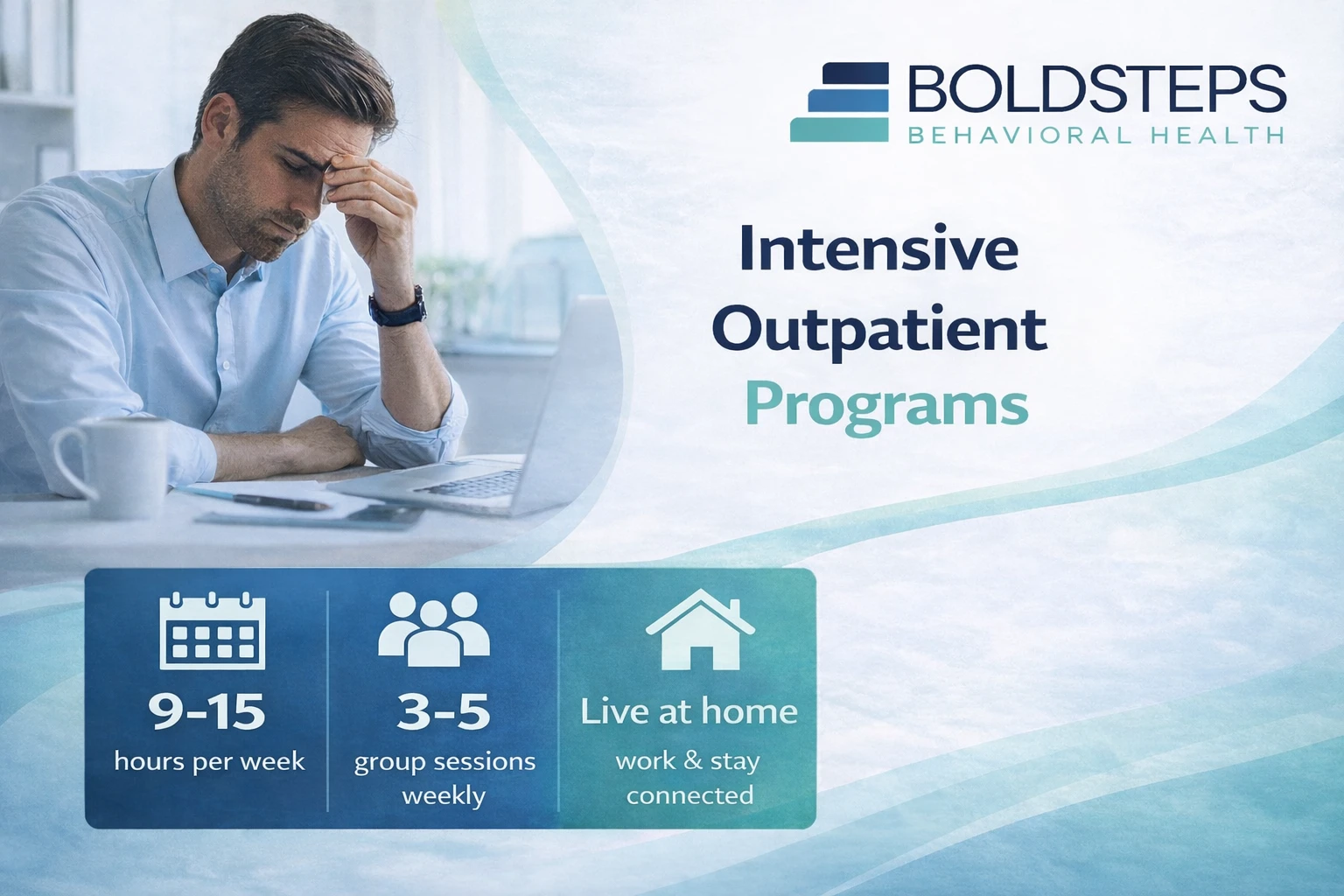
Unlike inpatient care where you stay overnight, an intensive outpatient program lets you:
- Attend therapy and support groups on a scheduled basis
- Live at home, keep your job, and maintain family responsibilities
- Practice coping skills in “real life” between sessions
For high-functioning people, this practical design is powerful. You get support without sacrifice—without needing to step away from your world entirely.
It’s hard to flip the switch from “I can handle this” to “I need help,” but the answer isn’t all or nothing. It’s early support before patterns grow roots.
Why You Don’t Have to Hit Bottom
Let me say this clearly: you don’t have to hit bottom to need help.
Waiting for disaster is a trap. Coming in early gives you an advantage:
- You break unhelpful cycles before they become reinforced
- You build insight and tools before patterns become rigid
- You preserve relationships and reputation
- You protect your health—mentally and physically
High-functioning struggle often looks like:
- Self-medicating with alcohol or substances after work
- Racing thoughts that won’t calm down
- Sleepless nights even when you’re tired
- Emotional numbness
- Feeling like you should be fine because “you manage everything else”
That’s not resilience—it’s survival mode.
If that resonates, you’re not weak. You’re aware. And that awareness is the doorway to real change.
A Clinician’s View: What I See in High-Functioning Clients
In clinical practice, high-functioning individuals often share common threads:
1. Shame Over Asking for Help
They tell me:
- “I wasn’t broken enough.”
- “I still have my job and my life together.”
- “Others have it worse.”
But shame doesn’t measure suffering. It amplifies it.
Asking for help isn’t a defeat—it’s an act of courage.
2. Fear of Losing Control
For high-functioning people, control feels important. Letting go even a little is scary. IOP doesn’t take control from you—it teaches how to manage it better.
3. Pattern Overwhelms Purpose
You still go to work. You still show up. But inside, there’s dissonance. You feel stuck in a loop—work → stress → coping → numb → repeat.
IOP helps break that loop by:
- Creating space to understand why you cope the way you do
- Teaching healthier strategies that align with your goals
- Rebuilding your internal rhythm
You don’t have to stop functioning to stop hurting.
How Intensive Outpatient Program Works at Bold Steps Behavioral Health
At Bold Steps Behavioral Health, our approach is structured, personal, and practical. You’ll find IOP isn’t therapy with bells and whistles—it’s real-world support grounded in clinical expertise.
Here’s what you can expect:
Therapeutic Groups
Small group sessions where you’ll explore:
- Stress and emotional regulation
- Substance use triggers
- Thought patterns
- Relapse prevention
These aren’t lectures. They’re conversations—real, relevant, and based on your experience.
Individual Counseling
One-on-one time to:
- Tailor your goals
- Process personal struggles
- Get support specific to your life, not a generic “plan”
Skills-Based Learning
We don’t just talk about coping—we teach it. You’ll walk away with:
- Concrete tools for managing cravings, anxiety, and overwhelm
- Techniques for communication and self-care
- Plans for reducing risk and building balance
Flexibility for Real Life
Sessions are scheduled to allow:
- Work commitments
- Family responsibilities
- Sleep, food, and daily routines
You get support without having to step away from your real life.
You Don’t Have to Give Up Everything to Gain Help
One of the biggest misconceptions is you must sacrifice your world to get help. High-functioning people fear that entering treatment means abandoning work, reputation, identity.
It doesn’t.
An intensive outpatient program lets you heal within your life. You don’t step off the ladder—you strengthen your grip on it.
And if you’re looking for an intensive outpatient program in Harrisburg, PA, or seeking a treatment partner close to home, Bold Steps is right here.
You don’t have to choose between living your life and improving it. You can do both.
Common Concerns and Honest Answers
“I’m not ‘that’ bad.”
Good. Because IOP isn’t for “that bad”—it’s for right now, before things escalate. You’re here because something matters to you. That’s enough.
“I don’t want people to know.”
Confidentiality is a cornerstone of care. IOP is private and respectful of your life, your reputation, and your pace.
“I don’t have time.”
You make time for what matters. IOP is scheduled to fit into your life, not take it apart.
“Will this interfere with my job?”
Not if you choose intentionally. Sessions are designed for real people with real schedules.
“Is it really effective?”
Yes. Early intervention often leads to stronger, more sustainable outcomes than waiting for crisis-level problems.
Real People, Real Stories (Anonymized)
I once worked with a software developer who’d never missed a deadline—but couldn’t sleep and drank nightly to “unwind.” He said, “If I go to treatment, I’ll admit I failed.”
After IOP, he said, “I wish I’d done this six months earlier.”
Another client, a mother and small business owner, told me she never wanted to stop functioning. She just wanted to stop feeling like she was barely holding everything together.
IOP didn’t take her life away. It gave her steadiness.
These are not fringe cases. They’re people who looked okay to the world but were quietly unraveling.
You Don’t Have to Wait to Make a Change
The hardest step isn’t the first session. It’s the decision to stop pretending you’re fine when you’re not.
You’re not alone in this. And you don’t have to wait for a crisis to deserve help.
If you’re in Harrisburg & Dauphin County, Lancaster County, or York County and you’ve been thinking “maybe I need support,” that thought matters. That insight is strength.
Bold Steps Behavioral Health’s intensive outpatient program can help you reclaim control—with dignity, structure, and real clinical care.
FAQs About Intensive Outpatient Program
What makes an IOP different from regular therapy?
IOP is more structured and frequent than typical outpatient therapy. You attend scheduled sessions multiple times per week, combining group work and individual support.
Do I have to live at the treatment center?
No. That’s one of the key benefits: you receive care while living at home and participating in your daily life.
Can I keep working while in the program?
Yes. Sessions are typically in the mornings, evenings, or scheduled in a way that allows you to maintain work and family commitments.
Is this just for substance use issues?
No. IOP can address substance use and co-occurring mental health concerns like anxiety, depression, trauma, or stress-related patterns.
Will people know I’m in treatment?
Confidentiality is a priority. You decide who you tell. Your privacy is protected.
You don’t have to hit bottom to need help. You don’t have to collapse to deserve care. You just have to recognize that what you’re doing isn’t sustainable—and be willing to take a different step.
Call 717-896-1880 to learn more about our intensive outpatient program services in Harrisburg, PA.