

I didn’t avoid getting help because I thought I didn’t need it.
I avoided it because I was afraid of what it might take from me.
Not the substance. Not the routine. Not the comfort of familiarity, even in the chaos.
I was scared that treatment would take me. My personality. My spark. My intensity. The fire that burned hot, but made people listen. The kind of edge that helped me write late at night, speak my truth without flinching, and feel things so deeply that I knew I was alive—even when it hurt.
I thought if I stepped into recovery, if I said yes to something like medication assisted treatment, I’d be saying goodbye to all of that.
But that’s not what happened.
I Thought Recovery Would Flatten Me
Maybe you’ve thought it, too.
That if you give up the substance, or accept the help, or take the prescription, the parts of you that feel most real will go with it. The poetry. The energy. The emotion that sometimes gets out of control, but also feels like magic when it’s just right.
It’s a fear that lives deep in people who’ve always felt things sharply.
And in creative, emotionally expressive people—especially those who’ve found a sense of identity in their struggle—it’s not just a passing worry. It’s a threat to the self.
I thought my edge was my identity. And I thought anything that tried to stabilize me would dull it into something I didn’t recognize.
But It Wasn’t Medication That Made Me Numb—It Was the Chaos
When I was in the thick of it—barely sleeping, using to cope, jumping from high to crash—it felt like I was alive. Like I could feel everything.
But when I look back, I see something else: I wasn’t feeling everything. I was feeling only the extremes. Everything in between—joy, peace, contentment, subtle beauty—was getting drowned out.
There’s a difference between being vivid and being volatile.
And when I finally reached out, when I stepped into care, I started to understand that what I’d been calling “my edge” was, in many ways, just my defense.
It wasn’t until things started to quiet down that I realized how loud it had all become.
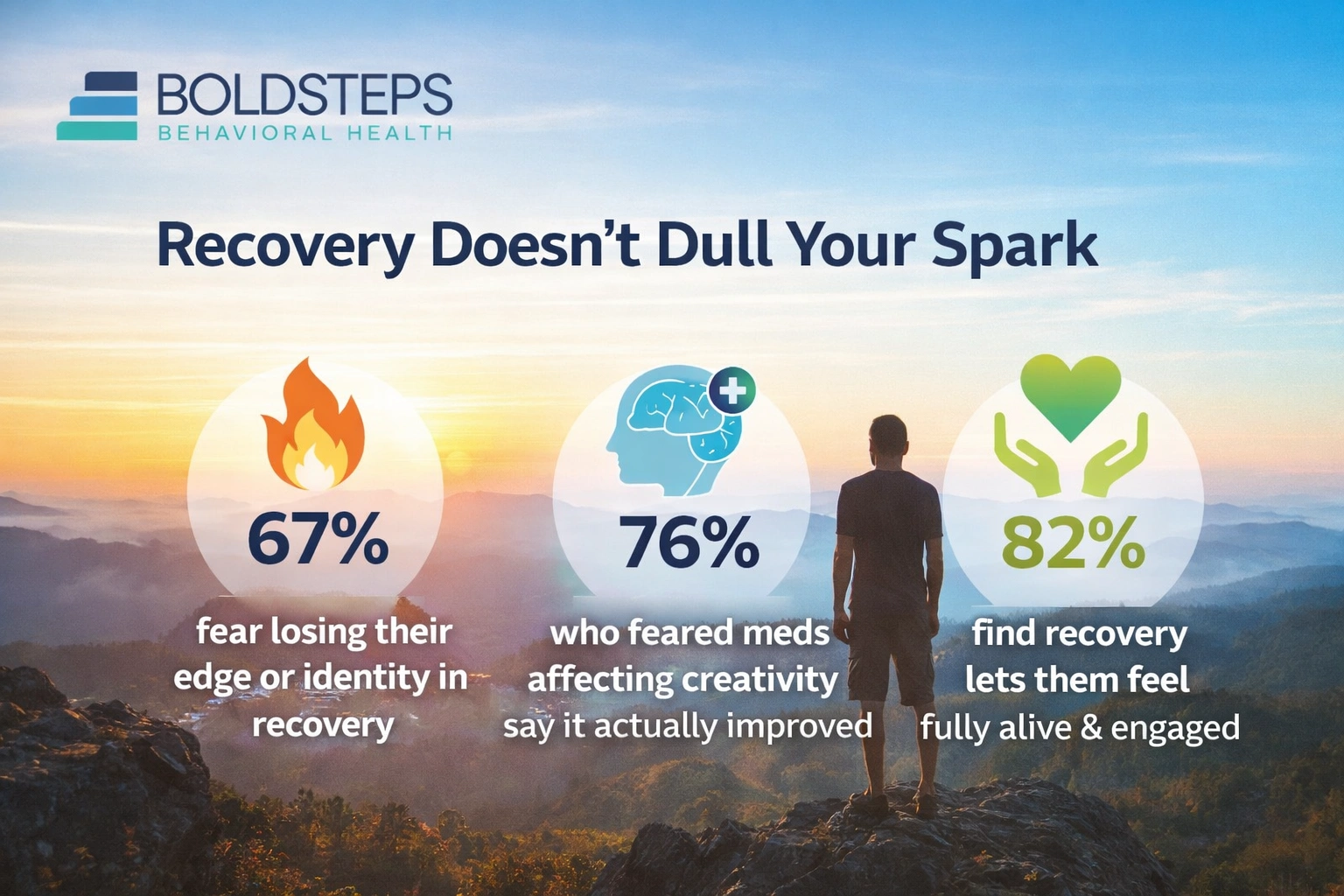
Medication Didn’t Erase My Personality—It Helped Me Access It
Saying yes to medication was one of the hardest choices I’ve made.
I told my care team, “I’m not willing to lose my voice.” And they didn’t try to convince me otherwise. They didn’t make promises. They just listened.
We started slow. Monitored everything. Talked through how it felt—day by day, dose by dose.
And something surprising happened.
Instead of silencing me, the right support steadied me.
Instead of wiping away my words, it made space for them to come back without the panic.
I could write again—not in a manic blur, but in sentences I could stand behind. I could speak without wondering if I’d gone too far. I could feel without drowning.
There’s a Version of You That Doesn’t Just Survive
That version? It still has the edge.
But it also has boundaries. Breath. Clarity.
And yes, it might feel strange at first. Like trading in the spark for a flicker.
But that flicker is steady. It’s sustainable. And it doesn’t burn you from the inside out.
For me, it was in recovery—not in the chaos—that I finally started to trust myself.
I didn’t have to question every emotion. Didn’t have to worry that calm meant boring. Didn’t have to fuel my art with breakdowns anymore.
The part of me I thought I’d lose? I didn’t.
I just stopped feeding it to the fire.
People in Places Like You Live Still Struggle With This
When I talk to people in York County, Pennsylvania, I often hear the same fear I once had: “If I accept help, I won’t be me anymore.”
And from others in Lancaster County, Pennsylvania, I hear this: “What if people only liked me because I was chaotic? What if calm means invisible?”
Let me tell you the truth I had to learn the hard way: the people who really care about you aren’t in love with your pain. They’re in love with your presence. Your voice. Your expression. Your full aliveness—not just the version that flares up in crisis.
Recovery didn’t make me invisible. It helped me show up.
If you’re looking for care in Pennsylvania that understands that kind of fear—that sees you not as a problem, but as a person with history and heat and depth—you’re not alone.
And you don’t have to lose yourself to get support.
What I Know Now (That I Wish I Knew Then)
You don’t have to sacrifice your edge to feel better.
You don’t have to trade your artistry for stability.
You don’t have to settle for silence just because you’re tired of screaming.
The version of you that exists on the other side of survival? They’re not watered down. They’re grounded. Clearer. Still brilliant. Just less breakable.
And when you have the right support, that version gets a chance to speak without the chaos yelling over it.
FAQs: If You’re Still Not Sure You’re Ready
What if I don’t want to feel numb?
That’s a valid fear. The goal of treatment isn’t to numb you—it’s to support your emotional range so that you’re not being pulled under by it. If something you’re taking ever makes you feel flat or disconnected, you’re allowed to speak up. We adjust together.
I’ve always used my pain to create. What if I lose that?
You don’t lose your creativity—you gain access to more of it. When you’re not fighting to survive every day, you can channel your energy into creation instead of crisis. Many people find their art deepens in recovery, not disappears.
Will I still be “me” if I go on medication?
Yes. The goal isn’t to change you—it’s to give you tools that help you live with more ease, more choice, and more agency. If you ever feel unlike yourself, that’s something we take seriously and work to fix.
What if people don’t like the calmer version of me?
Then maybe they weren’t really seeing you in the first place. The people who truly matter will love who you are when you’re safe, grounded, and real—not just when you’re spiraling.
I want to try, but I’m still scared. What do I do?
Start where you are. You don’t have to be 100% ready. Just curious enough to ask. That’s all I was. That was enough.
If You’re Holding Back Because You’re Afraid to Lose Yourself—You’re Not Alone
I wish someone had told me this:
You don’t have to burn to be bright.
You don’t have to collapse in order to be seen.
And you don’t have to disappear in order to heal.
That voice inside you—the one that wants to feel more, not less—is still here. It’s not the enemy. It just needs care that understands how to hold intensity without shutting it down.
Call 717-896-1880 to learn more about our medication assisted treatment in Harrisburg, Pennsylvania.