

Watching your child relapse after treatment can feel like getting the wind knocked out of you.
Especially if they were doing well for a while.
Maybe they sounded clearer. Happier. More like themselves again. Maybe your family finally started sleeping through the night without waiting for the next phone call, the next lie, or the next crisis.
Then suddenly, something shifted.
Maybe they stopped answering texts. Maybe you noticed old behaviors creeping back in. Maybe they admitted they drank again. Or maybe you discovered it yourself.
Either way, the grief can feel enormous.
Many parents quietly ask themselves the same painful question after a relapse:
“Did treatment even work?”
If your child recently returned to drinking after an alcohol addiction treatment center, it’s important to understand this first:
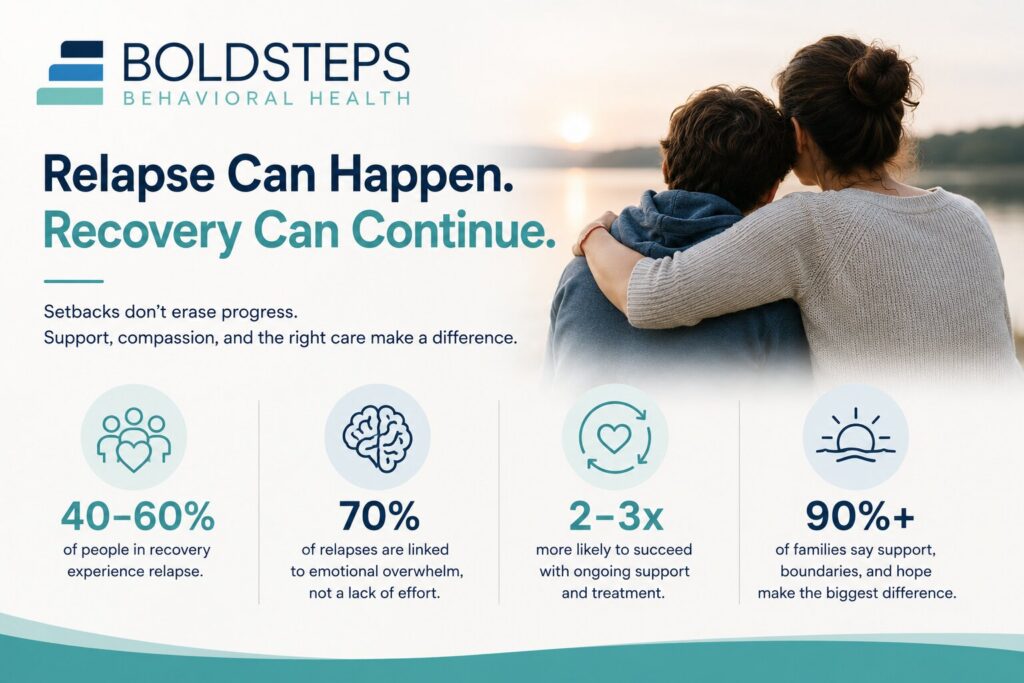
Relapse is serious. But it is not always hopeless.
And it does not automatically erase the healing that already happened.
Families Often Expect Recovery to Look Cleaner Than It Does
This is one of the hardest emotional adjustments for parents.
Many families unknowingly picture recovery as a straight line:
- Treatment
- Sobriety
- Stability
- Problem solved
So when relapse happens, it can feel deeply disorienting. Parents often wonder if they missed warning signs or somehow caused the setback.
But addiction recovery rarely moves in a perfectly linear way.
Especially for young adults.
Many people enter treatment carrying years of emotional pain, anxiety, shame, impulsivity, trauma, or mental health struggles underneath the alcohol itself. Treatment may begin the healing process, but returning to real life afterward can still feel overwhelming.
That doesn’t mean treatment failed.
It means healing is usually more complicated than families are prepared for.
Recovery is often less like flipping a switch and more like learning how to walk again after an injury. Some days feel steady. Some don’t. Some involve setbacks that require more support before stability fully returns.
That can be painful to accept. But it’s also honest.
Your Child May Be Hurting More Than They Can Explain
After relapse, parents often see anger, defensiveness, dishonesty, or withdrawal.
Underneath those behaviors, there is frequently a tremendous amount of shame.
Especially if your child had sober time before drinking again.
Many young adults truly want recovery to work. They leave treatment hopeful. Motivated. Determined not to hurt themselves or their family again.
Then life happens.
Stress returns. Loneliness returns. Social pressure returns. Relationship problems return. Anxiety returns.
And when alcohol enters the picture again, shame often crashes in immediately afterward.
Some young adults describe relapse as feeling like they “destroyed” everything they worked for. Others feel too embarrassed to ask for help again because they believe everyone is disappointed in them already.
That shame can sound like:
- “I already messed up.”
- “Everyone thinks I’m hopeless.”
- “Why bother trying again?”
- “I can’t stop once I start anyway.”
Parents sometimes interpret these behaviors as not caring.
In reality, many relapsed young adults care deeply. They simply feel emotionally trapped.
Relapse Usually Starts Emotionally Before It Starts Physically
This is something many families don’t realize.
Relapse often begins long before alcohol is actually consumed again.
There is usually an emotional shift first.
Parents may notice:
- Increased isolation
- Pulling away from support systems
- Mood swings
- Irritability
- Defensiveness
- Skipping therapy or recovery meetings
- Changes in sleeping or eating habits
- Loss of routine
- Emotional numbness
Sometimes parents assume their child is simply being lazy, difficult, or irresponsible.
But for many people in recovery, these are early signs that emotional regulation is slipping. Stress starts building quietly underneath the surface. Old coping mechanisms begin sounding appealing again.
Then addiction starts whispering familiar lies:
- “You can control it this time.”
- “One drink won’t matter.”
- “You’re overreacting.”
- “Nobody understands you anyway.”
Relapse often grows in secrecy and emotional isolation before it shows up behaviorally.
That’s why connection matters so much in long-term recovery.
“Why Can’t They Just Stop?” Is a Question Rooted in Fear
Many parents carry guilt for even thinking this question.
But it’s an incredibly human response.
You watched your child suffer. You watched them enter treatment. You listened to promises about change. So relapse can feel confusing and deeply personal.
But addiction affects the brain’s relationship with stress, impulse control, reward, and emotional regulation. That’s part of why someone may genuinely want sobriety while simultaneously struggling to maintain it consistently.
Families often hear things like:
- “I’m only drinking socially now.”
- “I’m cutting back.”
- “I can handle it this time.”
- “I don’t need help anymore.”
Sometimes the person even believes those statements in the moment.
But many people eventually reach a frightening realization: once drinking starts again, they feel like they can’t stop drinking despite promising themselves they would.
That realization can be terrifying for both the individual and the people who love them.
And importantly, it’s usually not happening because they enjoy hurting their family.
Parents Often Become Emotionally Exhausted Too
One thing families rarely talk about openly is how physically and emotionally draining relapse can be for parents.
Many parents begin living in a constant state of hypervigilance:
- Watching mood changes
- Monitoring phone calls
- Looking for signs of drinking
- Bracing for emergencies
- Struggling to trust again
Over time, your nervous system can become trained to expect chaos.
That kind of emotional strain affects sleep, relationships, work, concentration, and physical health. Some parents feel guilty for becoming emotionally numb after repeated cycles of hope and disappointment.
Others feel guilty for becoming angry.
Both reactions are understandable.
You are allowed to love your child while also acknowledging how painful this has become.
And you do not have to carry the entire recovery process alone.
Finding meaningful support in Pennsylvania for yourself can help families move from panic into steadier forms of support and boundaries.
Returning to Treatment Is Not the Same Thing as Starting From Zero
This matters deeply.
Families often hear “relapse” and assume all previous progress disappeared.
But human growth doesn’t work that way.
A young adult returning to treatment after relapse may actually understand themselves more clearly than they did during their first admission. They may recognize triggers sooner. They may finally admit certain coping patterns aren’t sustainable. They may become more honest about loneliness, anxiety, depression, or unresolved trauma underneath the alcohol use.
In many cases, the second round of treatment feels less performative and more emotionally honest.
One of the most hopeful things we see clinically is this:
People often return to treatment because part of them still wants life to feel different.
That desire matters.
Even if your child sounds discouraged right now. Even if they are defensive. Even if they seem emotionally shut down.
The fact that someone comes back for help at all often means hope still exists underneath the exhaustion.
Recovery Is Usually Built Through Repetition, Not Perfection
Parents often want certainty after relapse.
That makes sense. Addiction creates instability, and families naturally crave reassurance that things will finally become safe and predictable.
But long-term recovery is rarely built through one perfect breakthrough moment.
More often, it develops through repetition:
- Returning to support
- Rebuilding routines
- Learning emotional regulation
- Practicing honesty
- Staying connected during stress
- Repairing relationships slowly
- Continuing care after setbacks
Healing is not weakness repeated.
It’s practice repeated.
Sometimes the healthiest thing a family can do is stop viewing relapse as proof of failure and start viewing it as information:
- What support was missing?
- What stressors escalated?
- What warning signs appeared?
- What emotional needs remained untreated?
Those questions often create more healing than shame ever does.
Families Need Boundaries and Compassion at the Same Time
This balance can feel incredibly difficult.
Some parents swing into rescue mode after relapse. Others become emotionally hardened because they’re afraid of being manipulated or hurt again.
Most families move between both extremes at different points.
Healthy support does not mean accepting harmful behavior without limits. Boundaries still matter deeply in recovery. So does accountability.
But accountability works best when paired with steadiness rather than panic.
Young adults struggling with addiction often already carry enormous self-hatred internally. Shame alone rarely creates sustainable change. Connection, structure, honesty, and support tend to create far more movement over time.
That doesn’t mean parents should sacrifice themselves emotionally.
It means healing usually works better when families respond thoughtfully instead of reactively.
FAQ: Relapse After Alcohol Treatment
Does relapse mean treatment failed?
No. Relapse can happen during the recovery process, especially in early sobriety. While it should always be taken seriously, relapse does not automatically erase the progress someone made in treatment.
Why do people relapse after treatment?
Relapse is often connected to emotional stress, isolation, mental health struggles, environmental triggers, or loss of structure after treatment ends. Recovery support usually needs ongoing reinforcement over time.
Should parents stay involved after relapse?
Yes—but involvement works best when paired with healthy boundaries. Families can remain compassionate while still protecting their own emotional well-being and encouraging accountability.
Is it common for young adults to relapse?
Unfortunately, yes. Many young adults experience setbacks while learning how to maintain recovery outside structured care. This does not mean long-term recovery is impossible.
What if my child refuses help again?
You cannot force lasting recovery through fear, guilt, or control alone. However, staying emotionally steady, encouraging support, and maintaining clear boundaries can still influence recovery positively over time.
Can someone recover after multiple relapses?
Absolutely. Many people with long-term sobriety histories experienced relapse before recovery stabilized. Recovery is rarely linear.
Does returning to treatment actually help?
For many people, yes. Returning to treatment after relapse can help interrupt dangerous patterns, rebuild support systems, and address emotional or mental health issues that may not have been fully treated before.
Your Family Is Not Alone in This
Relapse can make families feel isolated very quickly.
Parents often assume everyone else’s child recovered successfully while their family somehow failed.
That is rarely the full story.
Many families quietly walk through this exact heartbreak. Many young adults relapse and later build stable, meaningful recovery lives. And many parents who once felt completely hopeless eventually realize healing was still possible—even after setbacks.
Right now, your child may need connection more than condemnation. Structure more than panic. Steady support more than fear-driven reactions.
And you deserve support too.
Call 717-896-1880 or visit our alcohol addiction treatment center services to learn more about our addiction treatment, alcohol addiction treatment center services in York County, PA.