

There is a difficult space that many people find themselves in before they ever reach out for help.
You know you’re struggling.
You know something needs to change.
But every option you’re aware of feels wrong.
Weekly therapy doesn’t seem like enough anymore.
At the same time, the idea of being hospitalized feels overwhelming, frightening, or unnecessary.
So you do what many people do.
You wait.
You tell yourself you’ll feel better next week.
You push through another month.
You try harder.
You stay busy.
You distract yourself.
And slowly, almost without noticing, your world begins to shrink.
The activities you used to enjoy start disappearing.
The phone calls become harder to return.
The relationships become more distant.
The future becomes harder to imagine.
At Bold Steps Behavioral Health, we speak with many people who arrive in this exact place. They’re not experiencing the kind of crisis they associate with a hospital, but they’re also not okay.
Many begin exploring options like structured daytime care because they’re looking for support that exists between those two extremes.
If that’s where you are right now, we want you to know something important:
There is a difference between struggling and failing.
And needing more support does not mean you’ve failed.
Why So Many People Get Stuck in the Middle
One of the biggest misconceptions about mental health treatment is that there are only two options.
Either you see a therapist once a week.
Or you’re admitted to a hospital.
That belief keeps many people stuck.
The reality is that mental health care exists on a spectrum.
Some people need occasional support.
Others need intensive stabilization.
And many people fall somewhere in between.
They’re functioning enough to stay out of the hospital.
But they’re suffering too much to continue as they are.
Unfortunately, this middle ground can be confusing.
People often assume they aren’t struggling “enough” to deserve additional help.
So they continue carrying burdens that have already become too heavy.
The Problem With Waiting Until Things Get Worse
Depression rarely announces itself dramatically.
More often, it slowly changes the way a person lives.
You stop making plans.
You stop exercising.
You stop responding to texts.
You stop believing things can improve.
Each individual change may seem small.
Together, they create a life that feels increasingly narrow.
We’ve seen many people wait because they believe they should be able to manage on their own.
Months later, they often tell us the same thing:
“I wish I had reached out sooner.”
Not because recovery became impossible.
Because suffering became unnecessary.
Mental health challenges often become easier to address before they reach a crisis point.
The earlier support begins, the more opportunities people have to rebuild healthy habits, strengthen coping skills, and reconnect with their lives.
When Weekly Therapy Stops Feeling Like Enough
Therapy can be incredibly valuable.
For many people, it’s exactly the right level of support.
But there are times when symptoms become more intense.
Maybe you’re spending most of the day in bed.
Maybe concentration has disappeared.
Maybe anxiety feels constant.
Maybe depression is affecting work, school, relationships, or your ability to care for yourself.
In those situations, one hour a week may not feel sufficient.
That doesn’t mean therapy failed.
It simply means your needs may have changed.
Imagine trying to put out a house fire with a garden hose.
The hose isn’t bad.
It simply wasn’t designed for that level of need.
Mental health support works similarly.
Different situations sometimes require different levels of care.
Why Hospitalization Isn’t the Only Alternative
Many first-time treatment seekers hesitate because they assume getting more help automatically means losing control of their lives.
They imagine being separated from family.
Missing work.
Leaving home indefinitely.
For some individuals facing immediate safety concerns, higher levels of care are necessary and life-saving.
But not everyone who is struggling needs that environment.
Many people benefit from intensive treatment while continuing to return home at the end of each day.
This approach provides significantly more support than traditional outpatient care while allowing people to remain connected to their lives.
For individuals who feel caught between “not okay” and “not hospitalized,” this can feel like a much more approachable option.
What Makes This Middle Ground So Important
Think about recovery like learning to walk again after an injury.
You wouldn’t expect someone to go from a wheelchair directly to running a marathon.
There are steps in between.
Support exists in stages.
Mental health recovery often works the same way.
Some people need a bridge between weekly appointments and round-the-clock care.
They need enough structure to interrupt unhealthy patterns.
Enough support to develop new coping skills.
Enough guidance to regain stability.
But they also benefit from remaining connected to their homes, families, and communities.
This middle ground exists because recovery is rarely all-or-nothing.
Most healing happens somewhere in between.
The Emotional Question Beneath the Practical Question
When people search for information about an alternative to inpatient mental health care, they’re usually looking for logistical answers.
But underneath those questions is often a deeper fear.
They’re wondering:
“Am I bad enough?”
“Am I overreacting?”
“What if people think I’m weak?”
“What if I need more help than I want to admit?”
These questions are deeply human.
And they’re often fueled by shame.
Mental health struggles have a way of convincing people they should be able to fix everything themselves.
But depression, anxiety, and emotional distress don’t respond well to self-criticism.
They respond to support.
Seeking help is not evidence of weakness.
It’s evidence that you still care about your future.
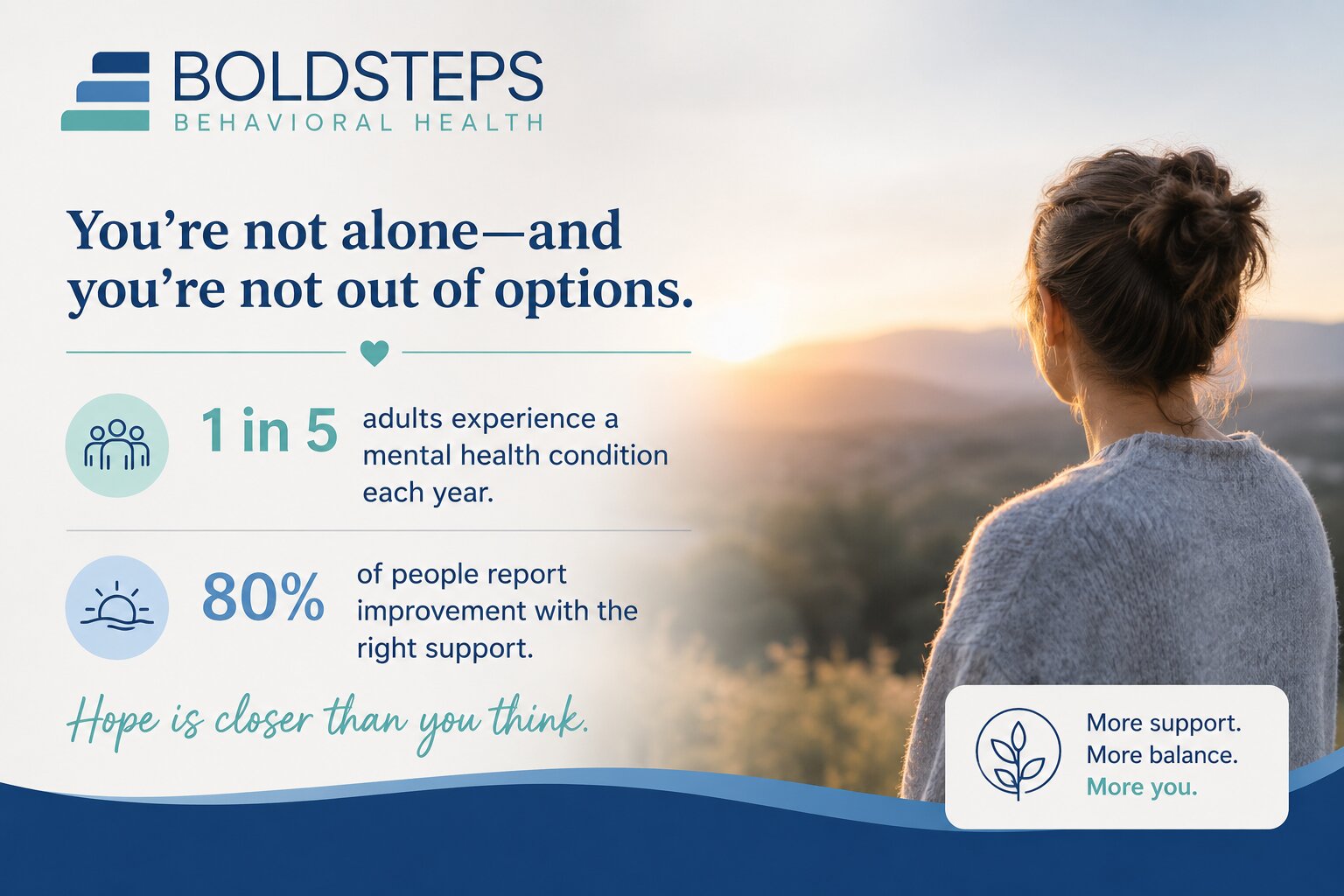
Recovery Doesn’t Usually Happen All at Once
One of the reasons people delay treatment is because they imagine recovery as a dramatic transformation.
A breakthrough moment.
A sudden realization.
An overnight change.
In reality, recovery is often much quieter.
It’s getting out of bed without arguing with yourself for an hour.
It’s responding to a friend’s text.
It’s eating regular meals again.
It’s noticing that you laughed at something.
It’s making plans for next weekend.
It’s feeling curious about the future instead of fearful of it.
These moments may seem small.
But they’re often signs that healing is already happening.
Like the first green shoots appearing after a long winter.
Not dramatic.
But unmistakable.
When Mental Health and Substance Use Overlap
Sometimes people arrive believing they only have a depression problem.
Others believe they only have a substance use problem.
Many discover they’re dealing with both.
Alcohol and other substances can become ways of coping with emotional pain.
Unfortunately, they often make symptoms worse over time.
This is one reason treatment can be especially valuable when mental health and substance use collide.
Addressing only one side of the problem often leaves important issues unresolved.
Comprehensive care looks at the whole person rather than focusing on a single symptom.
You Don’t Need Permission to Seek Help
One of the most heartbreaking beliefs we encounter is this:
“Someone else needs help more than I do.”
Maybe.
But that doesn’t mean you don’t need help too.
Pain isn’t a competition.
You don’t have to reach a certain level of suffering before support becomes appropriate.
If you’re struggling, that’s enough.
If your life has become smaller because of depression, anxiety, emotional distress, or substance use, that’s enough.
If you’re exhausted from carrying everything alone, that’s enough.
You don’t need anyone’s permission to take your pain seriously.
Hope Often Begins Before Confidence
Many people believe they need confidence before reaching out.
They don’t.
In fact, most people contact us feeling uncertain.
Scared.
Overwhelmed.
Skeptical.
That’s normal.
Hope doesn’t usually arrive first.
Action does.
The phone call comes first.
The conversation comes first.
The willingness to explore options comes first.
Then hope begins to grow.
If you’re looking for additional mental health resources and support, exploring available help in Pennsylvania may provide valuable information about your options.
Because the goal isn’t waiting until things become unbearable.
The goal is helping you build a future where they don’t have to.
Frequently Asked Questions
What if I feel too overwhelmed for weekly therapy but don’t think I need a hospital?
Many people find themselves in exactly this situation. There are treatment options that provide more support than traditional outpatient therapy while allowing individuals to return home each day.
How do I know if I need a higher level of care?
If symptoms are significantly affecting your daily life, work, relationships, emotional well-being, or ability to function, it may be helpful to seek a professional assessment.
Is seeking more support a sign that I’m getting worse?
Not necessarily. Often, it’s a sign that you’re recognizing your needs and taking proactive steps toward recovery.
Can depression get worse if I ignore it?
For many people, untreated symptoms gradually affect more areas of life over time. Early intervention can often make recovery easier and reduce unnecessary suffering.
What if I’m afraid people will judge me?
This fear is extremely common. Many people discover that seeking help earns more understanding and support than they expected.
What happens during an assessment?
An assessment typically involves discussing symptoms, daily functioning, treatment history, concerns, and goals. The purpose is understanding your needs and identifying appropriate support options.
Is there hope if I’ve been struggling for a long time?
Absolutely. Many people who seek treatment have been struggling for months or years. Recovery doesn’t depend on how long you’ve been struggling—it depends on taking steps toward support.
Take the Next Step
If you’re not in a crisis but know that weekly therapy isn’t enough, you don’t have to continue carrying everything alone.
Call 717-896-1880 or visit our partial hospitalization program services to learn more about our programs, partial hospitalization program services in Harrisburg, PA.