

If you’re reading this as a parent, there is a good chance you’re scared.
Maybe your son or daughter has stopped using heroin and now seems like a completely different person.
They can’t sleep.
They can’t get comfortable.
They’re sweating, shaking, pacing, or curled up in bed.
They may be crying one moment and angry the next.
And somewhere in the middle of all of it, they may have looked at you and said something that stopped your heart:
“I feel like I’m dying.”
Few experiences are more frightening than hearing those words from your child.
At moments like this, many parents begin searching online for answers. They want to know how long this will last. They want to know if what they’re seeing is normal. Most importantly, they want to know whether their child is going to be okay.
If that is where you are right now, we want you to know something important:
You are not the first parent to sit awake at night wondering these things.
And you are not alone.
Many families begin learning about heroin addiction treatment services during one of the hardest weeks of their lives. Understanding what withdrawal often looks like can make a frightening situation feel a little less confusing.
Why Withdrawal Feels So Intense
One of the biggest surprises for parents is how severe withdrawal can appear.
People sometimes assume that stopping drug use should immediately make someone feel better.
Unfortunately, that’s not how the body works.
When heroin is used repeatedly, the brain adjusts to its presence.
Over time, the body begins relying on the drug to maintain a sense of balance.
When heroin suddenly disappears, the nervous system struggles to adapt.
Imagine driving down a highway at high speed and suddenly slamming on the brakes.
Everything inside the vehicle gets thrown forward.
Withdrawal can create a similar shock to the system.
The body is trying to regain balance, but that adjustment process can feel overwhelming.
While symptoms can be extremely uncomfortable, they are often signs that the body is attempting to recover.
The First Day Often Begins Quietly
Withdrawal doesn’t always start dramatically.
For many people, symptoms begin within several hours after their last use.
At first, the signs may seem minor.
A runny nose.
Frequent yawning.
Anxiety.
Restlessness.
Difficulty sitting still.
Trouble concentrating.
Some parents describe this stage as feeling like their child is waiting for something bad to happen.
There is often an increasing sense of discomfort that becomes difficult to ignore.
Cravings can become intense.
The desire to use again may feel overwhelming.
This is one reason why the first day can be emotionally difficult even before the more severe physical symptoms appear.
Many individuals know what is coming.
That anticipation alone can create tremendous fear.
The Second Day Is Often the Most Difficult
By the second day, symptoms frequently become much more intense.
This is the stage that causes many parents to panic.
Physical symptoms often increase significantly.
Individuals may experience:
- Severe muscle aches
- Chills
- Sweating
- Nausea
- Vomiting
- Diarrhea
- Restlessness
- Anxiety
- Difficulty eating
- Difficulty sleeping
Many people feel completely exhausted but cannot relax.
Their body desperately wants rest.
Their nervous system refuses to cooperate.
One parent once described watching her son pace through the house all night because sitting still felt impossible.
Another said her daughter looked like she was fighting a battle nobody else could see.
Those descriptions are surprisingly accurate.
Withdrawal affects both the body and the mind at the same time.
That combination can make the experience feel unbearable.
Why So Many People Say It Feels Like Dying
This is one of the questions parents ask most frequently.
“Why does my child keep saying they feel like they’re dying?”
The answer is simple.
Because withdrawal can feel that severe.
The pain is real.
The nausea is real.
The panic is real.
The exhaustion is real.
The fear is real.
When all of those experiences occur simultaneously, many people struggle to imagine ever feeling normal again.
It’s important to understand that feeling like you’re dying and actually dying are not the same thing.
Most people are describing the intensity of the experience rather than a medical emergency.
The body feels completely overwhelmed.
The brain interprets that suffering as danger.
The result is often intense fear.
Parents who understand this distinction are often better able to remain calm and supportive during difficult moments.
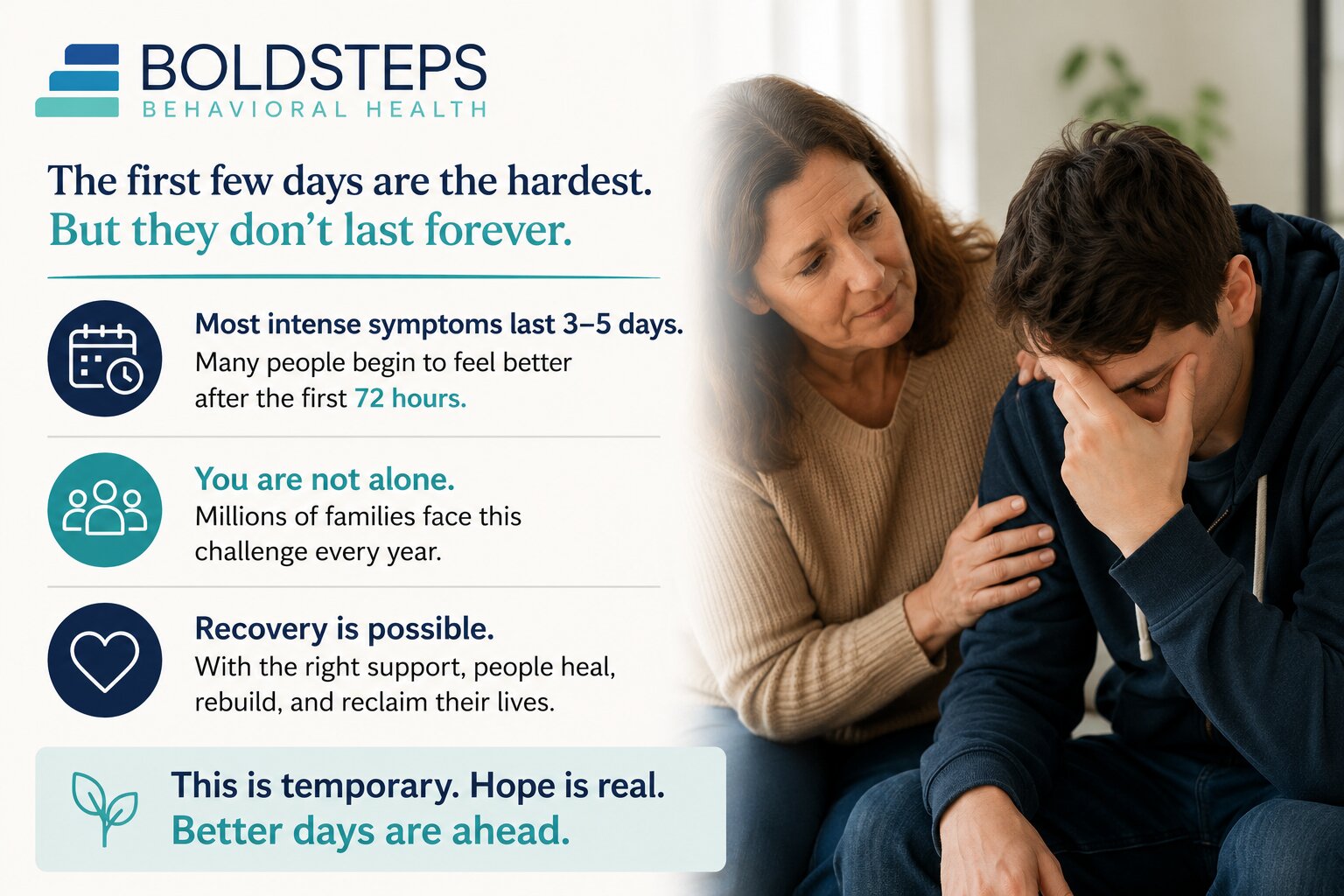
The Third Day Can Bring Small Signs of Hope
The first 72 hours are often viewed as one of the most challenging periods of withdrawal.
For many people, symptoms peak somewhere during this window.
That doesn’t mean the third day suddenly feels easy.
It usually doesn’t.
However, many individuals begin noticing small improvements.
They may eat a little more.
They may sleep for a short period.
The restlessness may become slightly less intense.
The discomfort may begin easing, even if only a little.
These changes can seem insignificant.
They aren’t.
Recovery often begins with small victories.
A few hours of sleep.
A meal.
A calmer afternoon.
A little less pain.
The body heals gradually.
Progress is often measured in inches before it is measured in miles.
What Parents Often Feel During Withdrawal
Parents rarely talk about their own experience.
They focus entirely on their child.
Yet families are often suffering too.
Many parents feel guilty.
They wonder if they missed warning signs.
They replay old conversations.
They ask themselves what they could have done differently.
Others feel angry.
Some feel exhausted.
Many feel completely helpless.
If you recognize yourself in those feelings, please know this:
Addiction affects entire families.
Your fear is understandable.
Your exhaustion is understandable.
Your confusion is understandable.
None of those feelings mean you have failed your child.
You are navigating an incredibly difficult situation while trying to support someone you love.
That is not easy.
What Helps During These Difficult Days
Parents often want to know exactly what they should do.
While every situation is different, a few principles can be helpful.
Remain calm whenever possible.
Listen more than you lecture.
Avoid major confrontations during active withdrawal.
Encourage professional support.
Focus on safety.
Remember that your child is not operating at their best during this period.
Withdrawal affects judgment, emotions, and behavior.
This is often not the ideal time for ultimatums or difficult family discussions.
The immediate goal is helping your loved one move safely through withdrawal and into appropriate care.
Withdrawal Is Not the Finish Line
One of the most common misunderstandings about recovery is the belief that everything improves once withdrawal ends.
Withdrawal is important.
It is not the entire recovery process.
In many ways, it is only the beginning.
The physical symptoms eventually improve.
The emotional challenges often remain.
Cravings may continue.
Stress still exists.
Triggers still exist.
Life still happens.
This is why ongoing treatment matters.
Recovery involves much more than surviving a difficult week.
It involves building new habits, healthier coping skills, stronger support systems, and a meaningful plan for the future.
The Future May Look Different Than It Does Today
When families are in the middle of withdrawal, it can be difficult to imagine things improving.
The discomfort feels endless.
The fear feels endless.
The uncertainty feels endless.
But withdrawal is temporary.
The experience that feels impossible today will not last forever.
We’ve watched countless families arrive feeling hopeless.
Many of those same families later watched their loved one regain stability, rebuild relationships, return to school, return to work, and create a future that once felt impossible.
Hope rarely arrives all at once.
Sometimes it begins with a single day that feels slightly better than the day before.
For families exploring treatment options in Pennsylvania, learning about available treatment options in Pennsylvania can provide guidance during this challenging time and help families understand what support may be available.
As parents learn more about addiction recovery, they often hear professionals discuss a heroin withdrawal timeline to better understand what symptoms may occur and how the body typically progresses through withdrawal. While every person’s experience is unique, knowing that symptoms often improve with time can help reduce some of the fear surrounding the process.
The first few days may feel overwhelming.
But they are not the end of the story.
Frequently Asked Questions
How long do heroin withdrawal symptoms usually last?
Many people experience the most intense symptoms during the first several days after stopping heroin. Symptoms often begin improving after the first 72 hours, although recovery timelines vary from person to person.
Is it normal for heroin withdrawal to feel unbearable?
Yes. Many individuals describe withdrawal as one of the most physically and emotionally difficult experiences they have ever faced. The intensity can be frightening, but it does not mean recovery is impossible.
Why can’t my child sleep during withdrawal?
Withdrawal often creates significant nervous system activation. Even when someone feels exhausted, anxiety, discomfort, and restlessness can make sleep extremely difficult.
What symptoms are most common during the first three days?
Common symptoms include muscle aches, sweating, chills, nausea, diarrhea, anxiety, irritability, insomnia, cravings, and restlessness.
Should withdrawal happen at home or with professional support?
Every situation is different, but professional evaluation can help determine the safest and most appropriate level of care. Support can often improve comfort and reduce risks during withdrawal.
What should I say to my child during withdrawal?
Simple, supportive statements are often most helpful. Let them know they are not alone, encourage professional help, and focus on support rather than criticism during the withdrawal process.
Does withdrawal mean recovery is already happening?
Withdrawal is often the first step. Recovery typically continues long after physical symptoms improve and often includes ongoing treatment, counseling, support systems, and lifestyle changes.
Is it normal for parents to feel overwhelmed?
Absolutely. Watching a child struggle with addiction and withdrawal can be emotionally exhausting. Many parents experience fear, guilt, sadness, frustration, and uncertainty during this process.
Call 717-896-1880 or visit our heroin addiction treatment services to learn more about our addiction treatment, heroin addiction treatment center services Harrisburg, PA.