

As a clinician, I’ve worked with executives, healthcare workers, business owners, teachers, managers, sales professionals, and parents who all had one thing in common:
They looked completely fine.
From the outside, they were succeeding.
They were showing up for work. Paying bills. Meeting deadlines. Taking care of families. Attending meetings. Responding to emails. Keeping promises.
Most people would have described them as responsible, capable, and dependable.
Yet privately, many were fighting a battle nobody could see.
A battle with anxiety.
Not the occasional stress everyone experiences.
The kind that follows you into bed at night.
The kind that wakes you up at 3 a.m.
The kind that turns every decision into a debate and every mistake into evidence that you’re somehow failing.
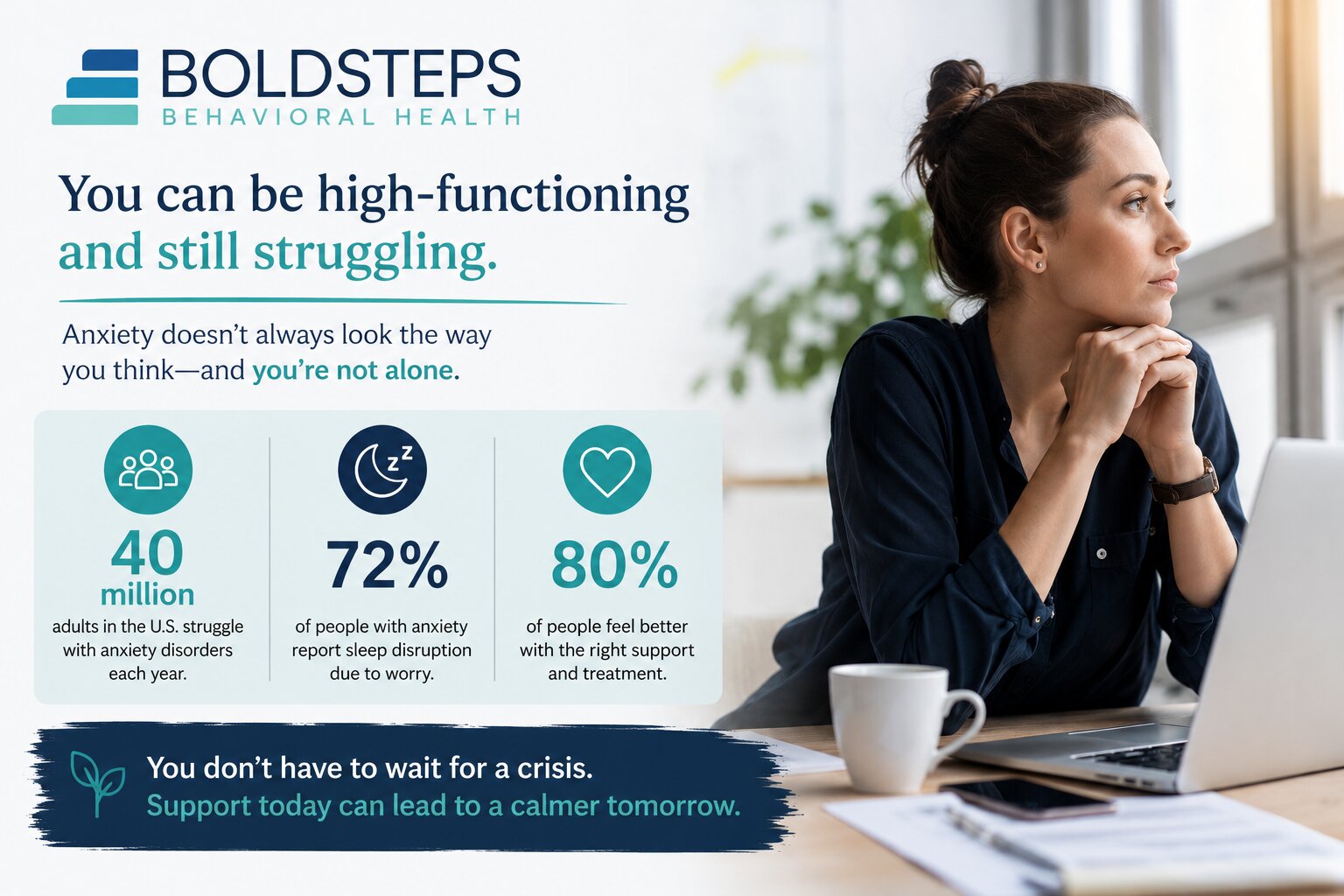
If you’ve found yourself searching for answers while still functioning at a high level, you’re not alone.
In fact, many people begin exploring support through anxiety disorder services long before their lives fall apart.
And that may be one of the smartest decisions they ever make.
High Functioning Doesn’t Mean Healthy
One of the biggest misconceptions about anxiety is that people who are struggling will look overwhelmed.
That isn’t always true.
Some of the most anxious people I’ve ever met were also some of the most successful.
They didn’t miss work.
They didn’t stop paying bills.
They didn’t withdraw from responsibilities.
Instead, they pushed harder.
Worked longer.
Stayed busier.
Kept moving.
To the outside world, it looked like motivation.
Behind the scenes, it often felt like survival.
One client described his life perfectly.
He said:
“Everyone thinks I’m driving the car. What they don’t see is that anxiety is sitting in the passenger seat grabbing the steering wheel.”
That image has stayed with me for years.
Because that’s exactly how many people experience anxiety.
They’re still moving forward.
But every mile feels harder than it should.
Why Successful People Often Wait the Longest
People who are high functioning frequently delay getting help.
Not because they don’t need it.
Because they convince themselves they can handle it.
They tell themselves:
“It’s just stress.”
“Things will calm down after this project.”
“I’ll deal with it after the holidays.”
“Everyone feels this way.”
Weeks become months.
Months become years.
Meanwhile, anxiety quietly expands.
The problem isn’t that these individuals lack strength.
The problem is that their strength allows them to carry the burden longer than most people.
Imagine carrying a heavy backpack every day.
At first, it feels manageable.
Then gradually, you adapt.
The weight becomes normal.
Eventually, you forget what it feels like to walk without it.
That’s often what anxiety looks like in high-functioning adults.
They become so accustomed to living with it that they stop recognizing how much it affects them.
The Hidden Signs I See Every Week
Many people expect anxiety to look dramatic.
Sometimes it does.
Often it doesn’t.
Some of the most common symptoms are surprisingly subtle.
Constant overthinking.
Difficulty relaxing.
Feeling guilty while resting.
Always preparing for worst-case scenarios.
Trouble sleeping despite being exhausted.
Checking emails repeatedly.
Replaying conversations for hours afterward.
Needing alcohol, food, work, or distractions to quiet the mind.
One client told me she couldn’t remember the last time she felt fully present.
Her body was always in one place.
Her mind was always somewhere else.
Planning.
Worrying.
Predicting.
Preparing.
Living that way is exhausting.
And eventually, the body begins demanding attention.
When Anxiety Starts Affecting Physical Health
Many people seek help only after physical symptoms appear.
Heart palpitations.
Headaches.
Digestive issues.
Muscle tension.
Jaw clenching.
Chest tightness.
Fatigue.
Dizziness.
Panic attacks.
The irony is that these symptoms often convince people something is medically wrong.
They schedule appointments.
Undergo testing.
Search online.
Assume they’re facing a serious physical illness.
Sometimes everything comes back normal.
That can feel frustrating.
Because the symptoms are absolutely real.
The explanation simply involves the nervous system rather than a physical disease.
Anxiety is not “all in your head.”
It affects the entire body.
The nervous system was never designed to operate in emergency mode every day.
Why Insurance Concerns Keep People Stuck
Another conversation I hear frequently sounds like this:
“I’d get help if I knew I could afford it.”
Cost concerns are understandable.
Mental health treatment should feel accessible, not overwhelming.
Unfortunately, many people assume support is financially out of reach before they ever explore their options.
What often surprises them is that many insurance plans include mental health coverage.
The challenge isn’t usually availability.
The challenge is taking the first step to ask questions.
Anxiety has a remarkable ability to create obstacles.
It tells people the process will be complicated.
It tells them treatment won’t work.
It tells them to wait.
And waiting often becomes its own trap.
Finding the Right Fit Matters More Than Finding the Perfect Label
One of the most common questions I receive is:
“What’s the best therapy for anxiety?”
The honest answer is that the best therapy is the one that addresses your specific needs.
Anxiety doesn’t affect everyone the same way.
Some people struggle with panic attacks.
Others battle constant worry.
Some experience social anxiety.
Others deal with perfectionism, work stress, or overwhelming self-criticism.
The goal isn’t finding a trendy treatment approach.
The goal is finding support that understands what you’re experiencing.
For some people, individual therapy creates meaningful change.
Others benefit from group support where they realize they aren’t alone.
Some need more structured care for a period of time.
Others thrive with weekly sessions.
Good treatment is not one-size-fits-all.
It should fit the person, not the other way around.
When Alcohol Becomes Part of the Equation
This is where many high-functioning individuals get stuck.
Alcohol often appears to help.
At first.
A drink after work seems harmless.
It takes the edge off.
It slows racing thoughts.
It creates temporary relief.
But anxiety and alcohol often form a cycle.
Anxiety creates discomfort.
Alcohol reduces discomfort temporarily.
The nervous system rebounds.
Anxiety increases.
More alcohol becomes necessary.
The cycle continues.
I’ve worked with countless professionals who believed they had an anxiety problem and later discovered alcohol had become part of what was keeping the cycle alive.
The goal isn’t judgment.
The goal is awareness.
Sometimes what feels like stress management is actually anxiety management in disguise.
And when mental health and substance use collide, both issues deserve attention.
The Moment People Finally Reach Out
The turning point rarely looks dramatic.
It usually sounds like this:
“I can’t keep doing this.”
Not because life is falling apart.
Because they’re tired.
Tired of feeling on edge.
Tired of carrying stress everywhere.
Tired of pretending they’re okay.
Tired of functioning while suffering.
That moment of honesty often becomes the beginning of meaningful change.
Not because anxiety disappears overnight.
Because they stop facing it alone.
Support provides perspective.
Perspective creates clarity.
And clarity often creates hope.
You Don’t Have to Earn Help
One of the most important things I tell people is this:
You do not have to reach a crisis before seeking support.
You do not need a breakdown.
You do not need a panic attack.
You do not need a major life event.
You do not need proof that you’re struggling enough.
If anxiety is affecting your quality of life, that is enough.
For individuals exploring available anxiety therapy Pennsylvania resources, the goal isn’t to become someone different.
The goal is to stop carrying unnecessary weight.
The goal is to feel present again.
The goal is to wake up without immediately entering survival mode.
The goal is to remember what calm feels like.
For those considering treatment options in Pennsylvania, learning about available treatment options in Pennsylvania can be a valuable first step toward finding support that fits your situation.
The strongest people I know aren’t the ones who never ask for help.
They’re the ones who stop pretending they don’t need it.
Frequently Asked Questions
How do I know if my anxiety is serious enough to seek help?
If anxiety is affecting your sleep, relationships, concentration, work performance, physical health, or overall quality of life, it may be worth speaking with a professional. You do not need to wait until symptoms become severe.
Can I get anxiety treatment while continuing to work?
Yes. Many people receive support while maintaining careers, family responsibilities, and daily obligations. Treatment plans can often be tailored around existing schedules.
Does insurance usually cover anxiety treatment?
Many insurance plans include mental health benefits. Coverage varies by provider and policy, but exploring your options can help you understand what services may be available.
What type of therapy works best for anxiety?
The best approach depends on the individual. Factors such as symptom severity, personal history, treatment goals, and co-occurring challenges often influence which therapeutic approach is most effective.
Can anxiety cause physical symptoms?
Yes. Anxiety frequently affects the body. Symptoms may include rapid heartbeat, headaches, muscle tension, fatigue, digestive issues, dizziness, sweating, and difficulty sleeping.
Is it common for successful professionals to struggle with anxiety?
Very common. Many high-achieving individuals experience significant anxiety while continuing to perform well professionally. Success and anxiety often coexist more frequently than people realize.
Can alcohol make anxiety worse?
Yes. While alcohol may temporarily reduce feelings of anxiety, it can increase anxiety symptoms over time and contribute to a cycle of ongoing emotional distress.
Call 717-896-1880 or visit our anxiety disorder services to learn more about our mental health, anxiety disorder services Harrisburg, PA.