

We’ve heard the quiet part out loud more times than we can count:
“I want to get better… but what if sobriety makes me boring?”
And it’s not a joke. Not really. It’s a fear that lives deep in the bones of people who feel everything—and who’ve learned to survive by turning that feeling into energy, art, intensity, humor, passion. People who’ve used substances to open doors inside themselves they were afraid might slam shut without it.
We talk to people all the time who aren’t afraid of help—they’re afraid of losing themselves. The version of themselves that lights up in a crowd. The one who writes with fire. The one who feels alive when emotions are high and the volume is up.
If you’re afraid that treatment, especially something like medication assisted treatment, will dull you or make you flat… you’re not wrong to wonder. And you’re definitely not the only one.
The Spark Behind the Chaos
Let’s get real.
For a lot of people, substance use hasn’t just been about escaping pain—it’s been a tool to create, connect, or feel. That drink before the stage. That hit before the canvas. That rush before the text you were too nervous to send sober.
When you’ve spent years linking your identity—your art, your edge, your presence—to that pattern, the idea of losing it can feel like cutting out a piece of your soul.
But here’s the truth we’ve learned after walking this path with hundreds of clients:
That spark you’re afraid to lose? It was never the substance.
What’s real doesn’t disappear in recovery. What disappears are the things you’ve been using to survive because you thought the real you couldn’t make it on their own.
Sobriety Isn’t the End of Feeling—It’s the Start of Feeling Fully
At first, yes—sobriety can feel a little gray. The highs aren’t as high, and the quiet feels loud. It’s disorienting when you’ve been used to chasing extremes.
But once the fog starts to lift? The world doesn’t get dull. It gets clear.
You start noticing things again: texture in music, layers in conversation, warmth in eye contact. You realize you can cry without coming undone. Laugh without forcing it. Speak without apologizing or performing.
That clarity? That’s the new high. And it doesn’t come with a crash.
We’ve watched countless clients rediscover themselves—not in spite of sobriety, but because of it.
One client came in shaking, saying, “If I lose my edge, I lose everything.” But three months into care, he told us, “I thought I needed the chaos to write. Turns out, I just needed space to listen to myself.”
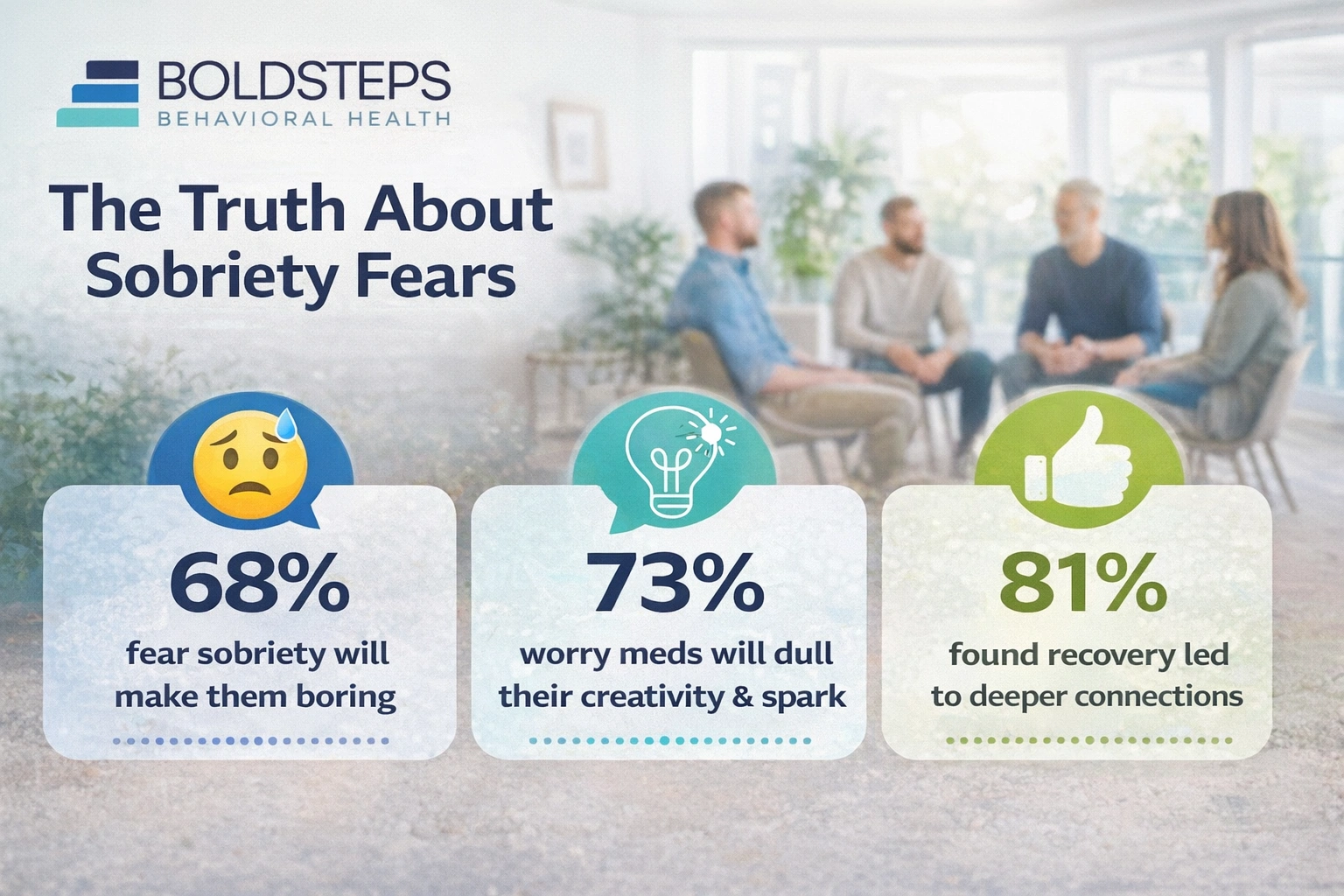
Medication Isn’t a Personality Eraser
Let’s talk about the elephant in the room.
People fear that psychiatric medication is going to make them a zombie. Blank. Numb. Unrecognizable.
That fear deserves respect. Especially for people whose identity is wired to intensity. The last thing they want is to feel like they’re being chemically muted.
But when medication is done right—carefully, collaboratively, with consent—it doesn’t erase your intensity. It helps you hold it.
We’ve worked with patients who told us flat out, “If this makes me dull, I’m done.” And we agreed with them.
Because no one wants to become easier to manage at the cost of becoming less themselves.
When it’s the right fit, medication doesn’t take over. It makes room. It quiets the noise just enough so your voice can be heard again.
The People Who Thought They’d Lose Themselves? They Didn’t.
We’ve watched musicians who were convinced they’d never perform sober step back on stage—clearer, sharper, more connected than they’d been in years.
We’ve supported writers who thought the pain was their muse begin to create from a place of stability—and produce work that was deeper, not flatter.
We’ve seen people go from dreading silence to craving it, because in that silence, they could finally hear themselves again.
In York County, Pennsylvania, one of our clients came in after years of using to “keep the party going.” They said, “If I get sober, no one will want to be around me.” Within six months, they were hosting dinners, writing again, and talking about starting a podcast. Turns out, the party didn’t die—it just stopped being fueled by fear.
In Lancaster County, Pennsylvania, another client feared their art would vanish if they gave up the substances that fueled it. But sobriety revealed the truth: their voice was never the problem. The volume was just too high to hear it clearly before.
The Truth About Being “The Fun One”
We need to say this: being “the fun one” is exhausting.
Keeping the energy up. Being the life of the party. Carrying the emotional weight of making things interesting. It can start to feel like a full-time job—especially when you’re unraveling on the inside.
A lot of people fear that if they stop using, they’ll stop being liked. Or even noticed.
But here’s the surprise most clients share after some time in treatment:
“I thought people liked me because I was wild. Now I realize they love me because I’m real.”
You don’t need to perform to be seen. You don’t need to crash to be deep. And you don’t need to stay sick to stay interesting.
FAQs From People Afraid Sobriety Will Make Them Boring
What if I lose my sense of humor?
You might lose the defensive humor—the kind that’s fast, sharp, and covering pain. But what comes back is something richer: humor that connects instead of deflects. Humor that lands without hurting.
Will I still be creative?
Yes. Often more than before. Once the dust settles, your brain starts to remember how to make things for the joy of it—not just from pressure or pain. Creative flow doesn’t die in recovery—it deepens.
Does everyone feel numb at first?
Some people feel emotionally flat in early sobriety or while adjusting to medication. That’s normal—and temporary. Your brain is finding its balance. And if something doesn’t feel right, we work with you to adjust it.
Can I still be the same “me” without the edge?
Here’s the thing: the edge doesn’t go away. It just stops cutting you. You’re still witty, passionate, fiery—you’re just not running on fumes.
What if sobriety is just… boring?
Then let’s talk about it. Because if your only definition of fun includes pain, chaos, or hangovers… maybe it’s time to redefine what being alive actually feels like.
You Can Be Bright Without Burning Out
You don’t have to pick between being interesting and being okay.
You don’t have to dim your light to be safe. You just have to stop setting yourself on fire to prove you’re still glowing.
Recovery doesn’t mean turning down the volume on your soul. It means learning how to hear it without distortion.
If you’re scared, that makes sense. We won’t ask you to let go of your identity—we’ll help you return to it.
Call 717-896-1880 to learn more about our medication assisted treatment in Harrisburg, Pennsylvania.