

You can be afraid of your pain and still be afraid of letting it go.
That’s something we wish more people knew—especially the ones walking through recovery with trauma in their history, addiction in their present, and a big question hanging over their future:
“If I finally get help… will I even recognize myself afterward?”
At Bold Steps, we see this fear all the time—particularly in people navigating both PTSD and substance use. And we get it. We don’t take it lightly. Because many of our patients aren’t just afraid of withdrawal or failure or even feeling too much—they’re afraid of feeling nothing. Of becoming dull. Of losing the edge that’s made them feel real and alive and interesting, even if it’s been slowly breaking them apart.
And when someone suggests something like medication assisted treatment—a phrase that sounds sterile and heavy—they imagine a version of themselves that’s flatlined emotionally. Disconnected. Blank. “Better,” maybe—but not them.
That fear makes sense. But it doesn’t have to be the end of the story.
The Real Grief That Recovery Can Bring
Most people expect recovery to be hard. They expect some discomfort. They expect cravings. They might even expect some loneliness.
But what few are prepared for is grief.
Not the grief of losing the substance—but the grief of letting go of the version of yourself you built to survive. The one who made people laugh with just enough bite. The one who seemed chill but secretly never slept. The one who wrote songs in the middle of the night that no one else could quite understand.
For a lot of people with PTSD, the coping mechanisms became part of their personality. Not because they were fake—but because they were functional. And when those start to fall away, you might wonder:
Who am I without the chaos?
You’re not the only one asking that. And you’re not wrong for wondering.
PTSD Isn’t Just a Wound—It’s an Identity Layer
One of the hardest things about trauma is how well it hides inside your habits.
You might think you’re just “a night owl,” when really you never learned to sleep safely. You might say, “I just have a temper,” when really, your brain was trained to respond before thinking. You might think you’re an extrovert, when in truth, you just hate the silence.
PTSD doesn’t just hurt. It reshapes. It makes survival look like personality.
So when recovery comes along and starts to unwind some of those patterns—either through therapy, sobriety, or medication—it’s not unusual to feel untethered.
You’re not broken. You’re becoming.
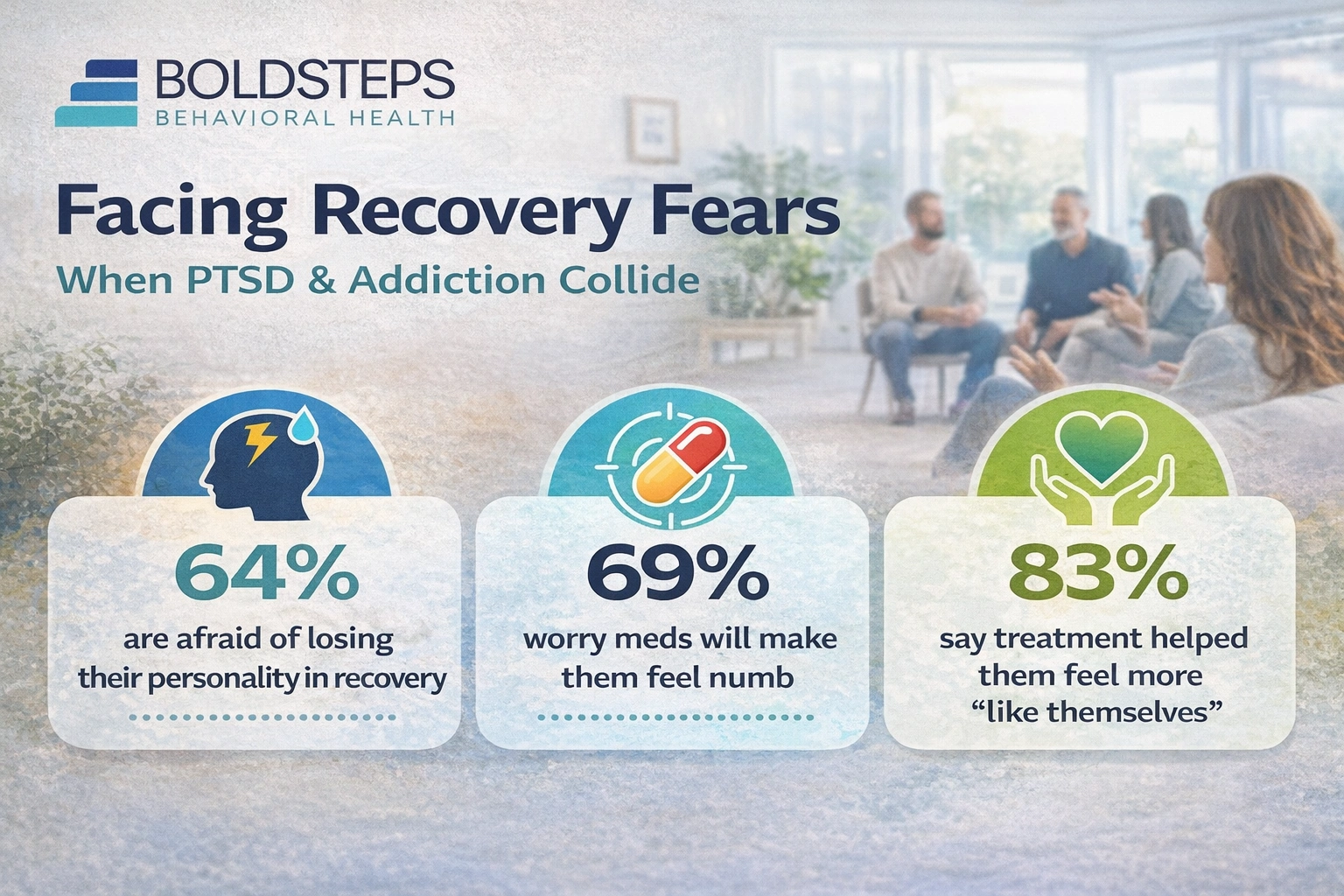
What Clients Fear About Medication—and Why We Take It Seriously
The fear that medication will take away your soul isn’t irrational.
It comes from people who value their emotional depth. Who know how to read a room. Who see art where others see noise. Who’ve used their intensity to connect, create, defend, and survive.
So when we talk about medication, we talk with people—not at them.
We don’t promise magic pills. We don’t push. And we definitely don’t treat symptoms without seeing the story behind them.
What we’ve seen in so many clients—especially those facing both PTSD and addiction—is that when the right support is in place, medication doesn’t erase their feelings.
It gives them space to feel safely. To process instead of panic. To rest instead of numb. To get through the day without gripping so tightly to the edge.
The Spark Doesn’t Disappear—It Stops Burning You
There’s this myth that sobriety, or structure, or healing, makes people less interesting. That once the crisis is gone, the color fades too.
But we’ve seen the opposite.
We’ve seen people who thought they were only funny when drunk discover they’re actually hilarious when they’re present. We’ve seen people afraid of losing their “dark creativity” begin making things that still carry depth—but now with clarity and purpose. We’ve seen people afraid of being boring in sobriety become the most magnetic, grounded person in the room—because they’re safe now. To themselves, and to others.
One client from York County, Pennsylvania came to us terrified that getting help would make them invisible. They’d spent years being “the wild one,” the unpredictable one, the one who was always a little too much but somehow still the life of every room.
But underneath that was untreated trauma—deep, old, and loud.
They said yes to treatment, slowly. Cautiously. Including medication.
And six months in? They weren’t quieter. They were clearer. They still had fire—but now, it warmed instead of burned.
Recovery Isn’t a Personality Rewrite—It’s a Homecoming
We don’t see people in treatment as needing to become someone else. We see them as slowly coming back to who they were before the fear took over.
Before trauma rewired their reactions.
Before substances became the only way to sleep, or speak, or feel.
A client from Lancaster County, Pennsylvania once said, “I thought trauma made me deep. But really, it just made everything louder.”
In recovery, they learned that depth and chaos are not the same thing. And that peace doesn’t mean passivity. It means getting to choose how you show up.
Real Things Clients Say After Choosing to Stay
“I thought meds would kill my creativity. But now I write from a place that doesn’t leave me wrecked.”
“My sense of humor didn’t go away. It got sharper—because I wasn’t performing anymore.”
“I feel like I’m finally hearing my own voice again. Not just the version I use to survive.”
“It’s not that I’m less emotional now. It’s that I’m not terrified of my emotions anymore.”
FAQs: For the Ones Still Holding Back
Will I lose my personality if I take medication?
No. If anything feels off, we address it. You stay in control. The right medication supports who you are—it doesn’t override it.
Can I still be intense without being in pain?
Yes. Intensity doesn’t have to equal instability. You can be deep, passionate, and powerful—without constantly running from fire.
What if I feel “flat” at first?
That’s a common early experience, especially after long-term substance use. But it usually shifts as your body and brain stabilize. And if it doesn’t? We adjust together.
Is it okay to miss parts of my old self?
Absolutely. It’s normal to grieve the version of you that survived. We honor that person—even as we help you build something new.
Can I say no to something that doesn’t feel right?
Always. Recovery is collaborative. You’re allowed to ask questions, speak up, and change your mind.
You Don’t Have to Disappear to Heal
If your trauma made you funny, fast, emotional, creative, or bold—you get to keep that. You deserve to keep that.
Recovery doesn’t take your soul. It gives you back your body. Your time. Your ability to pause before the spiral.
You don’t need to become someone else to feel better.
You just need support that sees who you already are—and helps you come home to that person, one piece at a time.
Call 717-896-1880 to learn more about our medication assisted treatment in Harrisburg, Pennsylvania.