

Drug detox is the first critical step toward overcoming substance use disorder. It is the process of safely eliminating toxins from the body while managing withdrawal symptoms under medical supervision. Detox is a necessary but sometimes challenging stage of recovery, and understanding what to expect can help individuals prepare mentally, physically, and emotionally for the process.
At Bold Steps Behavioral Health, we offer comprehensive addiction treatment programs designed to provide a safe and supportive detox experience, followed by continued care to maintain long-term sobriety. This step-by-step guide will walk you through what happens during drug detox, the physical and emotional challenges involved, and how continuing treatment can help ensure a successful recovery.
What is Drug Detox and Why is it Necessary?
Drug detox is the process of clearing harmful substances from the body while managing withdrawal symptoms. When a person becomes dependent on drugs or alcohol, their brain and body adjust to the presence of the substance. Stopping use suddenly can cause mild to severe withdrawal symptoms, which is why medical supervision is essential for a safe detox.
Why Detox is Necessary:
- Manages withdrawal symptoms to ensure safety.
- Prepares individuals for further addiction treatment.
- Reduces physical dependence on drugs or alcohol.
- Prevents dangerous complications such as seizures, dehydration, and heart problems.
Step-by-Step Guide to Drug Detox
Step 1: Medical Evaluation and Personalized Treatment Plan
The detox process begins with a thorough medical and psychological assessment to determine:
- Substance(s) used
- Severity of addiction
- Mental and physical health status
- Risk of severe withdrawal symptoms
What to Expect:
- Blood tests and health screenings
- Psychological evaluations for co-occurring mental health disorders
- Personalized detox plan, including medication options
This step ensures that each individual receives the right level of care to manage withdrawal symptoms safely.
Step 2: Stabilization and Managing Withdrawal Symptoms
Once detox begins, the body starts eliminating substances, leading to withdrawal symptoms. The severity and duration of withdrawal depend on the type of drug used, duration of use, and individual health.
Common Withdrawal Symptoms by Drug Type
| Drug Type | Withdrawal Symptoms | Duration |
|---|---|---|
| Opioids (Heroin, Oxycodone, Fentanyl) | Muscle pain, nausea, sweating, anxiety, cravings, insomnia | 7-10 days |
| Alcohol | Tremors, seizures, hallucinations, confusion, nausea | 3-7 days |
| Benzodiazepines (Xanax, Valium, Ativan) | Anxiety, panic attacks, seizures, dizziness, insomnia | 1-4 weeks |
| Stimulants (Cocaine, Methamphetamine, Adderall) | Fatigue, depression, agitation, intense cravings | 5-10 days |
| Marijuana | Anxiety, irritability, insomnia, appetite changes | 7-14 days |
What to Expect During Stabilization:
- Medical monitoring to prevent complications
- Medications to manage withdrawal symptoms (if needed)
- Hydration, nutrition, and vitamin therapy
- Counseling support for emotional well-being
Step 3: Medication-Assisted Treatment (MAT) in Detox
Certain medications help ease withdrawal symptoms and reduce cravings, making detox safer and more comfortable.
Common Medications Used in Detox:
- Opioid Detox: Methadone, Buprenorphine (Suboxone), Clonidine
- Alcohol Detox: Benzodiazepines (Valium, Librium), Naltrexone
- Benzodiazepine Detox: Gradual tapering, Gabapentin
- Stimulant Detox: Antidepressants, sleep aids, hydration therapy
Using medication-assisted treatment (MAT) during detox increases comfort and reduces the risk of relapse.
Step 4: Psychological and Emotional Support
Detox is not just a physical process—it also involves emotional and psychological challenges. Many people experience anxiety, depression, and mood swings during withdrawal.
Support During Detox Includes:
- Counseling and therapy sessions
- Group support meetings
- Mindfulness techniques for stress management
- Coping strategies for cravings
Step 5: Transitioning from Detox to Addiction Treatment
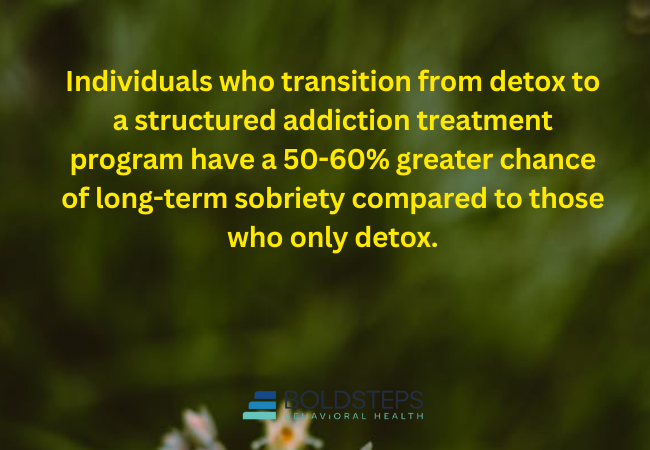
Detox alone does not cure addiction—it is the first step in the recovery process. To maintain sobriety, individuals must continue treatment through structured programs such as:
- Partial Hospitalization Program (PHP): A highly structured, full-day treatment program.
- Intensive Outpatient Program (IOP): Flexible treatment with therapy sessions several days per week.
- Outpatient Treatment Program: Long-term recovery support with scheduled counseling.
Why Continued Treatment is Crucial:
- Addresses underlying causes of addiction (trauma, mental health issues).
- Develops healthy coping strategies for long-term sobriety.
- Reduces the risk of relapse through relapse prevention programs.
At Bold Steps Behavioral Health, we help individuals transition from detox to the appropriate level of care based on their recovery needs.
Preparing for Drug Detox – Tips for a Smoother Process
If you or a loved one is preparing for detox, here are some essential tips to ensure a safer and smoother experience:
1. Set Realistic Expectations
- Withdrawal symptoms vary by substance and individual—knowing what to expect can reduce anxiety.
- Detox is not a cure but a step toward lasting recovery.
2. Seek Medical Supervision
- Do NOT attempt detox at home, especially with alcohol, opioids, or benzodiazepines, as withdrawal symptoms can be life-threatening.
- A medical detox center ensures safety and comfort.
3. Stay Hydrated and Eat Nutritious Foods
- Detoxing can cause dehydration and nutrient deficiencies.
- Drink water, herbal teas, and electrolyte-replenishing drinks.
- Eat protein-rich foods, fruits, and vegetables to aid recovery.
4. Build a Support System
- Have a trusted family member, friend, or counselor available for emotional support.
- Consider joining a support group for encouragement and accountability.
5. Focus on the Next Steps
- Detox is just the beginning—commit to continued treatment through PHP, IOP, or outpatient care.
Why Choose Bold Steps Behavioral Health for Drug Detox and Addiction Treatment?
At Bold Steps Behavioral Health, we understand that seeking help for addiction is a courageous decision, and we are committed to providing safe, compassionate, and evidence-based care for individuals on their path to recovery. Our comprehensive treatment approach ensures that every person receives the personalized care and support they need to achieve lasting sobriety.
What Sets Us Apart?
1. Medically Supervised Drug Detox for a Safe Withdrawal Process
- Our Drug Detox Center offers 24/7 medical monitoring to ensure a safe and comfortable detox experience.
- We use Medication-Assisted Treatment (MAT) when necessary to reduce withdrawal symptoms and cravings.
- Our team of experienced physicians, nurses, and addiction specialists provides individualized detox plans based on each person’s needs.
2. Comprehensive, Evidence-Based Treatment Programs
We provide a full continuum of care, ensuring that individuals have access to the right level of treatment at every stage of recovery:
- Drug Detox Center & Alcohol Detox Center – The first step toward sobriety with medically managed withdrawal.
- Partial Hospitalization Program (PHP) – A structured, intensive treatment program for individuals transitioning from detox or inpatient care.
- Intensive Outpatient Program (IOP) – Flexible treatment that allows individuals to continue recovery while maintaining work, school, or family responsibilities.
- Outpatient Treatment Program – Ongoing therapy and support for long-term sobriety and relapse prevention.
3. Personalized Care & Dual Diagnosis Treatment
- We specialize in treating co-occurring mental health disorders such as anxiety, depression, PTSD, and trauma.
- Our therapists use proven therapies like Cognitive Behavioral Therapy (CBT), Dialectical Behavior Therapy (DBT), and holistic treatments to promote emotional healing.
- Each treatment plan is customized to address the unique needs and goals of the individual.
4. Compassionate & Experienced Staff
- Our team is made up of licensed medical professionals, therapists, and addiction specialists who are dedicated to helping individuals achieve long-term recovery.
- We treat each person with dignity, respect, and care, ensuring they feel supported and empowered throughout their recovery journey.
5. A Supportive, Judgment-Free Environment
- We understand that addiction is a disease, not a choice, and we are here to help—not judge.
- Our welcoming and supportive environment fosters a sense of community, encouragement, and belonging.
- We believe in healing the whole person—mind, body, and spirit—through a combination of clinical, holistic, and peer-supported approaches.
6. Relapse Prevention & Aftercare Support
- Recovery doesn’t end after detox or rehab—that’s why we offer ongoing aftercare support, relapse prevention planning, and alumni programs.
- We help individuals build coping strategies, develop a strong support system, and transition smoothly back into daily life.
7. Flexible & Accessible Treatment Options
- We accept most major insurance plans and offer affordable self-pay options.
- Our team assists with insurance verification and financial planning to help individuals access the care they need.
- We offer flexible scheduling for outpatient treatment to accommodate work, school, and family obligations.
Conclusion
Drug detox is the first step toward recovery, helping individuals safely manage withdrawal symptoms and prepare for long-term sobriety. While detox can be challenging, medical support, emotional care, and proper treatment planning make the process safer and more manageable.
At Bold Steps Behavioral Health, we provide safe, effective detox services and ongoing treatment programs to help individuals build a strong foundation for lifelong recovery. Call (717) 702-6335 today to begin your journey to a healthier, addiction-free life.
FAQ on Drug Detox
How long does drug detox take?
Detox typically lasts 5-10 days, but the duration varies based on the substance used and individual health.
Can I detox at home?
Detoxing at home can be dangerous and life-threatening, especially for alcohol, opioids, and benzodiazepines. Medical supervision ensures safety and comfort.
What happens after detox?
After detox, individuals should enter an addiction treatment program such as PHP, IOP, or outpatient care to prevent relapse and address the root causes of addiction.
Does insurance cover drug detox?
Many insurance plans cover detox and addiction treatment programs. Call 717.896.1880 for insurance verification and treatment options.