

People thought I had it all together.
I had a good job. The kind that sounded impressive at parties. A relationship that looked happy from the outside. A house with string lights and expensive cookware. I always brought the “nice wine” to gatherings and remembered birthdays. I replied to texts. I smiled in photos. I even posted inspirational quotes on Monday mornings.
But every night, I drank.
Sometimes a little. Sometimes a lot. Always enough to take the edge off. Always alone.
I wasn’t falling down drunk. I wasn’t losing things. Not yet. But I was drifting—mentally, emotionally, spiritually. The only person who saw how far I was slipping was me.
And even I was trying not to look.
I Looked Like I Was Managing. Inside, I Was Drowning.
The phrase “high-functioning alcoholic” gets thrown around casually. I used it like a joke: “Oh, I’m just a high-functioning mess.”
What I meant was: I’m unraveling quietly.
I kept up with work. No one ever smelled alcohol on my breath. I wasn’t skipping bills or blacking out at events. I’d never been arrested. I never called off sick.
But here’s what they didn’t see:
- I was drinking every night, sometimes just to sleep.
- I was hiding empty bottles under the recycling.
- I was checking texts in the morning to see what I’d said.
- I was so tired. All the time.
And no matter how much I accomplished, I always felt like I was failing at something invisible.
I Didn’t Hit Rock Bottom. I Slid Into Numbness.
There was no big moment. No crash. Just a slow disconnection from the person I remembered being.
I was becoming someone who:
- Needed two drinks just to feel normal
- Avoided mirrors at night
- Lied to doctors and minimized everything
- Dreaded weekends because it meant more drinking, more pretending
And still, I told myself it wasn’t “bad enough” to ask for help.
It wasn’t until I googled “Can you get treatment without going away?” at 2 a.m. that I realized I didn’t have to wait for disaster.
That’s how I found out about something called an intensive outpatient program—and how I finally stopped pretending.
This is the IOP that helped me in Harrisburg. Maybe it can help you too.
IOP Was the Support I Didn’t Know I Was Allowed to Need
The first call felt impossible. I rehearsed it. Deleted it. Paced around the kitchen. But I finally picked up the phone.
And no one acted shocked. No one asked me to prove I needed help. They just said, “We’re really glad you called.”
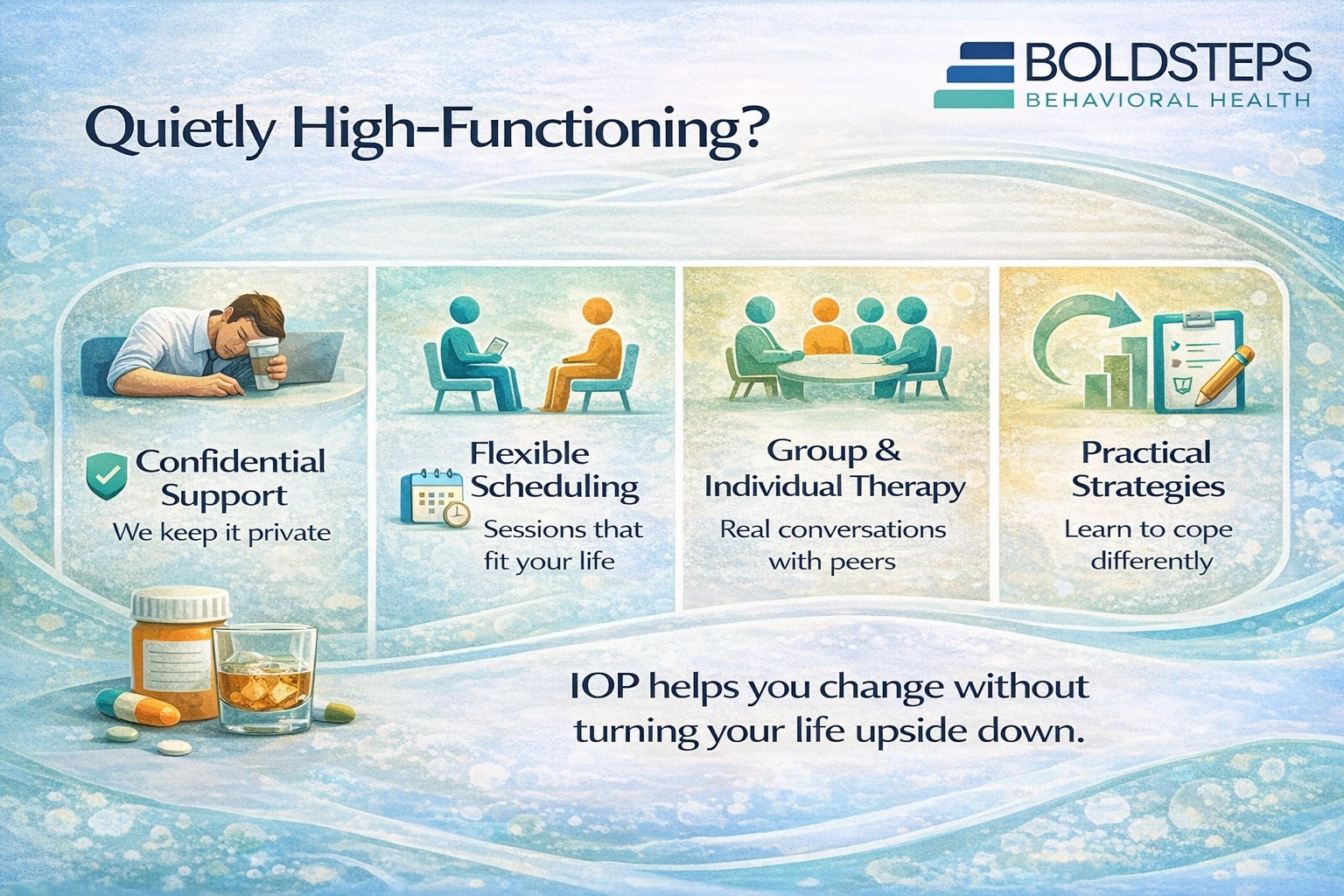
They explained that an IOP—intensive outpatient program—was for people who didn’t need detox or residential care but still wanted real support. Group sessions. Therapy. Structure. Accountability.
And flexibility. I wouldn’t have to leave my job or explain my absence to friends or family if I wasn’t ready to.
That mattered more than I can explain. I wasn’t ready for the world to know. But I was ready to not feel so alone.
What IOP Gave Me: A Place to Drop the Mask
I expected clinical coldness. Instead, I found relief.
In group sessions, I sat next to people like me. People who had jobs, families, goals—and secrets. One guy was a teacher. One woman was in finance. One ran a small business.
We talked about guilt. Control. The effort it takes to look okay when you’re not.
Nobody asked us to hit bottom to belong. We were allowed to just be… tired.
That’s what IOP gave me: permission to stop performing. To say, “I’m struggling,” and have someone nod instead of look surprised.
I Stopped Measuring Myself Against the Stereotypes
For a long time, I thought “real addiction” looked a certain way.
I thought people in treatment had DUIs or were unhoused or were in withdrawal. I thought being smart or successful meant I couldn’t be “that bad.”
But that belief kept me stuck.
Addiction isn’t about how things look. It’s about how they feel. And I felt numb, lonely, and like I was disappearing from my own life.
Being high-functioning doesn’t mean you’re fine. It just means you’ve gotten good at hiding.
IOP Helped Me Rebuild—Without Losing Everything
One of my biggest fears was that getting help would blow up my life.
That I’d have to tell everyone. That I’d lose my job. That I’d unravel publicly.
Instead, I unraveled safely.
I kept my job. I made my meetings. I drank less. Then not at all. I learned to sleep without numbing myself first.
IOP didn’t fix me. It supported me—so I could do the real work with clarity.
And for the first time in years, I started to like the person who showed up to their own life.
Looking for an intensive outpatient program in Harrisburg?
If you’re in York County, Dauphin County, or nearby in Lancaster County, Bold Steps offers an intensive outpatient program that’s confidential, flexible, and made for people who look “fine” on the outside but feel anything but.
You don’t need to wait until everything falls apart. You don’t have to crash your car or lose your job to be allowed to ask for help.
You can just be tired. Numb. Ready for something different.
We’ll meet you there.
FAQ: High-Functioning Addiction and IOP
What is a high-functioning alcoholic or addict?
Someone who maintains their job, relationships, and responsibilities—while quietly struggling with substance use. They often minimize the problem because “nothing’s gone wrong yet.”
Do I need detox to go to IOP?
Not necessarily. IOP is designed for people who are medically stable but still need structured support. If you’re not in withdrawal but want help, IOP might be right for you.
Will I have to quit my job or take time off?
No. Many IOPs offer evening sessions or flexible schedules so you can keep working while attending treatment.
Do I have to tell my employer?
Only if you choose to. IOP at Bold Steps is confidential. We’ll work with you to build a schedule that fits your life and your privacy needs.
What if I’m not sure I’m “bad enough” to need help?
If you’re asking the question, it’s probably worth a conversation. You don’t need to hit bottom to deserve support.
Ready to stop pretending you’re fine?
Call 717-896-1880 to learn more about our intensive outpatient program in Harrisburg, PA. You don’t have to fall apart to start healing. You just have to stop hiding—and we’re here when you do.