

You don’t wake up one day and suddenly “decide” to quit.
For most people, the thought starts as a whisper. A restless feeling. A small nudge that maybe, just maybe, life would feel a little better—less scattered, less anxious, less self-critical—without alcohol in the mix.
But then that whisper meets the wall of forever.
And suddenly, what felt like curiosity turns into panic:
What if I fail? What if I can’t do this forever? What if I don’t even want to?
If that sounds familiar, this isn’t a sign you’re not ready. It’s a sign you’re honest. And that’s exactly where real change begins.
We’ve worked with people all across the sober spectrum—from those quietly curious about their relationship with alcohol to those ready to stop but unsure how.
This blog is for you—the one still sorting through the “what ifs,” but also wondering what life could look like if you just took one small step toward healing.
You’re Not Broken for Feeling Unsure
There’s a reason the idea of long-term recovery can feel so overwhelming: because it is.
Changing how you cope, socialize, connect, and unwind? That’s not a weekend project. It’s a full-body shift. And it takes courage—especially if alcohol hasn’t “ruined” your life, but has definitely made it harder to show up fully.
This is the gray area so many people live in—where things aren’t rock bottom, but they’re also not sustainable. Where you’re high-functioning but low in peace. Where you can technically manage, but inside you feel like something’s missing.
Choosing to explore recovery from this place isn’t weakness. It’s wisdom.
And if you’re navigating that emotional tension in York County, Pennsylvania, there are options that don’t force you into extremes—they support your next honest step.
Long-Term Sobriety Doesn’t Have to Be the First Goal
Let’s reframe the word forever.
Because for someone in an emotionally raw place, forever feels like a trap. Like signing a contract you don’t fully understand.
That’s why many sober-curious people freeze at the starting line.
Instead of chasing permanence, what if your goal was something smaller—something you could actually reach today?
- What if your first step was one honest conversation?
- What if it was seven days without drinking, just to see how your body feels?
- What if it was showing up to a group and just listening?
These aren’t small steps. They’re brave ones. And they’re often more sustainable than making declarations you’re not emotionally ready to fulfill.
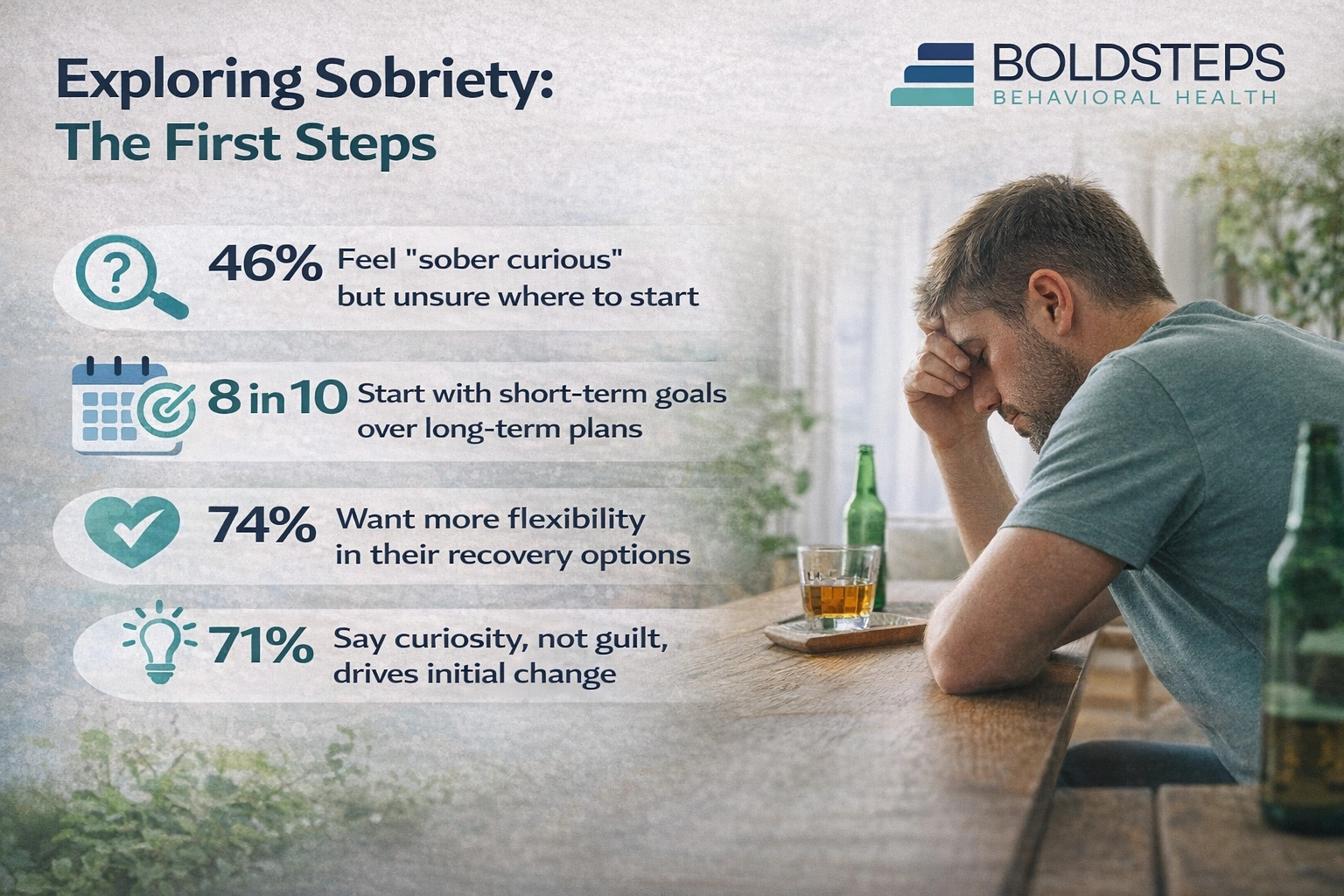
Let Curiosity Guide You—Not Guilt
One thing we say a lot at Bold Steps is: Curiosity is more powerful than shame.
You don’t have to hate alcohol to want a break from it.
You don’t have to hit bottom to question your patterns.
And you definitely don’t have to carry guilt in order to grow.
We’ve helped people who were quietly exhausted by their weekend habits. People who never blacked out but hated how they felt after drinking. People who didn’t want to stop socially drinking, but did want to stop needing it just to be okay.
Every single one of them started with curiosity. That’s it.
And that was enough.
Understand That Stability Feels Intimidating at First
If you’re someone who’s never felt stable before—emotionally, mentally, or physically—the idea of “long-term anything” can sound terrifying.
But what if stability didn’t mean perfection?
What if it meant:
- Having support on days when your confidence is low
- Learning how to sit with hard feelings without numbing them
- Knowing what helps you calm down that isn’t a drink
- Feeling more in control—not more restricted
That’s what we build with clients who enter programs like alcohol addiction treatment through a sober-curious lens.
It’s not about demanding commitment. It’s about offering consistency, one day at a time, until it feels like something you want to keep choosing.
If you’re navigating these early questions from Harrisburg, Pennsylvania, know that nearby programs are designed to honor this slower, gentler path into recovery. You’re not required to show up convinced—just open.
Choose a Format That Matches Your Readiness
One of the biggest misconceptions about getting support is that it only comes in all-or-nothing formats.
In reality, treatment today offers flexibility for people who are working, parenting, caregiving, or simply unsure how much they want to commit.
Here are a few ways people explore without pressure:
- Multi-day weekly treatment: A structured but non-residential format that lets you stay connected to your everyday life while building healthy routines.
- Outpatient counseling: One-on-one sessions with a therapist who can help unpack the emotional layers underneath your drinking patterns.
- Peer-based recovery groups: Community spaces where being “sober curious” is not only welcome, it’s common.
- Holistic support services: Including yoga, meditation, nutritional support, and trauma-informed care that meet the mind and body together.
Whether you want to fully pause drinking or just change your relationship to it, treatment options in Pennsylvania exist to help you explore—not pressure you.
Track the Small Wins That Matter
When you’re used to high-functioning chaos, it’s easy to overlook progress.
But recovery isn’t measured in years. It’s measured in moments:
- The night you chose to stay home and rest instead of going out to drink.
- The morning you remembered everything clearly.
- The conversation you had with someone where you actually felt present.
Tracking these moments—writing them down, even just mentally noting them—can remind you that change is happening, even when it feels slow.
Long-term stability is built from thousands of small decisions. Yours have already started.
FAQs: When You’re Exploring Sobriety Without All the Answers
What if I’m still drinking—can I still reach out for help?
Absolutely. You don’t have to be sober to begin exploring sobriety. Support is available before, during, and after change—not just after a decision has been made.
What if I’m not sure I want to quit completely?
That’s okay. Many people start by examining their relationship with alcohol, not ending it entirely. Curiosity is enough to begin.
Are there programs that won’t pressure me to label myself?
Yes. Especially ones that take a whole-person approach. You don’t need to identify as an “alcoholic” to receive compassionate, tailored care.
Will I lose my social life if I go sober?
Change is real—but so is connection. Many people find their relationships deepen in sobriety, especially as they learn how to show up more authentically.
What if I’m scared of failing?
That fear is normal. But failing isn’t the opposite of healing—hiding is. The moment you reach out, you’ve already disrupted the cycle. That matters.
One Step Doesn’t Have to Mean Forever—It Just Has to Be Now
If you’re still scrolling, still wondering, still thinking, “Could I actually do this?”—you’re already in motion.
Your questions are valid.
Your doubts are welcome.
And your desire to feel better, even if you don’t know what that looks like yet, is enough.
When you’re ready, you won’t need to have the whole plan. You’ll just need a safe place to begin.
Let your curiosity lead—support will meet you there.
Call 717-896-1880 or visit our alcohol addiction treatment in in Harrisburg, Pennsylvania to talk to someone who understands. We don’t need you to be sure. Just ready to ask.