

You watched them try.
Maybe it was a few weeks in a program. Maybe it was months sober. They texted you more, slept better, cracked a few real smiles. For a while, you saw glimpses of the child you used to know.
And then, slowly, something shifted.
You started to hear the same tension in their voice. Their sleep got erratic again. The calls became less frequent—or more defensive. Then came the admission, or maybe the discovery: they’d used again.
If you’re a parent watching a 20-something return to alcohol after what seemed like progress, it’s easy to assume they weren’t ready. Or didn’t care. Or just didn’t take recovery seriously.
But there’s another possibility. One we see every day.
They might be trying to stay sober while living with untreated, or undertreated, anxiety.
And that combination—sobriety without emotional regulation—can make recovery feel impossible.
Here are three key signs that your child’s journey may need both substance use and anxiety support in order to truly move forward.
They’re “Clean” But Not Calmer
This is often the first thing parents notice.
Your child isn’t drinking, but they’re still not okay. They’re agitated, avoidant, overwhelmed, or emotionally shut down. The recovery process isn’t bringing peace—it’s just removing the numbing.
And in that space, everything feels louder.
We hear this all the time:
- “My kid isn’t drinking, but they’re still miserable.”
- “They’re going to meetings, but they’re not getting better.”
- “They seem anxious all the time—even worse than before.”
Sobriety strips away the substance, but it doesn’t erase the root cause. If your child has been using alcohol to cope with panic, social anxiety, unresolved trauma, or chronic stress, they may be left with a flood of unfiltered emotion.
That’s where anxiety-informed care matters.
Without it, sobriety becomes a pressure cooker. And eventually, something gives.
If you’re supporting a child in recovery in Lancaster County, Pennsylvania, look for programs that offer emotional support alongside sobriety-focused care. Because recovery without relief isn’t sustainable—it’s just survival.
They Keep Saying, “I Don’t Know Why I Did It”
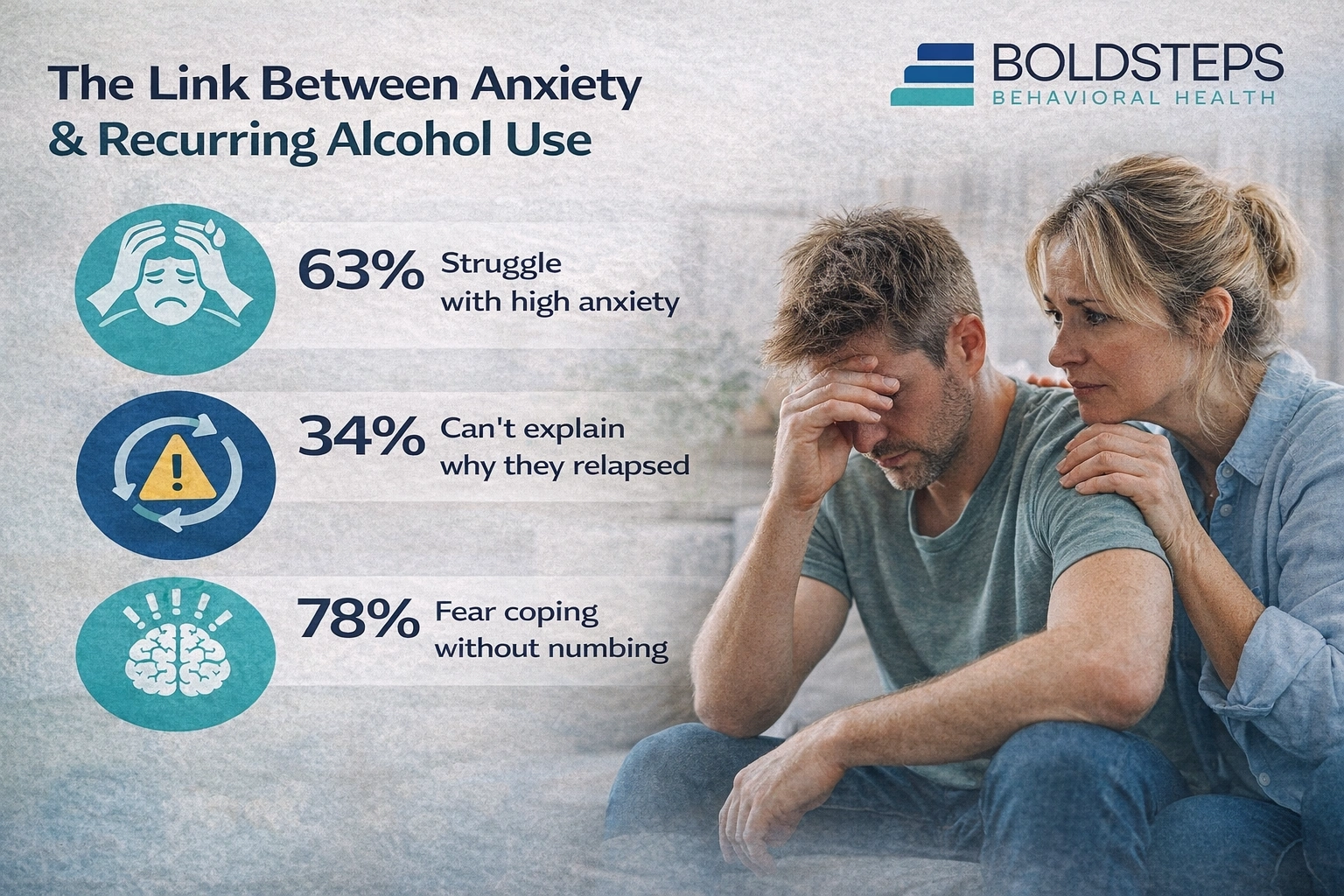
When your child relapses, one of the most frustrating responses they can offer is this: “I don’t know.”
Not angry. Not rebellious. Just… blank.
It’s painful to hear—because you’re trying to understand. You want to help. You want a reason.
But for many young adults, relapse happens not because of logic, but because of emotion. Specifically, emotional overwhelm they don’t know how to name.
Unmanaged anxiety can feel like:
- Dread with no source
- Chest tightness that won’t release
- Sleep that won’t come—or won’t stay
- Irritability that turns into shame
- Social withdrawal that feels safer than connection
When anxiety builds and no one’s taught you how to manage it, the body starts looking for any kind of off-switch.
And alcohol still knows where that switch is.
Relapse doesn’t always signal resistance. Sometimes, it’s your child’s nervous system sounding the alarm.
Programs that understand this—like alcohol addiction treatment that integrates mental health—can help your child reconnect the dots. Not just “what happened,” but “why does this keep happening?”
They Can’t Imagine Coping Without Numbing
One of the hardest things for parents to accept is that your child may be afraid to feel.
You may see this as avoidance. Excuses. Moodiness. But what’s underneath is often more complicated—and more human.
For many young adults, alcohol has been a coping tool for years. Even before it became destructive, it was the thing that:
- Helped them breathe in social situations
- Turned down the volume on racing thoughts
- Made anxiety feel manageable
Take it away, and what’s left?
Rawness. Noise. Vulnerability.
If your child seems terrified of therapy, resistant to groups, or unable to engage with their emotions, it may not be denial. It might be fear. Especially if no one has taught them how to regulate their anxiety without numbing it first.
We work with clients every week who arrive saying, “I don’t want to go back to drinking, but I don’t know what else to do when I feel this way.”
The solution isn’t more discipline. It’s more support. Specifically, support that helps them build emotional tolerance—so they don’t have to turn to alcohol to make feelings bearable.
That kind of care exists. And if you’re navigating these questions in Dauphin County, Pennsylvania, you don’t have to travel far to find programs that treat substance use and anxiety as interconnected—not separate.
Why Traditional Recovery Alone Often Falls Short
Many well-meaning programs focus on abstinence first. But without addressing the anxiety that drove the use in the first place, the success rate drops.
Imagine asking someone to stop using crutches when their leg still isn’t healed.
That’s what recovery can feel like without anxiety support.
Real healing asks: What pain is this substance helping you avoid? Then it gives tools to face that pain differently.
Programs that integrate trauma-informed therapy, medication support, mindfulness practices, and personalized coping strategies tend to offer more durable recovery—especially for young adults.
Your child may not need more rules. They may need more regulation.
FAQs for Parents Noticing Emotional Gaps in Recovery
How do I know if my child’s anxiety is fueling their relapse?
Look for patterns. Do they relapse after conflict, stress, or major transitions? Do they report physical symptoms like panic or insomnia even while sober? That’s a strong indicator.
Can treatment really address both anxiety and alcohol use at the same time?
Yes—and it should. Programs that treat these together often lead to better outcomes. Ignoring one makes it harder to stabilize the other.
What if my child doesn’t think their anxiety is a problem?
That’s common. Many people normalize their anxiety or don’t realize how much it’s affecting them until they begin treatment. A clinician can help gently explore that resistance.
Should my child be on medication for anxiety in recovery?
It depends. Not all medications are appropriate, but some non-addictive options can be helpful. A dual-trained provider can walk through the risks and benefits with you and your child.
How can I support my child emotionally without enabling?
Support means staying present and honest without rescuing. It’s okay to say, “I see how hard this is—and I want to help you find support that fits what you’re dealing with.”
You’re Not Failing as a Parent—You’re Facing a Complex Truth
Watching your child relapse—or even struggle in early recovery—is heartbreaking. It’s easy to internalize their pain as your failure.
But here’s what we want you to hear:
You didn’t cause this.
You can’t cure this alone.
And you’re not imagining things when you sense that something more is going on beneath the drinking.
When anxiety and alcohol use are treated together, everything starts to make more sense. Your child isn’t just trying to stay sober—they’re learning how to stay regulated, connected, and safe in their own body.
That’s when healing gets real. That’s when relapse stops being inevitable.
And that’s when you finally get to see your child not just sober—but okay.
Let’s find what’s been missing—and help them stay grounded.
Call 717-896-1880 or visit our alcohol addiction treatment in in Harrisburg, Pennsylvania to learn how dual-focused care can support your child’s recovery—with anxiety support built in from the start.