

You didn’t miss work.
You didn’t forget a deadline.
You didn’t drop the ball in any obvious way.
And that’s exactly why you keep telling yourself this isn’t a problem.
From the outside, your life still runs. People rely on you. You show up. You handle things.
But there’s a quieter truth underneath all of it—one that doesn’t show up on a calendar or in a performance review.
You’re holding it together. But it’s taking more out of you than anyone can see.
If you’ve ever found yourself wondering whether you need something like heroin addiction treatment support, only to immediately dismiss it because “things aren’t that bad,” this is where we need to slow down.
Because “not that bad” can still be unsustainable.
You Didn’t Fall Apart—You Adapted Around It
Most people expect addiction to look like collapse.
That’s not what this is.
You adapted.
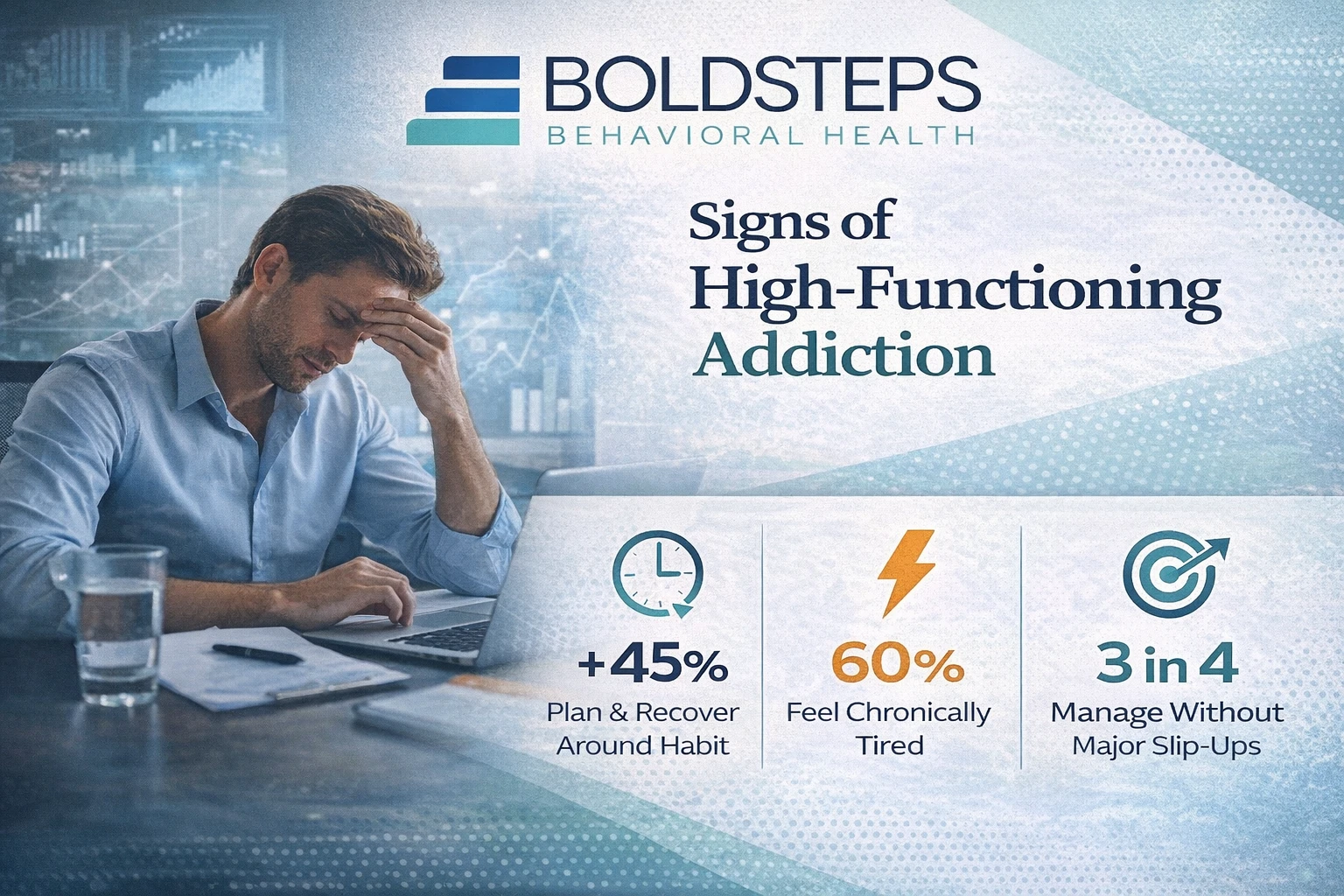
You built routines that allow you to keep functioning:
- You plan your use carefully
- You recover just enough to stay sharp
- You adjust your schedule to avoid overlap
From the outside, it looks like control.
But clinically, what we’re seeing is compensation.
You’ve created a system where your life absorbs the impact—so nothing breaks right away.
That system works… until it doesn’t.
The Stability You’re Proud Of Is Doing Double Duty
The same discipline that helps you succeed is also helping you hide this.
You’re organized. You’re reliable. You know how to push through discomfort.
Those traits don’t disappear in addiction—they get repurposed.
Instead of protecting your well-being, they protect the pattern.
You’re not avoiding consequences.
You’re delaying them.
The Cost Isn’t Loud—It’s Constant
This is where people like you get overlooked.
Because nothing dramatic is happening.
But if we look closer, there’s a pattern:
- You’re more tired than your schedule justifies
- You feel mentally split—part of you present, part of you managing something else
- You don’t fully relax without it
- You think about it more than you want to admit
This isn’t collapse.
It’s erosion.
Slow, quiet, and easy to ignore until it isn’t.
You’re Running Two Lives at Once
One is visible.
It’s the version people see—the one that functions, produces, responds, delivers.
The other is internal.
It’s the one that tracks timing, manages supply, calculates risk, and constantly adjusts.
Running one life is already demanding.
Running two is exhausting.
And eventually, the overlap becomes harder to manage.
The Thought You Don’t Say Out Loud
There’s usually a moment—small, easy to dismiss—where something honest slips through:
“I don’t know how long I can keep this up.”
That thought matters.
Not because everything is falling apart.
But because something in you is starting to recognize the strain.
Most people push that thought away.
But clinically, that’s often the beginning of clarity.
The Financial Question Is a Barrier—But Not Always a Real One
Even if you’ve never said it directly, it’s there:
“If I did need help… could I even afford it?”
That question alone keeps a lot of high-functioning people stuck in place.
But here’s where assumptions tend to be wrong.
Many individuals are surprised to learn that Medicaid rehab coverage Pennsylvania can open doors they didn’t think were available.
The barrier isn’t always cost.
Sometimes it’s the belief that cost will be the barrier.
You’re Waiting for a Breaking Point That May Never Come
You’ve probably told yourself:
“If it gets worse, I’ll deal with it.”
But high-functioning addiction doesn’t always give you a clean “worse.”
It stretches things out.
You can maintain this version of life—where everything technically works—for a long time.
But that doesn’t mean it’s stable.
It means you’re carrying the weight longer than most.
In Communities Like Yours, This Pattern Is Quietly Common
This isn’t rare.
In places like Lancaster County, Pennsylvania, and York County, Pennsylvania, there are people maintaining careers, families, and responsibilities—while quietly managing the same internal strain.
They don’t look like the stereotype.
They look like you.
And that’s why it goes unnoticed for so long.
You Don’t Need External Consequences to Justify Internal Change
This is where a lot of people get stuck.
They wait for something visible:
- A mistake
- A confrontation
- A loss
But internal cost is still cost.
If something is:
- Taking your energy
- Occupying your thoughts
- Controlling your choices
Then it’s already significant.
You don’t need proof beyond that.
The Exhaustion You Feel Isn’t About Work
It’s deeper.
It’s the exhaustion of:
- Managing perception
- Negotiating with yourself
- Keeping everything aligned just enough
That kind of fatigue doesn’t go away with rest.
Because rest doesn’t remove the system you’re maintaining.
What Change Actually Looks Like for Someone Like You
It’s not about walking away from your life.
It’s about adjusting how you’re supported within it.
That might mean:
- Structured daytime care that fits around responsibilities
- Multi-day weekly treatment that builds stability without disruption
- Or, in some cases, more immersive support if things are further along
Even exploring care in Pennsylvania can help you understand what’s possible—without committing to anything immediately.
This isn’t about losing control.
It’s about regaining it.
The Shift Isn’t Dramatic—It’s Honest
People expect a moment of crisis.
What actually happens is quieter.
A sentence, usually internal:
“I can keep doing this… but I don’t want to anymore.”
That’s it.
That’s the shift.
Not desperation.
Recognition.
You’re Not “Fine”—You’re Functioning Under Pressure
And those are not the same thing.
Functioning means you’re meeting expectations.
Being well means you’re not constantly managing something underneath those expectations.
Right now, you’re doing both.
And that dual effort is what’s wearing you down.
The Question That Matters More Than “Is This Bad Enough?”
Instead of asking:
“Is this serious enough?”
Try asking:
“How long do I want to keep living like this?”
That question is harder to avoid.
Because it’s not about external standards.
It’s about your internal experience.
You Can Keep This Going—But It Will Keep Taking
That’s the trade.
You maintain your life.
But it costs you:
- Energy
- Focus
- Honesty with yourself
Over time, that cost increases.
Not suddenly.
Gradually.
Until something shifts.
Frequently Asked Questions
If I’m still functioning, is this really addiction?
Functioning doesn’t rule out addiction. If your use is something you rely on, plan around, or feel unable to stop, it’s worth taking seriously.
Do I need to hit rock bottom before getting help?
No. Waiting for a crisis often makes things harder to address. Early action can prevent deeper consequences.
What if I can stop when I want?
That belief is common. But if you haven’t tested it—or if stopping feels more complicated than expected—it’s worth exploring further.
Will treatment disrupt my life completely?
Not necessarily. Many options are designed to support people who are still working and managing responsibilities.
Is cost always a barrier?
Not always. Options like Medicaid rehab coverage Pennsylvania can make treatment more accessible than many people assume.
What’s the first step if I’m unsure?
Start with information. You don’t need to commit. Understanding your options is a step forward on its own.
You Already Know This Isn’t Sustainable
This isn’t new information.
You’ve felt it in moments you don’t talk about.
When things get quiet.
When the distraction fades.
When you’re left with the reality of how much effort this takes.
That awareness doesn’t mean everything is falling apart.
It means you’re starting to see things clearly.
You Don’t Have to Wait Until It Breaks
You’ve built something that works.
That doesn’t have to disappear.
But it also doesn’t have to stay tied to something that’s quietly draining it.
You’re allowed to choose something more stable—before instability forces your hand.
And that choice doesn’t make you weak.
It means you’re paying attention.
If this feels familiar, it’s worth taking seriously—not later, not when something forces it, but now.
Call 717-896-1880 or visit our heroin addiction treatment in Harrisburg, Pennsylvania to learn more about our addiction treatment options.