

I remember sitting there thinking, “I did it. So why does this feel so empty?”
No chaos. No using. No crisis.
Just a quiet kind of disconnection I didn’t expect.
I had already gone through treatment. I had stayed sober. By every external measure, I was “doing well.” But internally, it felt like I was back at the beginning—trying to figure out who I was and why none of this felt like enough.
If you’ve been there—or you’re there now—you’re not alone. And more importantly, you’re not doing recovery wrong.
If anything, you’re finally getting to the part that actually matters.
You Finished Treatment—But Something Didn’t Fully Land
There’s this belief that once you graduate from treatment, things should start to feel better in a steady, upward way.
You’ve done the work. You’ve removed the substance. You’ve built some structure.
So why does it still feel like something’s missing?
Because treatment stabilizes you.
It helps you stop. It helps you reset.
But it doesn’t automatically rebuild the emotional, psychological, and identity-level pieces that were impacted over time.
That part comes later—and it’s less structured, less obvious, and often more uncomfortable.
Sobriety Took the Noise Away—but Also the Numbness
When you first get clean, everything is loud.
Cravings. Emotions. Thoughts.
Then, over time, things quiet down.
But sometimes… they quiet down too much.
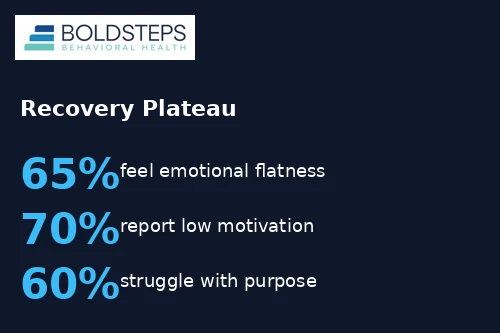
You’re no longer overwhelmed—but you’re not exactly connected either.
You might feel:
- Flat, like your emotional range shrunk
- Restless, but without direction
- Disconnected from people, even when you’re around them
- Unsure what actually makes you feel good anymore
That middle space—where you’re sober but not fully alive—is one of the least talked about parts of recovery.
And it can make you question everything.
You Outgrew Survival Mode—But Haven’t Built the Next Version Yet
Early recovery is about survival.
You’re focused on:
- Not using
- Staying consistent
- Avoiding triggers
- Keeping your life from slipping
That version of you is necessary.
But it’s not permanent.
At some point, survival mode stops feeling like enough.
You start asking different questions:
- “What actually matters to me now?”
- “Who am I without all of that?”
- “Why does everything feel so… neutral?”
Those questions don’t mean something’s wrong.
They mean you’ve reached the next phase.
Why It Feels Like You’re Starting Over Again
Because in a very real way—you are.
Not from scratch.
But from a deeper level.
You’ve removed the substance. Now you’re left with:
- The emotional patterns underneath it
- The identity you haven’t fully rebuilt yet
- The habits that didn’t get fully addressed in early recovery
This isn’t regression.
It’s exposure.
You’re seeing what was always there—without the buffer.
And that can feel like starting over, even though it’s actually moving forward.
The Kind of Support You Needed Then Isn’t the Same Now
This is where a lot of long-term alumni get stuck.
You think:
“I already did treatment. Why would I go back?”
Because you’re not the same person you were then.
What you needed at the beginning was stabilization.
What you might need now is depth.
That could look like:
- More focused mental health support
- Structured daytime care that helps you re-engage
- Conversations that go beyond staying sober and into building a life
Even topics like Suboxone vs methadone can come up differently now—not as emergency decisions, but as part of long-term stability and support planning.
You’re not repeating the process.
You’re evolving it.
The Plateau Is Real—and It’s Where People Drift
There’s a phase in recovery where nothing dramatic is happening.
No crisis. No breakthroughs. No big changes.
Just… maintenance.
And for a while, that feels like success.
Then it starts to feel like stagnation.
This is where people quietly disconnect:
- Meetings feel repetitive
- Conversations feel surface-level
- Motivation drops without a clear reason
Not because recovery stopped working.
Because it needs to deepen.
You’re Allowed to Want More Than Just “Not Using”
This is one of the hardest shifts to accept.
Because for a long time, not using was the goal.
And now you’ve achieved it.
So what comes next?
You’re allowed to want:
- A sense of purpose
- Real connection
- Emotional depth
- A life that feels meaningful—not just manageable
If those things feel missing, it doesn’t mean you failed.
It means you’re ready for more.
Coming Back Isn’t a Step Back—It’s a Step Deeper
There’s a stigma even within recovery about needing more support later.
Like you should have it figured out by now.
But recovery isn’t a one-time event.
It’s a process that changes as you do.
Exploring additional support—even something like heroin addiction treatment support again—doesn’t erase your progress.
It builds on it.
Even looking into support in Pennsylvania can help you reconnect with what recovery needs to look like now—not what it looked like before.
This Quiet Disconnection Is More Common Than You Think
A lot of people don’t talk about this phase.
Because it doesn’t look dramatic.
But in places like Harrisburg, Pennsylvania, and York County, Pennsylvania, there are people walking around sober, functional—and quietly disconnected in the same way.
They’re not using.
But they’re not fully living either.
And that in-between space is where a lot of important work happens.
The Honest Truth: This Is Where Recovery Becomes Real
Anyone can stop for a period of time.
But learning how to build a life that actually feels worth staying sober for?
That’s different.
That’s deeper.
And that’s what you’re facing now.
It’s not failure.
It’s the next layer.
You’re Not Back at the Beginning—You’re Just Seeing More Clearly
It feels like starting over because you’re facing things without distraction.
Without numbing.
Without avoidance.
But you’re not starting from zero.
You have:
- Experience
- Awareness
- Tools you didn’t have before
Even if they feel distant right now, they’re still there.
What Moving Forward Actually Looks Like
Not a dramatic reset.
Not a complete overhaul.
Just honest steps.
That might mean:
- Reaching back out for support
- Trying a different type of care
- Being honest about how you actually feel—not how you think you should feel
Progress here is quieter.
But it’s real.
Frequently Asked Questions
Is it normal to feel disconnected after long-term sobriety?
Yes. Many people experience a plateau or emotional flatness after the initial stages of recovery. It’s a sign that deeper work may be needed.
Does this mean my treatment didn’t work?
No. Treatment helped you get stable. What you’re feeling now is about what comes after stability—not a failure of what came before.
Why does it feel like I’m starting over?
Because you’re addressing deeper layers now—identity, purpose, and emotional connection. That can feel like a reset, but it’s actually growth.
Should I go back to treatment even if I’m not using?
In some cases, yes. Additional support can help you move through this phase and reconnect with your recovery in a more meaningful way.
How do I know what kind of support I need now?
Start by identifying what feels missing—connection, purpose, emotional depth—and explore options that align with those needs.
Is it common to revisit topics like medication later in recovery?
Yes. Conversations around things like Suboxone vs methadone can evolve over time, especially when focusing on long-term stability.
You Don’t Have to Stay Stuck in This Version of Recovery
This phase can feel confusing.
Because nothing is obviously wrong—but something isn’t right either.
And it’s easy to stay here.
To maintain. To coast. To avoid looking deeper.
But you don’t have to.
You’re allowed to want more from your recovery.
You’re allowed to feel like something’s missing—and go find it.
This Isn’t the End of Your Progress—It’s the Beginning of Something More Honest
The version of you that got sober did something incredibly hard.
But that version doesn’t have to carry everything forever.
You’re allowed to grow past it.
To redefine what recovery means.
To build something that doesn’t just keep you stable—but actually makes you feel alive again.
If this feels like where you are—steady on the outside, but disconnected underneath—you don’t have to navigate it alone.
Call 717-896-1880 or visit our heroin addiction treatment in Harrisburg, Pennsylvania to learn more about our addiction treatment options.