

Medically reviewed by Lara Slimmer, Clinical Director
Leaving treatment is a major milestone, but it isn’t the end of recovery. For many people, it’s the beginning of learning how to build a healthy, substance-free life outside of a structured treatment setting. One of the biggest decisions during this transition is choosing where to live.
If you’ve been searching halfway house vs sober living, you’re not alone. These terms are often used interchangeably, but they describe different types of recovery housing with different levels of structure, supervision, and purpose.
If you’re exploring your next step after treatment, learning more about sober living at Bold Steps can help you understand one option for continuing your recovery while gradually returning to independent living.
The goal isn’t to determine that one type of housing is universally better than the other. Instead, it’s to understand which environment best matches your needs, responsibilities, and stage of recovery.
Halfway House vs Sober Living: The Key Differences
Feature |
Halfway House |
Sober Living Home |
|---|---|---|
| Structure | Higher level of supervision and oversight | Greater independence with house rules |
| Licensing/Regulation | Often state-licensed or connected to correctional systems | Usually privately operated with varying standards |
| Who Pays | Government funding, corrections, nonprofits, or resident contributions | Residents generally pay monthly rent |
| Typical Length of Stay | Often limited by program or legal requirements | Flexible; several months to a year or longer |
| Who It’s For | Individuals leaving incarceration, court-ordered programs, or highly structured treatment | Individuals voluntarily continuing recovery after treatment |
| Programming Requirements | Often mandatory counseling, employment, or meetings | Usually requires meetings, sobriety, employment or school participation |
| Substance-Use Testing | Common and often mandatory | Common, with random testing depending on house policies |
What Is a Halfway House?
A halfway house is a structured recovery residence designed to help people transition from highly supervised environments back into the community.
Many halfway houses serve individuals who are:
- Leaving incarceration
- Completing court-mandated treatment
- Participating in community corrections
- Transitioning from highly structured residential programs
Because many residents are fulfilling legal or correctional requirements, halfway houses often have more formal supervision and stricter rules.
Residents may be expected to:
- Follow curfews
- Participate in counseling
- Attend recovery meetings
- Maintain employment
- Submit to regular drug and alcohol testing
- Meet with case managers or parole officers
Some halfway houses receive government funding or operate through nonprofit organizations, making costs lower for residents than other housing options.
While these homes can feel more restrictive, that structure is often exactly what some people need during a vulnerable stage of recovery.
For someone rebuilding stability after incarceration or meeting legal obligations, the added accountability can provide an important bridge back into everyday life.
What Is Sober Living?
A sober living home is a recovery-focused residence where people choose to live while continuing to build healthy routines after treatment.
Unlike halfway houses, sober living is generally voluntary.
Residents usually move into sober living because they want additional support before returning to fully independent living.
Although sober living homes typically provide more freedom, they still maintain accountability through shared expectations such as:
- Remaining alcohol- and drug-free
- Participating in household responsibilities
- Paying rent
- Respecting curfews or quiet hours
- Attending recovery meetings
- Maintaining employment, school, or volunteer activities
- Participating in random drug testing when required
Rather than relying primarily on professional supervision, sober living emphasizes peer support.
Residents live alongside others who are also working toward long-term recovery, creating an environment where healthy routines become part of everyday life.
Many people find this balance helpful because it provides independence without removing accountability.
Oxford House vs Halfway House
People also frequently compare Oxford House vs halfway house when researching recovery housing options.
An Oxford House is a specific model of sober living rather than a halfway house.
Oxford Houses are:
- Democratically run by residents
- Financially supported through resident rent
- Self-governed without live-in staff
- Focused on peer accountability
Halfway houses typically involve greater oversight, structured programming, and formal supervision.
Neither model is inherently better. They simply serve different populations and different recovery needs.
Someone completing probation or leaving incarceration may benefit from the additional structure of a halfway house, while someone finishing residential treatment with strong motivation may thrive in a peer-based recovery home.
How to Choose Between a Halfway House and Sober Living
There isn’t one correct answer for everyone.
Instead of asking which option is “better,” consider which environment gives you the greatest chance of maintaining recovery.
Is there a legal requirement?
If you’re leaving incarceration or participating in court-supervised recovery, a halfway house may be required as part of your transition.
In that case, the decision may already be made by your legal or correctional team.
How much structure do you need?
Recovery looks different for everyone.
Some people benefit from:
- Frequent supervision
- Highly structured schedules
- Daily accountability
- Mandatory programming
Others may be ready for:
- Greater independence
- Flexible schedules
- Personal responsibility
- Peer-based support
Being honest about where you are—not where you hope to be—can help you choose an environment that supports lasting recovery.
What does your support system look like?
If you have a strong network of supportive family members, friends, sponsors, and therapists, you may feel comfortable with a less structured environment.
If your home environment includes active substance use, conflict, or limited support, additional structure may provide a safer transition.
Recovery housing isn’t just about having a place to sleep.
It’s about creating an environment that supports healthy decisions every day.
What is your budget?
Cost is another practical consideration.
Halfway houses may receive government or nonprofit funding, reducing out-of-pocket costs for some residents.
Sober living homes are generally self-sustaining.
Residents typically pay monthly rent, along with groceries and personal expenses. While insurance often covers treatment services, it does not typically cover housing costs in sober living.
Understanding the financial expectations ahead of time can help you plan more confidently.
How Bold Steps Sober Living Fits In
For many people completing addiction treatment, the biggest challenge isn’t getting sober—it’s maintaining recovery while rebuilding everyday life.
That’s where supportive recovery housing can make a meaningful difference.
At Bold Steps, our sober living program is designed to help residents transition from structured treatment toward greater independence while remaining connected to recovery.
People living in sober housing continue developing healthy routines while balancing work, school, relationships, and personal responsibilities within a supportive community.
For individuals in the Harrisburg area who are ready for increased independence but still value accountability and peer support, sober living can serve as an important step between treatment and fully independent living.
The right recovery housing isn’t the one with the strictest rules or the greatest freedom. It’s the one that provides the level of support you need today while helping you prepare for tomorrow.
Frequently Asked Questions
Who benefits most from sober living?
Sober living is often a good fit for people who have completed detox or residential treatment and want continued support while gradually returning to independent living. It can also benefit individuals whose home environment may not support early recovery.
Does insurance cover sober living?
In most cases, insurance does not cover the cost of sober living housing itself. However, insurance may continue covering eligible outpatient treatment or counseling services while someone lives in a sober living home. Coverage varies by insurance plan.
How long do people typically stay in sober living?
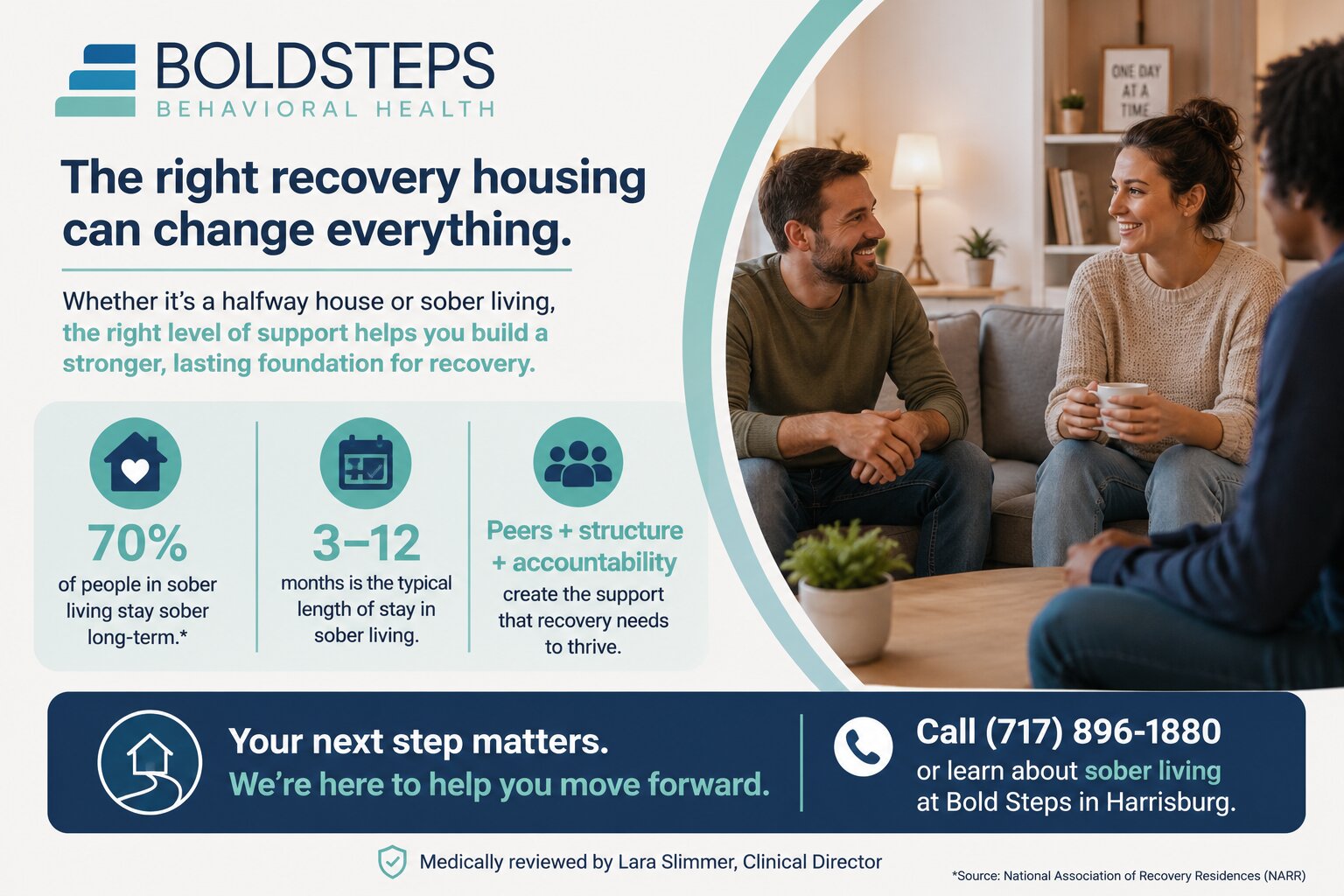
Many people stay in sober living for three to twelve months, although some remain longer depending on their recovery goals, financial situation, employment, and support needs. The ideal length of stay is individualized rather than fixed.
Recovery Housing Should Match Your Recovery Needs
Choosing between a halfway house and a sober living home isn’t about finding the “better” option—it’s about finding the right level of support for where you are in recovery.
Both types of recovery housing play valuable roles. Halfway houses often provide structured supervision for people meeting legal or correctional requirements, while sober living offers a supportive, peer-focused environment for those transitioning from treatment toward independent living.
If you’re unsure which path is right for you, talking with a treatment provider can help you weigh your options and create an aftercare plan that supports long-term recovery. Easily accessible from anywhere in Harrisburg, Lancaster County, York County and beyond.
Call (717) 896-1880 or learn about sober living at Bold Steps in Harrisburg.