

Medically reviewed by Lara Slimmer, Clinical Director
If you’re thinking about stopping Percocet, it’s normal to wonder what withdrawal will actually feel like. Many people search for Percocet withdrawal because they’re afraid of the unknown—not because they’ve already decided what to do next. Understanding what to expect can make the process feel less overwhelming and help you plan for safer, more effective support.
If you’re exploring recovery options beyond withdrawal, learning about Percocet addiction treatment can help you understand how detox, therapy, and ongoing care work together to support long-term recovery.
One important detail that many articles overlook is that Percocet contains two medications: oxycodone, an opioid pain reliever, and acetaminophen. While the withdrawal symptoms themselves come from stopping the opioid component, long-term use of high-dose Percocet also raises important considerations related to acetaminophen exposure. Understanding both parts of the medication helps explain why medical guidance is often recommended.
Percocet Withdrawal Symptoms
Percocet withdrawal occurs because the body has adapted to the presence of oxycodone. When the medication is reduced or stopped, the nervous system needs time to regain its natural balance.
The symptoms of Percocet withdrawal are essentially the same as oxycodone withdrawal and other short-acting prescription opioids.
Physical Symptoms
Common Percocet withdrawal symptoms include:
- Muscle aches
- Joint pain
- Sweating
- Chills or goosebumps
- Frequent yawning
- Runny nose
- Watery eyes
- Nausea
- Vomiting
- Diarrhea
- Stomach cramps
- Dilated pupils
- Increased heart rate
- Insomnia
- Restlessness
Many people describe these symptoms as feeling like a severe flu combined with an inability to relax or sleep.
Psychological Symptoms
Withdrawal also affects mood and emotions. You may experience:
- Anxiety
- Irritability
- Depression
- Difficulty concentrating
- Strong drug cravings
- Mood swings
- Feeling emotionally overwhelmed
These symptoms can be just as challenging as the physical discomfort, especially during the first several days.
Although withdrawal is extremely uncomfortable, opioid withdrawal is usually not life-threatening in otherwise healthy adults. However, dehydration from vomiting or diarrhea, underlying medical conditions, pregnancy, or other substances being used at the same time can increase medical risks, which is why professional evaluation is important.
Percocet Withdrawal Timeline
Many people ask, “Percocet withdrawal—how long does it last?”
The exact timeline depends on several factors, including:
- How long you’ve taken Percocet
- Your daily dose
- Whether you used it exactly as prescribed
- Your overall health
- Whether other substances are involved
For most people taking immediate-release Percocet, withdrawal begins relatively soon after the last dose.
| Time After Last Dose | What to Expect |
|---|---|
| 6–12 hours | Anxiety, restlessness, yawning, sweating, cravings, runny nose |
| 24–48 hours | Nausea, vomiting, diarrhea, muscle aches, insomnia, chills |
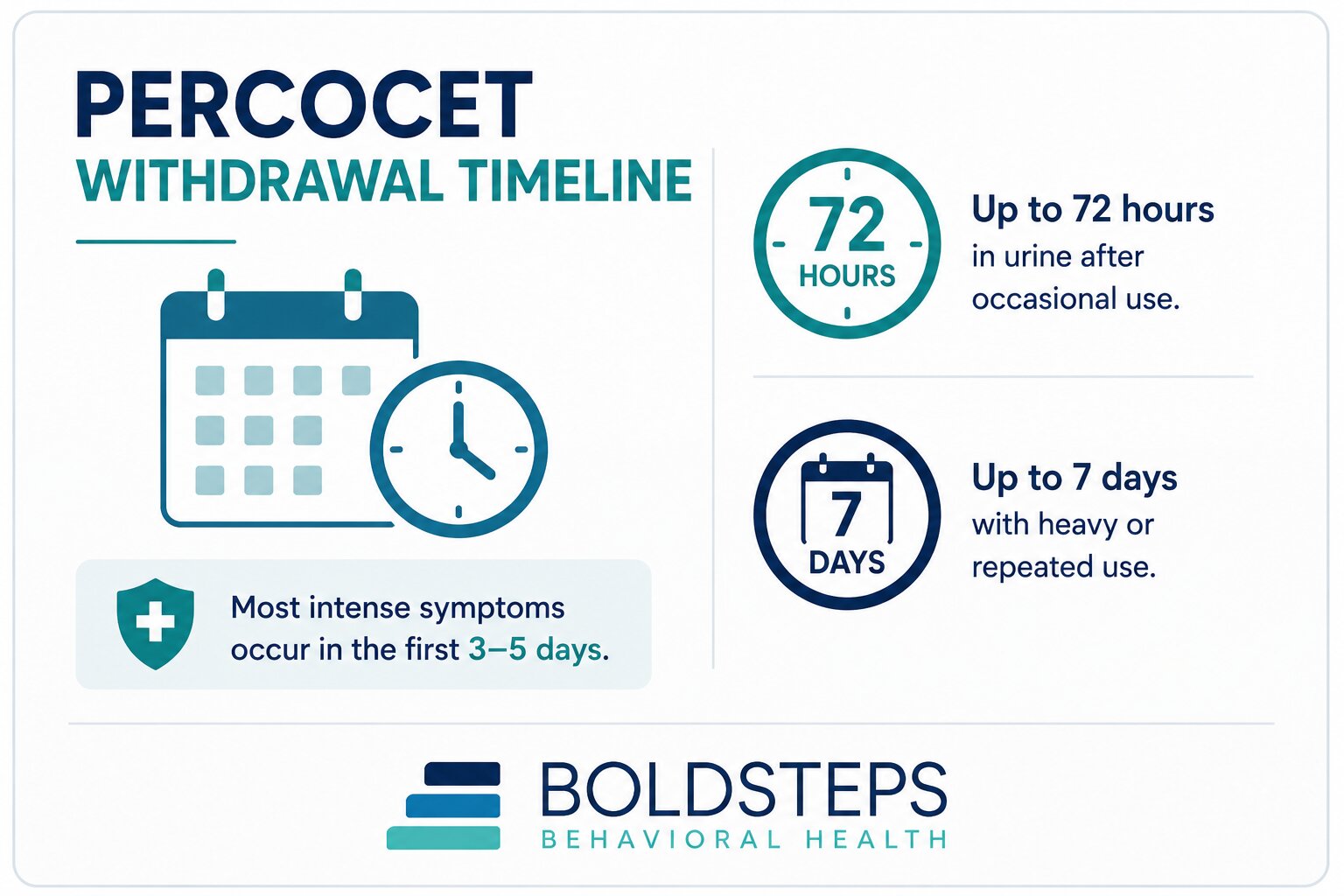
| Days 3–5 | Acute withdrawal is typically at its most intense |
| Days 5–10 | Physical symptoms gradually begin improving |
| Weeks to months | Some people experience post-acute withdrawal symptoms (PAWS), including cravings, mood changes, and sleep disturbances |
It’s important to remember that everyone’s Percocet withdrawal timeline looks a little different. Some people recover more quickly, while others experience lingering emotional symptoms that improve gradually with continued treatment and support.
Why Tapering Matters—And the Acetaminophen Factor
One of the biggest misconceptions about Percocet is that withdrawal is only about the opioid.
The opioid component—oxycodone—is what causes withdrawal symptoms when the medication is stopped abruptly. Suddenly removing it can lead to the intense physical and emotional symptoms described above.
That’s why many healthcare providers recommend gradually tapering opioid medications when it’s medically appropriate, rather than stopping them without guidance.
The Acetaminophen Consideration
Percocet also contains acetaminophen, which serves a different purpose than oxycodone.
Acetaminophen does not cause opioid withdrawal symptoms. However, people who have taken high doses of Percocet over long periods may have experienced repeated acetaminophen exposure, which can place additional stress on the liver.
This doesn’t mean everyone who takes Percocet has liver damage, and it isn’t meant to be alarming. Rather, it’s one reason clinicians consider a person’s full medical history—including medication doses, duration of use, and liver health—when developing a withdrawal plan.
Medical supervision allows providers to evaluate both the opioid dependence and any health considerations related to long-term acetaminophen exposure, helping create the safest possible approach.
Medical Detox for Percocet Withdrawal
Many people worry they’ll have to “tough it out” on their own.
Fortunately, that isn’t the only option.
Medical detox is designed to make withdrawal safer and more manageable while helping reduce unnecessary discomfort.
Depending on your individual situation, medical detox may include:
- Around-the-clock medical monitoring
- Assessment of hydration and vital signs
- Medications to ease withdrawal symptoms
- Medication-assisted treatment (MAT) when appropriate
- Evaluation of liver health if long-term high-dose Percocet use is a concern
- Emotional support throughout the detox process
Medication-Assisted Treatment (MAT)
For many individuals with opioid use disorder, medications can significantly reduce withdrawal symptoms and cravings.
These may include:
- Buprenorphine (Suboxone®), which can ease withdrawal and reduce cravings once started at the appropriate time.
- Methadone, which may be recommended in certain treatment settings for people who meet specific clinical criteria.
The most appropriate medication depends on your medical history, opioid use pattern, and evaluation by a qualified healthcare provider.
Why Cold Turkey Isn’t Recommended
Many people consider quitting Percocet “cold turkey” because they want to get withdrawal over with as quickly as possible.
However, abrupt opioid withdrawal often leads to:
- Severe discomfort
- Intense cravings
- Dehydration
- Difficulty sleeping
- Increased risk of returning to opioid use before withdrawal is complete
Professional support doesn’t eliminate withdrawal entirely, but it can make the process considerably more manageable while reducing the risk of complications and early relapse.
Getting Support Can Make the Process Easier
If you’re frightened about withdrawal, you’re not alone.
Many people worry they’ll be judged, that they’ll feel out of place, or that treatment means giving up control over their lives.
In reality, treatment begins with understanding your situation—not making assumptions about it.
Whether you’ve been taking Percocet for a few months after an injury or have struggled with misuse for years, your treatment plan should reflect your individual needs.
Seeking help isn’t a sign that you’ve failed.
It’s a decision to make the process safer and give yourself the best opportunity for lasting recovery.
Frequently Asked Questions
How long does Percocet withdrawal last?
Most physical withdrawal symptoms begin within 6–12 hours after the last dose, peak during the first three to five days, and gradually improve over the following several days. Some emotional symptoms and cravings may persist longer as part of post-acute withdrawal.
Is Percocet withdrawal dangerous?
Percocet withdrawal is usually not life-threatening in otherwise healthy adults, but it can be extremely uncomfortable. Dehydration, pregnancy, certain medical conditions, or using other substances at the same time can increase risks. Medical evaluation is recommended before stopping Percocet, especially after long-term use.
Can you quit Percocet cold turkey?
Although some people attempt to stop abruptly, quitting Percocet cold turkey often causes intense withdrawal symptoms and increases the risk of returning to opioid use. A medically supervised taper or detox is generally considered a safer and more comfortable approach.
Compassionate Support for Percocet Recovery
You don’t have to face withdrawal by yourself. Whether you’re planning ahead or already experiencing symptoms, professional care can help you navigate withdrawal safely while preparing for the next stage of recovery.
Call (717) 896-1880 or explore Percocet addiction treatment at Bold Steps. Easily accessible from anywhere in Harrisburg, Lancaster County, York County and beyond.