

Medication-assisted treatment (MAT) for alcohol use disorder is one of the most evidence-based tools available and one of the most misunderstood. It combines FDA-approved medication with counseling and behavioral support, giving people a much stronger foundation for recovery than willpower or talk therapy alone. This guide explains how MAT for alcohol works, who it helps, and why it works best as part of a complete treatment plan.
What is medication-assisted treatment (MAT) for alcohol?
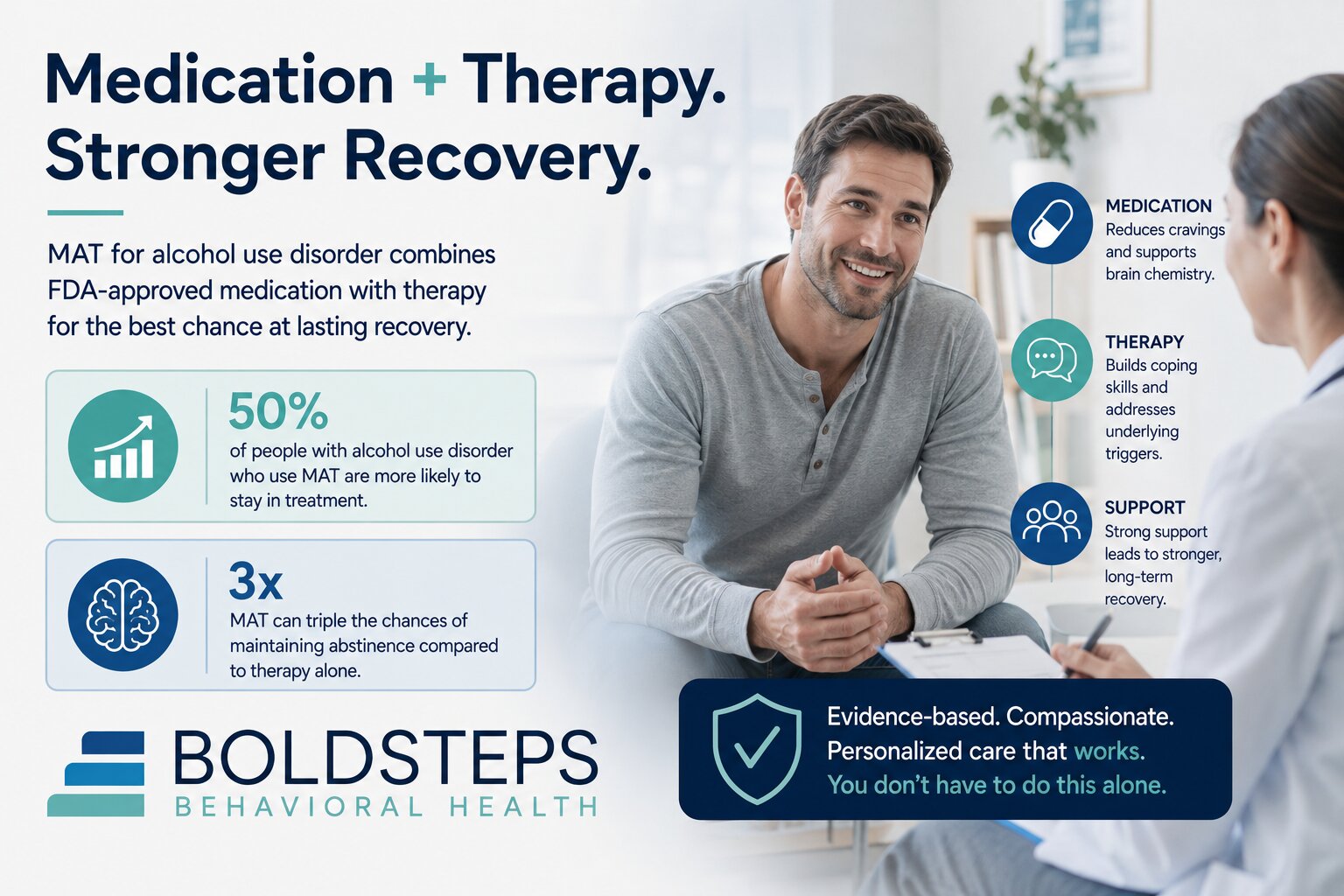
Medication-Assisted Treatment (MAT) combines FDA-approved medication with counseling and behavioral therapies to treat alcohol use disorder. First, medication can reduce cravings, limit alcohol’s rewarding effects, or cause an unpleasant reaction after drinking. At the same time, therapy addresses the underlying reasons for drinking and builds healthier coping skills. Together, these approaches support lasting behavioral change and long-term recovery.
The two halves work together. The medication alone doesn’t resolve why someone drinks; the therapy alone doesn’t address the neurochemical drivers of craving. Together, they produce significantly better outcomes than either alone.
How each alcohol MAT medication works
Three medications are commonly used in the United States for alcohol use disorder:
Medication |
Mechanism |
Best fit |
|---|---|---|
| Naltrexone | Blocks opioid receptors involved in alcohol’s rewarding effects; reduces cravings | People who want to reduce or stop drinking and stay engaged in treatment |
| Acamprosate | Helps stabilize brain chemistry after alcohol withdrawal; reduces post-acute cravings | People who have already detoxed and want to maintain abstinence |
| Disulfiram | Causes an unpleasant reaction if alcohol is consumed | People who want a chemical deterrent and have strong external accountability |
All three are taken under medical supervision. Choice depends on your health history, goals, and treatment setting.
MAT combined with therapy: why medication alone isn’t enough
MAT medications don’t address the underlying patterns that drive drinking — stress, trauma, mental health symptoms, social environment, habits. That’s why the medication is paired with therapy. Common therapy approaches used in MAT for alcohol include:
- Cognitive Behavioral Therapy (CBT) — identifying triggers and building alternative responses
- Motivational Enhancement Therapy — strengthening commitment to change
- Group counseling — peer support and shared problem-solving
- Family therapy — addressing relationship patterns that contribute to or are affected by drinking
For people with anxiety, depression, or trauma symptoms, our team coordinates psychiatric care with MAT. Through medication management services, clinicians monitor both treatments and adjust medications to support safety and effectiveness.
Common myths about MAT for alcohol
MAT for alcohol is sometimes misunderstood by people in recovery communities, family members, or even some clinicians. A few myths worth correcting:
“It’s trading one addiction for another.” Alcohol MAT medications don’t produce a high or create dependency in the way alcohol does. They normalize brain chemistry and reduce cravings. Naltrexone and acamprosate are not addictive.
“Real recovery doesn’t use medication.” The medical and research consensus has shifted decisively in favor of MAT as a first-line treatment for moderate to severe alcohol use disorder. AA’s own literature explicitly states that members should follow medical advice — including medication.
“MAT is for people who don’t want to quit.” MAT is for people who want to quit and want every tool available to support that decision.
“You take MAT forever.” Duration varies. Some people use MAT for months; others for years. The decision is made with your treatment team.
Who is a good candidate for alcohol MAT?
More specifically, MAT may be appropriate when:
- Someone has tried to quit on their own and not been able to stay stopped
- Cravings have repeatedly driven relapse
- Drinking is affecting work, relationships, or health
- The person is willing to engage in therapy alongside the medication
- There is no medical contraindication (liver problems, certain medications, pregnancy in some cases)
A medical evaluation with a provider experienced in addiction medicine is the first step.
Levels of care for alcohol use disorder treatment
MAT is a tool, not a level of care. It’s delivered within different intensities of treatment:
- Outpatient MAT — medication management with weekly or biweekly therapy; best for stable individuals with good support
- Intensive Outpatient Program (IOP) — 9+ hours per week of group and individual therapy with medication oversight
- Partial Hospitalization Program (PHP) — full daytime programming with medical and psychiatric support; appropriate when stepping down from residential or when outpatient hasn’t been enough
The right level depends on symptom severity, prior treatment attempts, co-occurring conditions, and home environment.
Start your recovery
For that reason, MAT combined with the right level of therapy may help when controlling alcohol use feels difficult.Bold Steps’ Partial Hospitalization Program provides structured daytime treatment with on-site psychiatric support, individual therapy, group programming, and family education — a complete environment for rebuilding recovery. Easily accessible from anywhere in Harrisburg, Lancaster County, York County and beyond.
Call 717.896.1880 any time, day or night. We’ll verify your insurance confidentially and help you figure out the right level of care for your situation.