

Living with both a mental health disorder and a substance use disorder — what professionals call dual diagnosis — can feel like fighting a battle on two fronts. Mental health symptoms may drive substance use, while addiction worsens mental health struggles, creating a vicious cycle that feels impossible to escape.
At Bold Steps Behavioral Health, we understand this complexity. That’s why we’ve developed a comprehensive, integrated approach to treatment, with our Partial Hospitalization Program Pennsylvania (PHP) at the center of our dual diagnosis services. PHP provides structured, daily care that helps individuals stabilize both their mental health and substance use recovery in a safe, supportive environment.
If you or someone you love is facing dual diagnosis challenges, this guide will explain why PHP might be the ideal solution. We’ll explore:
- What dual diagnosis really means
- Why integrated treatment is essential
- How PHP bridges the gap between inpatient detox and outpatient recovery
- The specific benefits of PHP for dual diagnosis clients
- What a typical day in PHP looks like
- How PHP prepares clients for life beyond treatment
- Real success stories from Bold Steps clients
What Does Dual Diagnosis Really Mean?
Dual diagnosis occurs when an individual struggles with both a substance use disorder and a mental health disorder at the same time. These are not isolated problems — they interact and exacerbate one another.
Common mental health conditions involved in dual diagnosis include:
- Generalized Anxiety Disorder (GAD)
- Major depressive disorder
- Bipolar disorder
- Post-traumatic stress disorder (PTSD)
- Borderline personality disorder
- Schizophrenia spectrum disorders
According to SAMHSA, an estimated 9.2 million U.S. adults live with both a mental health disorder and a substance use disorder. Without integrated treatment, these individuals are at significantly higher risk for:
- Severe emotional distress
- Overdose or suicide
- Unemployment and housing instability
- Family and relationship strain
- Chronic physical health conditions
That’s why we at Bold Steps Behavioral Health, as a trusted Addiction Treatment Center Pennsylvania, treat both conditions concurrently through our PHP and broader continuum of care.
Why Integrated Treatment Matters
Attempting to treat only one aspect of dual diagnosis often leads to incomplete recovery. For example:
- If you treat the addiction but not the underlying depression, symptoms of despair may trigger relapse.
- If you treat the anxiety but ignore the substance use, alcohol or drugs may continue to be used as unhealthy coping mechanisms.
Research shows that integrated treatment improves long-term recovery outcomes by up to 50% compared to treating conditions separately. Our PHP provides exactly this kind of integrated, whole-person approach.
PHP: Bridging the Gap Between Detox and Outpatient Care
Many individuals with dual diagnosis start their recovery at our Drug Detox Center Pennsylvania, where they receive safe, medically supervised withdrawal management. But detox is just the first step.
The period immediately following detox is one of the most vulnerable stages in recovery:
- The body is still adjusting chemically.
- Mental health symptoms may intensify.
- Cravings can feel overwhelming.
- Emotional dysregulation is common.
This is why a Partial Hospitalization Program Pennsylvania is so crucial. PHP provides structured, daily support to stabilize mental health and reinforce sobriety before transitioning to more flexible levels of care like our Intensive Outpatient Program Pennsylvania or Outpatient Treatment Program Pennsylvania.
The Top Benefits of PHP for Dual Diagnosis Clients
1. Daily Clinical Support for Ongoing Stability
Our PHP offers clients 5–6 hours of care per day, typically five days a week. This high level of engagement ensures:
- Regular medication management and monitoring
- Frequent therapeutic interventions
- Continuous assessment of mental health and recovery progress
Clients benefit from the steady guidance of our integrated treatment team, which includes medical professionals, addiction counselors, and mental health specialists.
2. Integrated Mental Health and Addiction Therapies
At Bold Steps, we believe healing happens when mental health and addiction treatment go hand in hand. In PHP, clients engage in:
- Individual therapy for trauma, depression, anxiety, or PTSD
- Group therapy for shared learning and peer support
- Cognitive Behavioral Therapy (CBT) to reframe harmful thinking
- Dialectical Behavior Therapy (DBT) for emotional regulation
- Relapse prevention planning to manage triggers
Clients with dual diagnosis especially benefit from this holistic approach, as it addresses both the root causes and symptoms of their conditions.
3. Safe, Structured Environment to Reduce Relapse Risk
Structure is a cornerstone of successful recovery. PHP provides:
- Predictable daily schedules that build healthy habits
- Reduced exposure to triggers during critical early recovery
- Professional oversight to catch warning signs early
This level of routine offers a safe space for healing while allowing clients to return home in the evenings, keeping them connected to their daily lives and loved ones.
4. Skill Building for Long-Term Recovery
Dual diagnosis treatment isn’t just about symptom management — it’s about preparing for life outside of treatment. PHP focuses on:
- Stress management techniques
- Communication and relationship skills
- Time management and goal setting
- Financial literacy and job-readiness workshops
- Healthy lifestyle habits, including nutrition and exercise
These skills empower clients to confidently transition to independent living and prevent future relapses.
5. Strong Peer Support and Community
Connection combats isolation. Our PHP fosters community by:
- Creating safe spaces for clients to share experiences
- Building peer accountability networks
- Offering group activities and recovery milestones celebrations
Peer support is particularly beneficial for dual diagnosis clients, as they often feel misunderstood. Finding others who share similar experiences builds hope and resilience.
6. Family Involvement and Education
Dual diagnosis affects the entire family system. At Bold Steps, family therapy is an integral part of PHP. Through our Mental Health Treatment Programs Pennsylvania, families learn:
- How to support their loved one’s recovery
- Effective communication strategies
- How to set healthy boundaries
- How to participate in long-term recovery plans
Healing the family unit strengthens recovery outcomes and rebuilds trust.
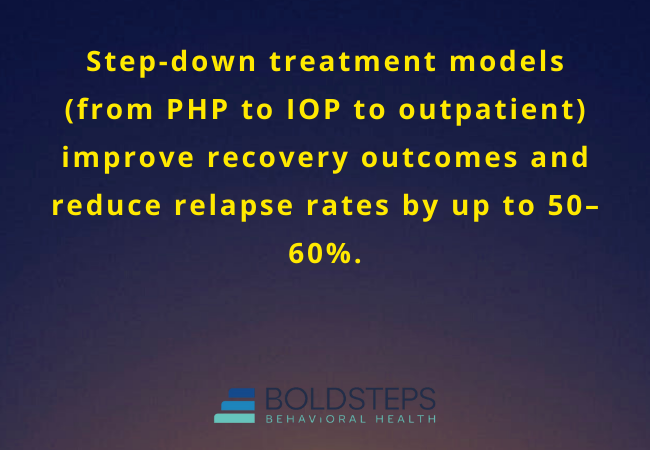
7. Seamless Step-Down to Ongoing Support
As clients progress, they smoothly transition into less intensive levels of care:
- Intensive Outpatient Program Pennsylvania (IOP): For continued support while balancing life commitments.
- Outpatient Treatment Program Pennsylvania: Flexible therapy to maintain progress.
- Alumni and aftercare services for lifelong connection and support.
This step-down approach reduces relapse risk and builds lasting recovery foundations.
A Typical Day in PHP at Bold Steps Behavioral Health
A structured daily routine is vital for dual diagnosis recovery. Here’s what a day might look like in our PHP:
| Time | Activity |
|---|---|
| 8:30 AM | Arrival & health check-in |
| 9:00 AM | Mindfulness exercise or group meditation |
| 9:30 AM | Group therapy: coping skills for mental health & addiction |
| 11:00 AM | Individual therapy session |
| 12:00 PM | Lunch & community connection |
| 12:45 PM | Skills workshop: stress management, communication, life skills |
| 2:00 PM | Family therapy or relapse prevention planning |
| 3:00 PM | Reflection, goal setting, and wrap-up |
| Evening | Return home for rest and practice of learned skills |
Conclusion
If you or a loved one is struggling with the challenges of dual diagnosis, you don’t have to navigate this journey alone. At Bold Steps Behavioral Health, our Partial Hospitalization Program Pennsylvania provides the daily structure, compassionate care, and integrated therapies you need to reclaim your life.
From detox to aftercare, our full continuum of care — including our Drug Detox Center Pennsylvania, Intensive Outpatient Program Pennsylvania, and Outpatient Treatment Program Pennsylvania — ensures you have support at every step. Call us today at 717.896.1880 to speak with our admissions team. Let’s take the first bold step together. Your recovery story starts here — and we’ll walk beside you every step of the way.
Frequently Asked Questions (FAQ)
How long should I stay in PHP for dual diagnosis?
Typically, 2–4 weeks, depending on individual needs and progress.
Is PHP covered by insurance?
Yes! Many plans cover our Partial Hospitalization Program Pennsylvania. Call 717.896.1880 — we’ll help verify your coverage.
What happens after PHP?
Clients step down to our Intensive Outpatient Program Pennsylvania or Outpatient Treatment Program Pennsylvania for continued care.
Can PHP treat severe mental health conditions?
Yes! Our integrated Mental Health Treatment Programs Pennsylvania provide support for a range of conditions, including depression, anxiety, PTSD, and more.
Does Bold Steps offer dual diagnosis treatment in Pennsylvania?
Absolutely. Our Dual Diagnosis Treatment Pennsylvania is fully integrated into our PHP, IOP, and outpatient services.