

Medically reviewed by Lara Slimmer, Clinical Director
Receiving a bipolar diagnosis can bring relief, confusion, fear—or all three at once. You may be wondering whether the diagnosis is correct, whether medication will change who you are, or whether you’ve somehow missed the signs for years.
If you’ve been searching for bipolar 1 vs 2, you’re asking an important question. Although both conditions fall under the bipolar spectrum, they are different diagnoses with different patterns of mood episodes, different clinical challenges, and sometimes different treatment approaches.
If you’re looking for a broader understanding of available care, learning about bipolar disorder treatment can help explain how professionals evaluate symptoms and create individualized treatment plans.
The distinction between bipolar 1 and bipolar 2 isn’t about labeling one as “better” or “worse.” It’s about understanding your experiences more accurately so you can receive treatment that fits your needs and move forward with greater confidence.
Bipolar 1 vs 2: At a Glance
Feature |
Bipolar 1 |
Bipolar 2 |
|---|---|---|
| Elevated mood episode | Mania | Hypomania |
| Intensity of elevated mood | Severe, often significantly disruptive | Noticeable but less severe |
| Depressive episodes | May or may not occur | At least one major depressive episode is required |
| Hospitalization risk | More common during manic episodes | Less common during hypomania, though depression may require treatment |
| DSM-5 distinction | At least one manic episode | At least one hypomanic episode and one major depressive episode |
| Common clinical challenge | Recognizing and managing mania | Bipolar 2 misdiagnosis as depression |
While this comparison highlights the difference between bipolar 1 and 2, every person’s experience is unique. Symptoms can vary considerably, even among people with the same diagnosis.
What Is Bipolar 1?
Bipolar 1 disorder is defined by the presence of at least one manic episode.
A manic episode lasts at least seven days in most cases, or is severe enough to require hospitalization regardless of duration. During mania, changes in mood and behavior become significant enough to interfere with work, relationships, finances, or personal safety.
Someone experiencing mania may:
- Feel unusually energetic or unstoppable
- Need very little sleep without feeling tired
- Speak much faster than usual
- Jump rapidly between ideas
- Take significant financial, legal, or sexual risks
- Feel unusually confident or invincible
- Become increasingly impulsive
- Lose touch with reality in severe cases, including experiencing psychosis
Not everyone with bipolar 1 experiences frequent depressive episodes. Some do, while others primarily struggle with manic episodes. The defining feature is the presence of mania.
Because mania can dramatically affect judgment and functioning, hospitalization is sometimes necessary to protect the person’s health and safety while symptoms stabilize.
What Is Bipolar 2?
Bipolar 2 disorder is characterized by:
- At least one hypomanic episode
- At least one major depressive episode
- No history of a full manic episode
Hypomania shares many features with mania but is less severe.
A person experiencing hypomania might:
- Feel unusually productive
- Have increased confidence
- Need less sleep
- Become more social or talkative
- Feel unusually creative
- Take on many new projects
Unlike mania, hypomania typically does not cause the profound impairment or loss of reality seen in bipolar 1.
Because hypomania may even feel enjoyable or productive, many people never recognize it as a symptom. Instead, the depression often becomes the primary reason they seek treatment.
This is why bipolar 2 should not be viewed as simply a “milder” form of bipolar disorder. While hypomania is less severe than mania, the depressive episodes can be long-lasting, recurrent, and deeply disruptive to daily life.
Key Differences Between Bipolar 1 and 2
Understanding bipolar 1 vs bipolar 2 symptoms becomes much easier when you focus on the type of elevated mood episode involved.
Mania vs. Hypomania
Think of mania and hypomania as existing on the same spectrum—but at different levels of intensity.
Mania often causes:
- Severe disruption
- Major impairment
- Risky decision-making
- Possible hospitalization
- Possible psychosis
Hypomania usually involves:
- Increased energy
- Elevated mood
- Noticeable personality changes
- Less impairment
- No psychosis
Someone experiencing hypomania may continue working, caring for family, or meeting responsibilities. Friends might simply describe them as unusually energetic or optimistic.
By contrast, mania often becomes impossible to ignore because it significantly disrupts daily functioning.
Depression Looks Different Too
Another major difference between bipolar 1 and 2 involves depression.
Although depression can occur in bipolar 1, bipolar 2 requires at least one major depressive episode for diagnosis.
Many people with bipolar 2 spend far more time experiencing depression than hypomania. These depressive episodes may include:
- Persistent sadness
- Loss of interest in activities
- Fatigue
- Difficulty concentrating
- Feelings of hopelessness
- Changes in sleep or appetite
For many individuals, depression—not hypomania—is the symptom that most affects quality of life.
Hospitalization Is More Common in Bipolar 1
Hospitalization is not part of the diagnostic criteria for bipolar disorder itself, but it becomes more common during manic episodes because judgment, safety, and reality testing may become significantly impaired.
People with bipolar 2 generally experience fewer hospitalizations related to elevated mood episodes, though severe depression may still require intensive treatment in some cases.
Why Bipolar 2 Is Often Missed or Misdiagnosed
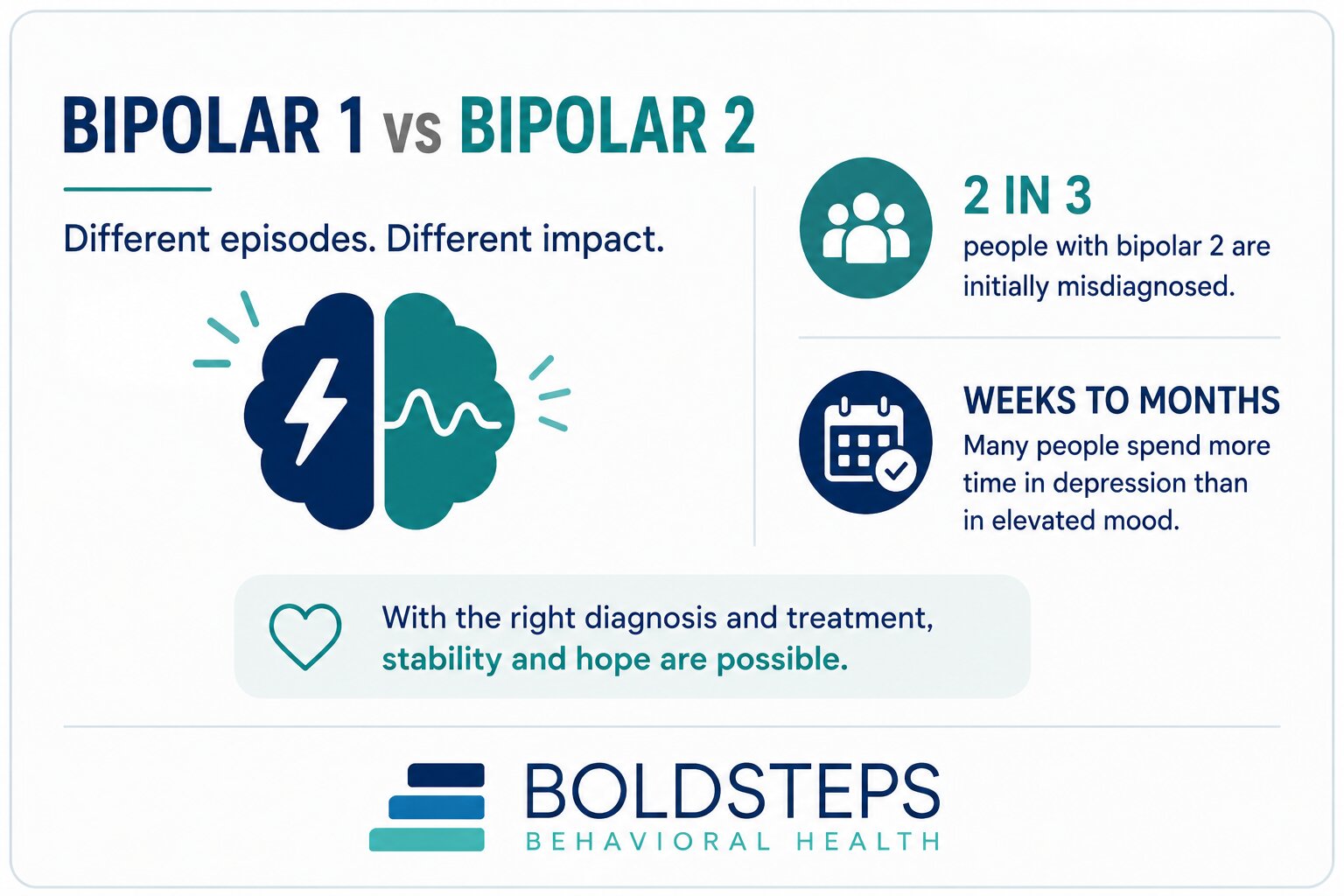
One of the biggest reasons people search for bipolar 2 misdiagnosis is because it happens surprisingly often.
Hypomania doesn’t always look like a problem.
It can look like:
- Being exceptionally productive
- Feeling more outgoing
- Sleeping less while still functioning
- Having increased motivation
- Taking on exciting new goals
Many people don’t mention these periods to their healthcare provider because they don’t seem concerning.
Instead, they seek help during depressive episodes.
Without recognizing previous hypomania, someone may initially receive a diagnosis of major depressive disorder rather than bipolar 2.
Why Accurate Diagnosis Matters
Treating depression in someone with undiagnosed bipolar 2 requires careful evaluation.
In some individuals, taking an antidepressant without an appropriate mood stabilizer may increase the likelihood of triggering hypomania or rapid mood changes. This doesn’t happen to everyone, but it’s one reason clinicians spend time asking detailed questions about past mood patterns before making treatment recommendations.
A thorough psychiatric assessment often includes questions about:
- Sleep patterns
- Energy levels
- Spending habits
- Family history
- Periods of unusually elevated mood
- Risk-taking behaviors
- Previous responses to medication
These conversations help clinicians distinguish bipolar 2 from depression, anxiety disorders, ADHD, and other conditions that may share overlapping symptoms.
How Treatment Differs Between Bipolar 1 and 2
Although both conditions often involve similar categories of treatment, the overall strategy may differ depending on symptom patterns.
Medication recommendations are individualized and depend on many factors, including the type of mood episodes someone experiences, their medical history, and how they’ve responded to treatment in the past.
Common medications may include:
- Lithium
- Valproate
- Lamotrigine
- Certain atypical antipsychotic medications
For bipolar 1, treatment often focuses heavily on preventing future manic episodes while also managing depression when it occurs.
For bipolar 2, treatment may place additional emphasis on reducing recurrent depressive episodes while stabilizing mood and preventing hypomania.
Therapy Is an Essential Part of Treatment
Medication is only one part of effective care.
Evidence-based therapy can help people:
- Recognize early warning signs
- Build healthy routines
- Improve sleep habits
- Manage stress
- Strengthen relationships
- Develop coping strategies
- Reduce relapse risk
If you’re worried that medication will make you feel “flat” or change your personality, you’re not alone. Many people share that concern before beginning treatment.
The goal of treatment isn’t to erase your personality or creativity.
The goal is to reduce the intensity of mood episodes so you can feel more like yourself—not less.
Finding the right treatment sometimes takes adjustments along the way, but working closely with a qualified mental health provider gives you the best opportunity to find an approach that balances symptom relief with your personal goals.
Living Well With Either Diagnosis
Whether you’re diagnosed with bipolar 1 or bipolar 2, the diagnosis is not a prediction of your future.
Many people successfully manage bipolar disorder through a combination of treatment, supportive relationships, healthy routines, and ongoing collaboration with their care team.
If you’ve recently received a diagnosis, it’s okay to have questions. It’s okay to need time to process. And it’s okay if your first treatment plan isn’t your final one.
Recovery isn’t about becoming someone different.
It’s about gaining the stability and support needed to live the life you want.
Frequently Asked Questions
What’s the difference between bipolar 1 and 2?
The primary difference is the type of elevated mood episode. Bipolar 1 includes at least one manic episode, while bipolar 2 involves hypomania plus at least one major depressive episode. Mania is more severe than hypomania and is more likely to significantly disrupt daily life or require hospitalization.
Is bipolar 2 less severe than bipolar 1?
Not necessarily. While hypomania is less severe than mania, bipolar 2 includes major depressive episodes that can be highly impairing. Neither diagnosis should be viewed as “better” or “worse.” They simply present differently and require individualized treatment.
Can bipolar 2 turn into bipolar 1?
Yes. If someone who was previously diagnosed with bipolar 2 later experiences a full manic episode, the diagnosis is generally updated to bipolar 1 because mania changes the diagnostic classification.
Compassionate Support for Bipolar Disorder
If you’ve recently been diagnosed—or you’re beginning to wonder whether your symptoms fit bipolar 1 or bipolar 2—you don’t have to sort through the uncertainty alone.
At Bold Steps Behavioral Health, our team provides comprehensive evaluations, personalized treatment planning, therapy, medication management, and ongoing support designed around your unique needs and goals.
Call (717) 896-1880 or learn more about bipolar disorder treatment at Bold Steps. Easily accessible from anywhere in Harrisburg, Lancaster County, York County and beyond.