

You’ve been sober for a while now.
Maybe you’ve stopped counting the days because your life is stable. Maybe you go to meetings sometimes. Maybe you don’t. You’ve handled birthdays, bills, anniversaries, job reviews. You’ve hit the milestones. You’ve rebuilt trust.
But here comes the part that no one warned you about: the flatness.
The holidays used to feel like a storm—either one you braced against or one you drowned in. But now? You come home to familiar people and places… and feel like a stranger.
You’ve made it this far. You’re not falling apart. But you’re not okay either. You’re just here. Numb. Quiet. Wondering if this is really all recovery is supposed to feel like.
At Bold Steps Behavioral Health in Harrisburg, PA, we work with people in this exact space. People who aren’t using, but who aren’t fully present. People who got sober and now feel stuck.
And what many of them need—quietly, courageously—is not more shame or speeches. It’s dual diagnosis treatment: care that sees the mental health patterns underneath the old survival ones. Not because you failed—but because you’re ready for something deeper.
When You’ve Been Sober a While… and Still Feel Hollow
Sobriety is often sold as a finish line.
Before: chaos, guilt, damage.
After: peace, clarity, freedom.
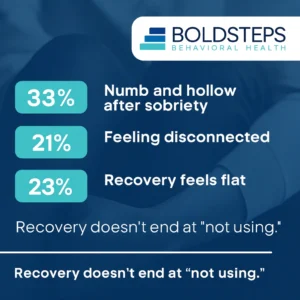
But here’s the thing no one tells you: recovery doesn’t end at “not using.”
You got sober, but now you wake up and dread the day. You show up to family dinner and feel disconnected. You try to be grateful, and it feels like a lie.
You don’t want to relapse—but you also don’t feel fully alive.
That’s not failure. That’s an invitation to keep healing. Dual diagnosis care is one way to answer it.
The Holidays Can Feel Like a Test You Didn’t Study For
There’s something uniquely jarring about coming home for the holidays when you’ve been in recovery.
You’ve grown. Changed. Built a new life. But when you walk into your childhood living room, everyone still sees the old version of you. Or worse—pretends nothing ever happened.
You’re expected to laugh, share stories, fit in. But inside, you feel:
- Disconnected from the people you love
- Overstimulated by the noise and expectations
- Anxious about saying the wrong thing
- Lonely, even in a full house
- Exhausted by pretending it’s “all good”
These aren’t signs that you’re failing. They’re signs that your mental health needs support, even if your sobriety is intact.
Dual Diagnosis Treatment Isn’t “Going Back”—It’s Going Deeper
At Bold Steps, dual diagnosis treatment is designed for people managing both substance use history and mental health struggles like:
- Depression that’s deepened post-recovery
- Anxiety that’s getting louder now that you’re sober
- Trauma symptoms that you used to numb, now rising again
- Emotional numbness that’s hard to name but hard to shake
This isn’t rehab 2.0. This is real, adult-level care that helps you understand what’s still hurting even after you’ve removed the substance.
You don’t need a relapse to qualify. You just need honesty. And a willingness to ask: What else might I need, now that I’ve made it through the storm?
You Can Love Recovery… and Still Want More from Life
Maybe you’ve built the scaffolding—routines, self-care, structure—but the emotional center still feels empty. That doesn’t mean your foundation is wrong. It means you’ve outgrown the blueprint.
Dual diagnosis care helps you explore that emotional and mental terrain without shame. It says: You’re still growing. Let’s make space for it.
If you’re in Harrisburg or Lancaster County and you’re craving more from your sobriety than just stability—like purpose, connection, and clarity—we’re here to meet you where you are, not where you used to be.
I’ve Been There: What I Wish Someone Had Said
I remember sitting in the guest room of my parents’ house the winter after my second year sober. The snow was quiet. The world felt still. I had a full fridge, wrapped presents, good coffee, and a life I’d fought hard to rebuild.
And I felt… nothing.
No craving. No crisis. But no joy either.
What I needed was someone to say:
“You’re not broken. You’re just ready for a deeper level of healing.”
“It’s okay to need help again.”
“You don’t have to keep pretending.”
Dual diagnosis treatment didn’t restart my recovery—it restored my sense of self.
What Dual Diagnosis Treatment Includes at Bold Steps
Our co-occurring disorder program includes:
- Individual therapy with clinicians trained in both mental health and addiction
- Group support that focuses on emotional regulation, identity work, and sustainable peace
- Medication management if anxiety, depression, or mood instability are getting in the way
- Customized care plans that respect how far you’ve already come
- Evening and outpatient options so you don’t have to disrupt your job, family, or routines
We also support clients from York County and Dauphin County who are seeking seasonal or short-term care to get through emotionally tough months.
FAQs: Dual Diagnosis Care for Long-Term Alumni
I haven’t used in years—am I “too far out” to come back for treatment?
No. Dual diagnosis care is for people at all stages of recovery. You don’t have to relapse to benefit from support.
What if I’m already in therapy?
That’s great. Dual diagnosis programs offer more structured, integrated care—especially helpful when mental health symptoms are starting to disrupt your routines again.
Does this mean my old treatment didn’t work?
Absolutely not. You’ve evolved. Your needs are evolving too. This isn’t failure—it’s follow-through.
What if I don’t want to explain all this to my family?
You don’t have to. We help you navigate boundaries and confidentiality. Your growth is yours.
Is this covered by insurance?
Often, yes. Our admissions team can help walk you through coverage options with no pressure.
If You’re Feeling Disconnected, You’re Not Alone—and You’re Not Done
You’ve made it through some of the hardest chapters. That matters.
But if this season feels heavy… if your spark feels dim… if you’re wondering whether there’s more to recovery than just staying clean—you’re not selfish. You’re wise.
Call 717-896-1880 or visit our dual diagnosis treatment program in Harrisburg, PA to learn how we support long-term alumni in finding not just sobriety—but clarity, connection, and peace that lasts.
This season, give yourself permission to want more. Not just less pain—but more life.