

Medically reviewed by Lara Slimmer, Clinical Director
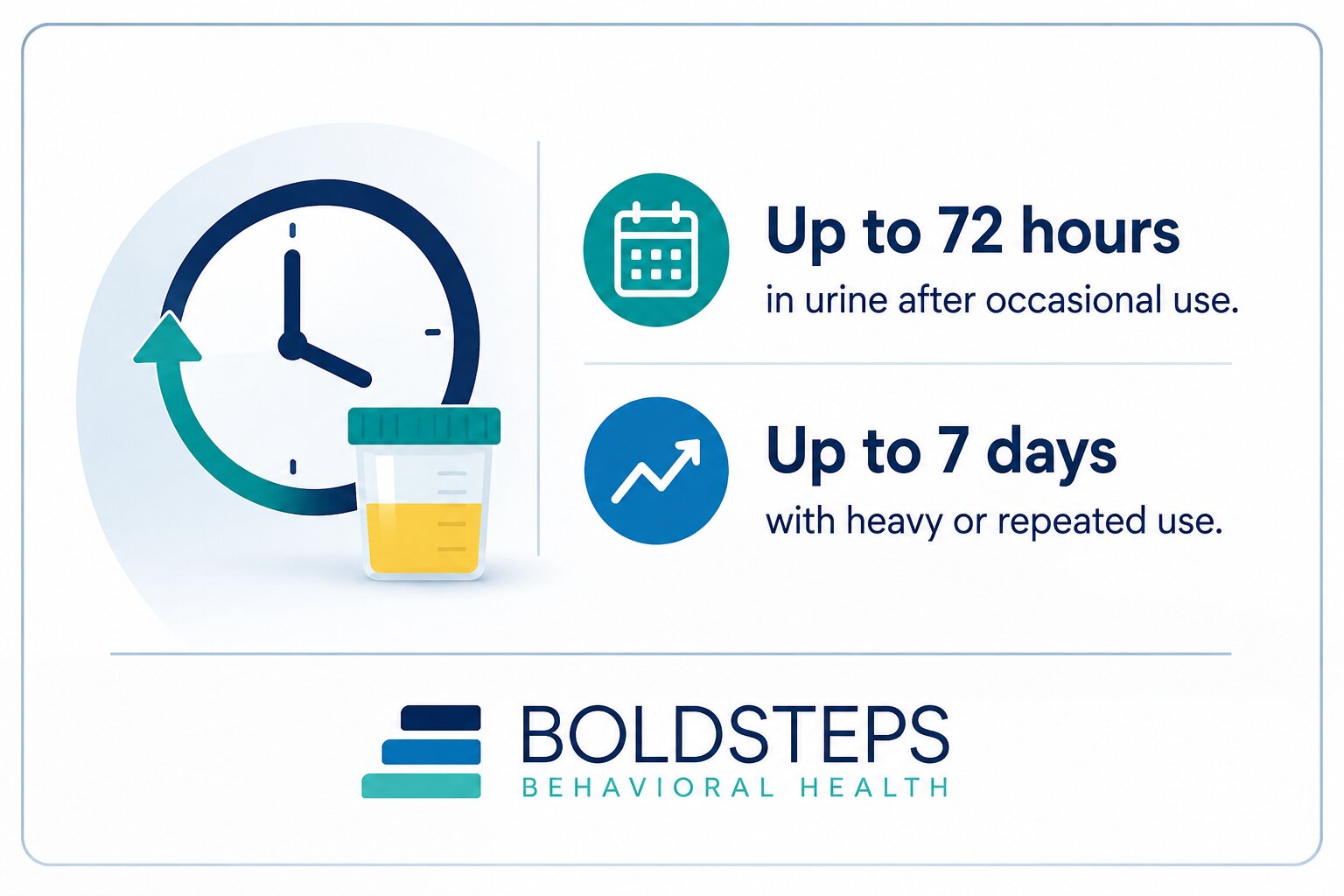
If you’re wondering how long does fentanyl stay in your system, you’re probably looking for a straightforward answer. In most cases, fentanyl can be detected for up to 72 hours in urine after occasional use, but heavy or repeated use may extend urine detection to as long as seven days because of its primary metabolite, norfentanyl. Detection times also vary depending on the type of drug test used.
If you’re looking beyond detection windows and want to understand recovery options, learning about fentanyl addiction treatment can help you understand what professional care may involve.
One reason fentanyl behaves differently than many other opioids is its unique chemistry. It is highly lipophilic, meaning it readily enters and is stored in fatty tissue. Combined with the way the body breaks it down into norfentanyl, this helps explain why fentanyl can remain detectable longer than opioids like heroin or morphine.
How Long Does Fentanyl Stay in Your System?
The exact fentanyl detection time depends on the test being used, how frequently fentanyl has been used, and individual factors such as metabolism and body composition.
Drug Test |
Detection Window |
Notes |
|---|---|---|
| Urine | Up to 72 hours after occasional use; up to 7 days with heavy or repeated use | Norfentanyl extends the detection window |
| Blood | Up to 12 hours | Primarily used in emergency or forensic settings |
| Saliva | About 1–4 days | Less commonly used than urine testing |
| Hair | Up to 90 days | Reflects long-term exposure rather than recent use |
These windows are estimates rather than guarantees. Individual results vary considerably.
Why Fentanyl Is Detectable Longer Than Other Opioids
One of the biggest reasons people ask how long does fentanyl stay in your system is because they’ve heard it lingers longer than other opioids—and that’s generally true.
Fentanyl Is Highly Lipophilic
Unlike many opioids, fentanyl is lipophilic, meaning it dissolves easily into fat tissue.
Rather than remaining only in the bloodstream, fentanyl distributes into body fat, where it can be released back into circulation over time before being fully eliminated.
This doesn’t mean someone continues feeling the drug’s effects for days. The clinical effects wear off much sooner than the medication remains detectable.
Instead, this property primarily influences how long the body takes to completely clear fentanyl and its metabolites.
Norfentanyl Extends Urine Detection
After fentanyl is metabolized by the liver, one of its primary breakdown products is norfentanyl.
Drug tests often detect norfentanyl rather than fentanyl itself.
Because norfentanyl remains in the body longer, urine tests can continue returning positive results even after fentanyl has already been eliminated from the bloodstream.
This is one reason heavy or repeated fentanyl use may remain detectable for up to a week.
Compared With Heroin or Morphine
Heroin is metabolized rapidly into morphine and other metabolites that are generally cleared more quickly than fentanyl’s metabolite profile.
Although detection windows overlap, fentanyl’s storage in fat tissue and prolonged elimination of norfentanyl often result in a longer overall urine detection period than many other short-acting opioids.
Fentanyl Detection by Test Type
Urine Test
Urine testing is the most common method used for workplace testing, treatment programs, and many clinical settings.
For occasional fentanyl use:
- Detection is often possible for up to 72 hours.
For chronic or repeated use:
- Detection may extend to approximately seven days because norfentanyl remains measurable longer.
It’s also important to know that not every routine opioid screening automatically detects fentanyl. Some testing panels require a specific fentanyl assay.
Blood Test
Blood testing has one of the shortest detection windows.
Fentanyl is generally detectable in blood for approximately:
- Up to 12 hours
Blood tests are most often used in emergency medicine, toxicology investigations, or situations requiring confirmation of recent exposure.
Saliva Test
Saliva testing offers a relatively short detection window.
Fentanyl may remain detectable for approximately:
- 1–4 days
Although saliva testing is becoming more common in some settings, it is still used less frequently than urine testing.
Hair Follicle Test
Hair testing provides the longest detection period.
Small amounts of fentanyl can become incorporated into growing hair, allowing detection for:
- Up to 90 days
Hair testing is primarily used to identify historical patterns of drug exposure rather than recent intoxication.
What Affects How Long Fentanyl Stays in Your System
No two people eliminate fentanyl at exactly the same rate.
Several factors influence detection time.
Frequency of Use
Repeated fentanyl exposure allows more drug and metabolites to accumulate before complete elimination.
Daily use generally results in longer detection windows than a single exposure.
Dose
Larger doses typically require more time for the body to fully metabolize and eliminate.
Body Fat Percentage
Because fentanyl is stored in fatty tissue, body composition may influence how long small amounts continue to be released into the bloodstream before elimination.
Liver and Kidney Function
The liver converts fentanyl into metabolites, while the kidneys help eliminate many of those metabolites.
Reduced liver or kidney function may slow this process.
Method of Use
Injected, smoked, transdermal, and medically administered fentanyl may produce different absorption patterns, although repeated exposure remains one of the biggest predictors of prolonged detection.
Individual Metabolism
Age, genetics, overall health, and other medications can all influence how quickly the body processes fentanyl.
Harm-Reduction Note: Fentanyl and Overdose Risk
If you are still using fentanyl—or think fentanyl may be present in another substance—it’s important to know that the risk of overdose is real.
Many counterfeit pills and illicit drugs now contain fentanyl without the user’s knowledge, making accidental overdose much more likely.
One practical way to reduce harm is to keep naloxone (Narcan®) available. Naloxone can rapidly reverse an opioid overdose when administered promptly and has saved countless lives.
Knowing where naloxone is, making sure people around you know how to use it, and calling emergency services immediately after it’s given are important safety steps.
This information isn’t meant to judge anyone’s choices. It’s simply intended to reduce the risk of a medical emergency while someone remains at risk.
When Detection Questions Signal a Bigger Picture
Sometimes the question isn’t really about a drug test.
Sometimes it’s about wondering whether fentanyl has become harder to stop than expected.
If you’ve found yourself searching detection windows repeatedly, worrying about withdrawal, or feeling like fentanyl has started controlling more of your decisions than you’d like, those concerns deserve attention—not judgment.
Recovery doesn’t begin because someone reaches a certain point. It begins when someone decides they’re ready to explore what comes next.
Professional treatment can help manage withdrawal, reduce cravings, and provide ongoing support for lasting recovery.
Frequently Asked Questions About Fentanyl Detection
How Long Does Fentanyl Stay in Urine?
After occasional use, fentanyl is generally detectable in urine for up to 72 hours. Heavy or repeated use may extend detection to about seven days because urine testing often detects norfentanyl, the drug’s primary metabolite.
Does Fentanyl Show Up on a Standard Drug Test?
Not always. Many routine opioid drug screens do not automatically test for fentanyl. Specific fentanyl testing may need to be requested depending on the testing panel being used.
What Is Norfentanyl and Why Does It Matter?
Norfentanyl is the primary metabolite produced when the liver breaks down fentanyl. Because it remains detectable longer than fentanyl itself, it is responsible for the extended urine detection window seen after fentanyl use.
How Long Does Fentanyl Stay in Your System After Surgery?
Fentanyl given in a hospital for pain is processed by the body in the same way, so the same factors apply: the dose, how it was given and how long it was used, along with your liver and kidney health and your metabolism. Your care team can tell you what to expect in your situation.
How Long Does Fentanyl Stay in Saliva?
Fentanyl may be detectable in saliva for about 1 to 4 days. Saliva testing is used less often than urine testing.
Compassionate Support for Fentanyl Recovery
If fentanyl has become difficult to stop—or you’re worried about withdrawal, cravings, or overdose risk—you don’t have to figure it out alone. Professional treatment can provide medical support, evidence-based care, and a plan tailored to your needs.
Call (717) 896-1880 or explore fentanyl addiction treatment at Bold Steps. Easily accessible from anywhere in Harrisburg, Lancaster County, York County and beyond.