

You don’t have to be falling apart to ask for help.
Sometimes, you’re not in full-blown crisis—but you’re not okay either. You’re going through the motions. Sleep is off. Mood swings feel louder. Maybe you’re sober curious and noticing how your emotions feel sharper without that drink, or that your old coping tools don’t work like they used to. That quiet knowing in your gut says: Maybe I need something more.
If you’re curious about mental health support—but unsure where to begin—a partial hospitalization program (PHP) might be a gentle, structured next step. And yes, it’s okay to ask about it even if you’re not sure you “qualify.”
At Bold Steps Behavioral Health, we welcome those who are exploring. Whether you’re dipping your toe into the idea of care or ready to dive in, here’s how to start asking questions—without shame, fear, or pressure.
Learn more about our partial hospitalization program services here.
1. You’re Not “Too Functional” to Ask for Support
One of the biggest myths we hear is: “I’m doing okay. Not great, but not bad enough to need a program.” This binary thinking—crisis or nothing—is what keeps people stuck.
In truth, many people in PHPs are managing work, relationships, and basic life stuff. On paper, they might look fine. But emotionally? They’re overwhelmed, disconnected, or trying to stay ahead of something slipping.
There is no award for toughing it out. And asking about a partial hospitalization program doesn’t mean you’re weak—it means you care enough to explore your options.
2. You Can Be Curious, Not Committed
Calling a mental health provider doesn’t lock you into anything.
You’re allowed to say:
- “I’m just exploring my options.”
- “I’m not sure if I need this—I just want to understand it better.”
- “Can you walk me through how PHP works and who it helps?”
This isn’t a sales call. It’s a conversation. A good provider—like Bold Steps—will never push you. They’ll meet you where you are, explain things clearly, and help you figure out if PHP is the right fit.
3. What You Can Expect From a PHP
It helps to understand what a partial hospitalization program actually looks like—because sometimes, just hearing the word “hospital” makes people tense up.
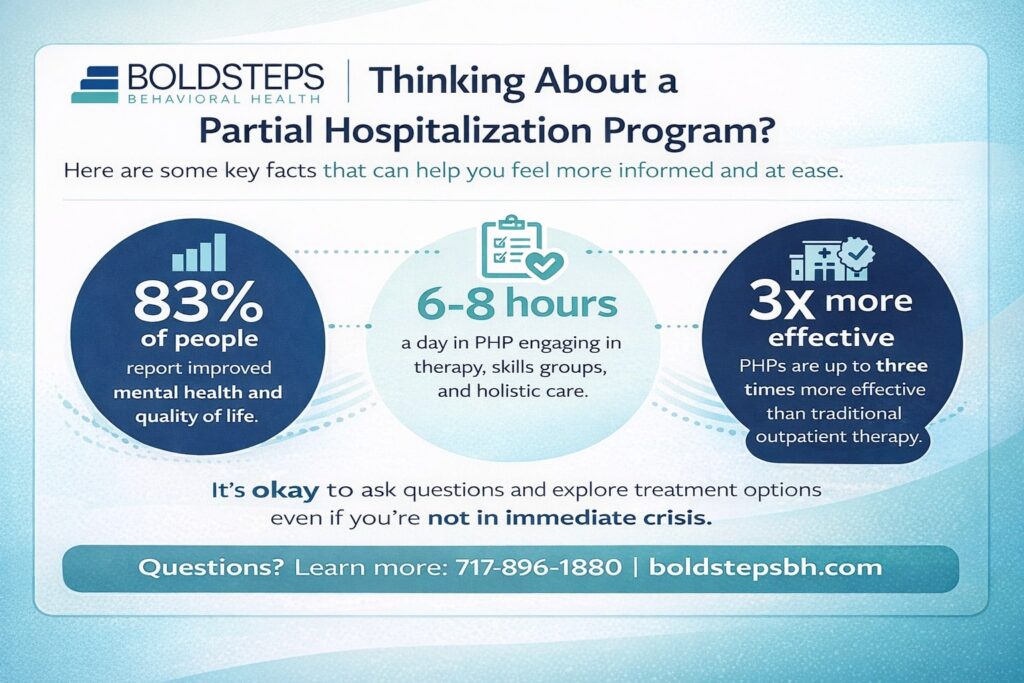
But PHP isn’t inpatient. There are no locked doors. You go home at the end of the day. It’s more like a full-time day program where you focus on emotional and psychological wellness.
At Bold Steps, a typical PHP day might include:
- Group therapy sessions on coping skills, emotional regulation, and communication
- One-on-one time with a licensed therapist
- Medication management if appropriate
- Time to process, reflect, and build real-world tools for living
And importantly: your story, your identity, your pace is respected throughout.
4. Ask the Real Questions—Not Just the “Right” Ones
You don’t have to come in with clinical language or know what to ask. Just speak from where you are. Try:
- “Will this help with stress and anxiety if I’m not in crisis?”
- “What if I’m still working through whether I want to stop drinking completely?”
- “Is it okay if I don’t have a formal diagnosis yet?”
These are real, valid questions. You’re allowed to ask without having it all figured out. That’s what we’re here for.
5. Share Your Concerns Honestly
Worried it’s too much time? Too intense? Not private enough?
You can say that.
- “I’m nervous this will be too structured or overwhelming.”
- “I still need time in my week to take care of my kids or work part-time.”
- “I’ve never done therapy before—what if I’m bad at it?”
We hear these things all the time. Good care adapts to real life—not the other way around.
6. You Deserve to Be Seen—Not Labeled
Many people exploring PHP worry they’ll be labeled: mentally ill, unstable, broken.
But at Bold Steps, we don’t reduce people to diagnoses. We see the full picture—your strengths, your intentions, your story.
Whether you’re seeking clarity, rebuilding your relationship with your emotions, or just tired of white-knuckling your mental health alone, there’s space for you here.
7. It’s Okay to Say “Not Yet”
You can reach out, get your questions answered, and still take time to decide. Just making the call is progress. You’re not behind. You’re building awareness. That matters.
And if you change your mind later? We’ll still be here. Same phone number, same people, still ready to help.
Real Talk From Our Team
“Not everyone who calls is ready for PHP—and that’s okay. Our job isn’t to convince you. It’s to support you in making the best decision for your mental health.”
– Staff Therapist, Bold Steps
Want to Stay Close to Home?
We offer treatment options in Pennsylvania that feel local, accessible, and community-rooted. Whether you live in Harrisburg or nearby, you’re not far from compassionate care that respects your process. Explore care options in your region here.
Frequently Asked Questions (FAQ)
What is a partial hospitalization program (PHP)?
A PHP is a structured mental health program that provides intensive therapy and support during the day—usually 5 days a week—while allowing you to return home at night. It’s ideal for people who need more support than weekly therapy but don’t require inpatient care.
Do I have to stop drinking or using substances to join a PHP?
Not necessarily. Many people come to PHPs while still navigating their relationship with substances. Some are sober curious. Others are actively in recovery. We meet you where you are—and help you clarify what next steps might look like.
What if I don’t have a diagnosis?
That’s okay. You don’t need a formal diagnosis to inquire or to start an assessment. Part of our intake process involves understanding your symptoms, needs, and goals—and determining what care makes the most sense for you.
How long does PHP last?
It varies. Some people attend for 2–4 weeks; others need longer. We regularly evaluate your progress and adjust as needed. The goal is to provide enough structure and support for you to stabilize, learn, and build confidence.
Is this confidential? I don’t want my job or friends to know.
Absolutely. Your privacy is protected by law. Nothing you share with us is disclosed to your employer, family, or anyone else without your written consent.
📞 Ready to Talk?
You don’t have to do this alone. Whether you’re just exploring or ready to begin, we’re here to help you feel safe, informed, and empowered.
Call 717-896-1880 or visit our page to learn more about our partial hospitalization program services in Pennsylvania.