

Sobriety Didn’t Solve Everything—It Uncovered the Real Problem
I expected life to get better when I got sober. People told me it would. I pictured waking up refreshed, reconnecting with family, maybe finding some elusive thing called “inner peace.” Instead, I found emptiness. I found anxiety gnawing at my gut with no escape hatch. I found depression that wasn’t numbed anymore. For a while, it felt like sobriety just pulled the curtain back on misery I hadn’t noticed before.
If you’re feeling this too, you’re not alone—and you’re not broken. You’re just dealing with something sobriety by itself doesn’t fix: untreated mental health struggles.
When the Drinking Stops, the Feelings Flood In
Getting sober strips away the numbing, but it doesn’t automatically rebuild your mental health. For some of us, substances weren’t just a bad habit—they were the only thing that seemed to keep us upright. Anxiety, depression, trauma—they don’t vanish when you stop using. Sometimes, they get louder.
That’s where dual diagnosis treatment changes everything. It doesn’t just say, “Congrats, you’re sober now—good luck.” It says, “Let’s deal with why you turned to substances in the first place.”
If this hits home, Bold Steps’ dual diagnosis program in Harrisburg is a good place to start looking for real, lasting change.
Sobriety Isn’t the Finish Line—It’s the Starting Line
No one tells you this at the beginning: sobriety is the starting line, not the finish line. What happens after you get clean is where real recovery starts. And if you’ve got untreated depression, anxiety, PTSD, or bipolar disorder simmering underneath, early sobriety can feel brutal.
I sat in meetings where people talked about the “pink cloud”—that euphoria some people feel early in recovery. I didn’t feel it. I felt like I was dragging myself through every day. Turns out, that’s incredibly common among people with co-occurring mental health conditions.
Dual diagnosis treatment works because it stops pretending that addiction happens in a vacuum. It treats both the addiction and the mental health struggles together.
You Didn’t Fail Treatment—Your Treatment Failed You
Maybe you’ve been through treatment before. Maybe you got sober and waited to feel good, only to end up frustrated and empty. Here’s the truth people don’t talk about enough: some treatment programs aren’t built to help people with both mental health and substance use issues. They’ll get you clean, but they won’t show you how to stay sane while you’re clean.
It’s not you. It’s the treatment model.
Dual diagnosis treatment in Harrisburg recognizes this. It integrates therapy, medication management, group support, and trauma work into your recovery. It means you don’t have to “white-knuckle” your way through sobriety, fighting your own brain every step of the way.
Dual Diagnosis Helped Me Feel Like a Human Being Again
Once I got into a dual diagnosis program, things finally made sense. The racing thoughts weren’t a lack of willpower—they were anxiety. The bottomless pit of sadness wasn’t me “not trying hard enough”—it was clinical depression. The emotional blow-ups weren’t me being a terrible person—they were unresolved trauma.
With the right help, I wasn’t just sober—I was functional. I was hopeful. I actually wanted to wake up in the morning. That’s the difference when you treat the full picture, not just the drinking or drug use.
If you’re in Harrisburg or nearby, Bold Steps offers this kind of integrated care—where your mental health isn’t an afterthought.
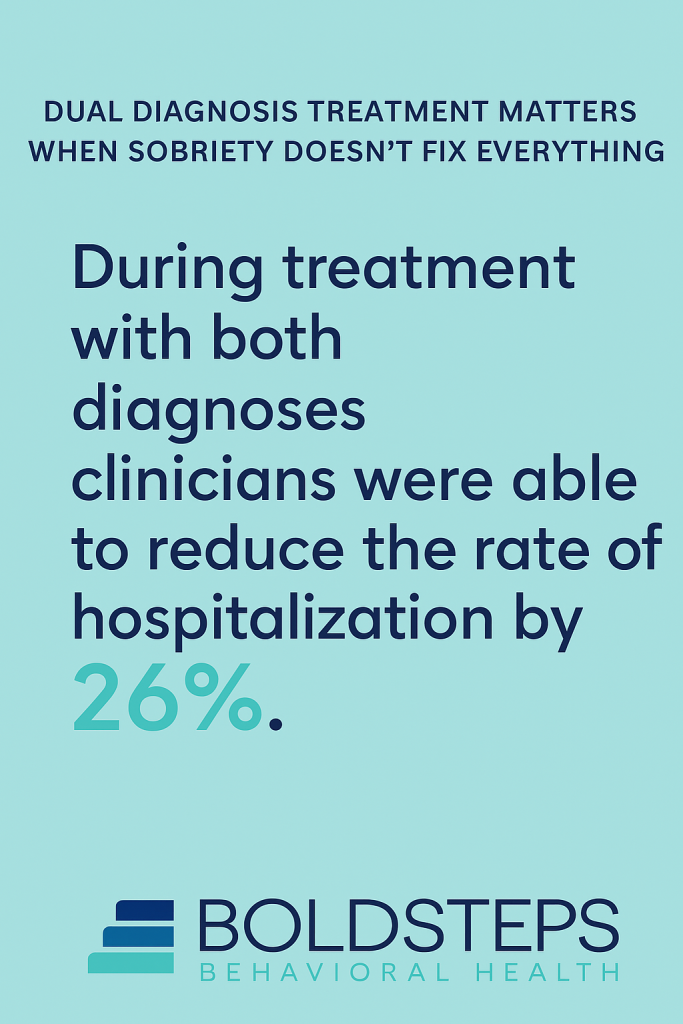
What Makes Dual Diagnosis Treatment Different?
Here’s what to expect when you go somewhere that actually treats both parts of the problem:
- Mental Health Diagnosis & Care: Licensed therapists and psychiatrists help you get real answers about what’s going on mentally—not just addiction labels.
- Medication Management: If you need it, you get access to meds that stabilize mood, reduce anxiety, or help with depression—managed safely alongside your recovery.
- Trauma-Informed Therapy: A lot of us used substances to numb trauma. Dual diagnosis treatment includes real trauma therapy, not just surface-level support groups.
- Integrated Recovery Support: It combines addiction recovery tools (like 12-step or SMART Recovery) with mental health care so you’re not stuck choosing between the two.
When You Treat Both, Sobriety Stops Feeling Like Punishment
I’m not going to lie—early recovery is hard. But when you’re only treating addiction, it can feel impossible. Treating your mental health changes that. It turns survival into living. It turns dread into hope. It turns, “I hate this sober life” into, “Okay…this actually feels doable.”
That’s what I want for you. That’s what you deserve.
FAQ: Getting Answers About Dual Diagnosis Treatment
What is dual diagnosis treatment?
Dual diagnosis treatment addresses both substance use disorders and mental health conditions at the same time. It’s designed for people who experience both issues together—because treating just one side doesn’t lead to lasting recovery.
How do I know if I need dual diagnosis treatment?
If you’ve tried sobriety and still feel miserable, if you’ve struggled with depression, anxiety, PTSD, or other mental health issues while using, or if sobriety feels overwhelming emotionally—you likely need dual diagnosis care. Bold Steps can help you get assessed.
Can dual diagnosis treatment help if I’ve already been to rehab?
Absolutely. Many people who didn’t feel “better” after treatment realize later that untreated mental health struggles were the missing piece. Dual diagnosis care often works for people who didn’t get what they needed the first time around.
Does Bold Steps offer dual diagnosis treatment in Harrisburg, PA?
Yes. Bold Steps Behavioral Health offers outpatient dual diagnosis programs in Harrisburg with therapy, medication management, and recovery support integrated together.
Is medication part of dual diagnosis treatment?
It can be, but it’s always based on individual needs. Some people benefit from medication for depression, anxiety, or mood disorders, while others focus more on therapy and coping strategies. You’ll work with a care team to figure out what helps you most.
📞 Ready for Real Recovery? Let’s Talk.
Sobriety isn’t supposed to feel like suffering. You deserve to feel whole—not just substance-free. If you’re done with programs that only scratch the surface, it’s time to look at dual diagnosis treatment.
Call 717-896-1880 or visit to learn more about how Bold Steps can help you build a life that actually feels worth living.