

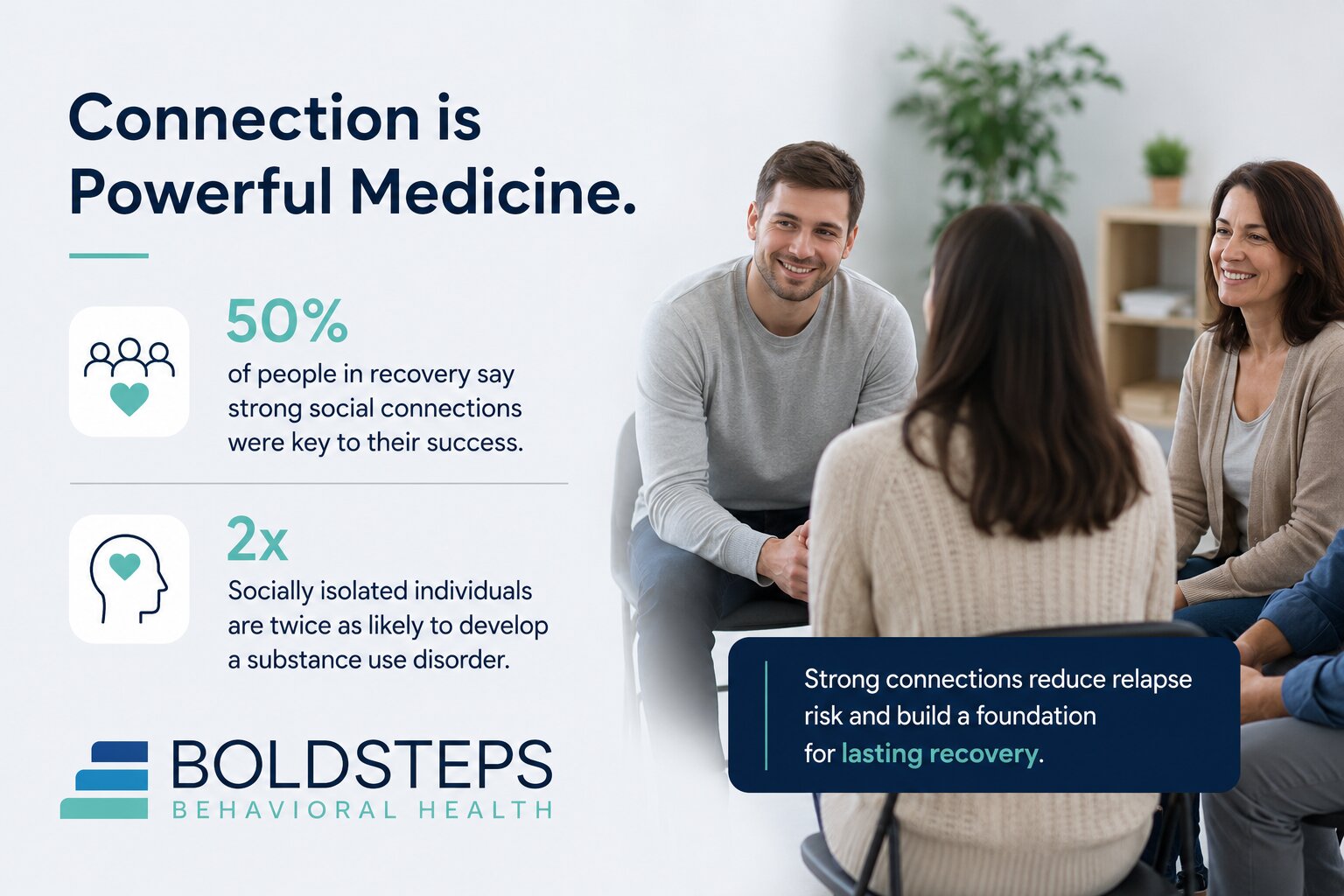
Social isolation and addiction are deeply intertwined. Loneliness is both a driver of substance use and a consequence of it — pulling people into a cycle that is hard to break without intentional, structured intervention. Understanding this connection is often the first step toward breaking it.
What the research shows about isolation and substance use
Multiple studies have linked loneliness and social isolation to increased risk of alcohol use disorder, opioid use disorder, and other substance use patterns. The risk operates through several mechanisms:
- Self-medication: alcohol, opioids, and stimulants are often used to numb or escape emotional pain associated with loneliness
- Loss of social accountability: when no one is watching, restraint is harder to maintain
- Unstructured time: isolation removes many of the daily routines that would otherwise occupy time
- Stress dysregulation: chronic loneliness activates the same stress-response systems that substances temporarily relieve
Social isolation is not just a background condition. It is an active contributor to substance use patterns.
How isolation drives addiction
The mechanics of how isolation contributes to substance use:
- Pain without an outlet. Emotional pain that can’t be shared is more likely to be medicated.
- Limited feedback. People who are isolated often can’t see how their use is changing them.
- Fewer prosocial activities. Isolation removes the alternative activities that compete with substance use.
- Reduced access to support. When crisis hits, there are fewer people to reach out to.
- Normalization through online isolation. Even online-only social networks can reinforce substance-using subcultures rather than challenge them.
Isolation doesn’t cause addiction on its own, but it removes most of the natural safeguards.
How addiction drives isolation
Substance use also creates isolation, even for people who started out socially connected:
- Shame and secrecy. Active users often hide their use from family, friends, and coworkers.
- Social withdrawal. People in active addiction frequently stop attending events, answering calls, or maintaining relationships.
- Relationship breakdown. Trust erodes; conflicts replace connection.
- Loss of shared interests. As use escalates, hobbies and social activities lose their appeal.
- Stigma. People fear judgment, which keeps them from re-engaging.
The result is a smaller and smaller social world, often centered entirely around the substance itself.
The isolation–addiction cycle
The two reinforce each other in a self-perpetuating loop:
- Isolation increases emotional pain and unstructured time.
- Emotional pain and unstructured time drive substance use.
- Substance use creates shame, secrecy, and social withdrawal.
- Withdrawal further shrinks social networks.
- A smaller network means less accountability and more isolation.
- The cycle repeats, often more intensely.
This cycle is one of the most common patterns seen in treatment. Breaking it requires intervention on both sides — the substance use and the isolation — at the same time.
Rebuilding social connection in recovery
Connection isn’t a soft addition to recovery work. It’s a clinical tool. Treatment programs that build in real, structured social contact produce stronger outcomes than those that focus only on individual therapy.
Ways connection is rebuilt during treatment:
- Group therapy — daily contact with peers who are working on the same issues
- Sober living environments — structured residential settings that normalize daily connection
- Peer support specialists — team members with lived experience who provide one-on-one connection
- Family therapy — rebuilding (or building) the closest relationships
- Community-based recovery groups — AA, NA, SMART Recovery, and other mutual-help groups that provide ongoing connection after treatment
After treatment, the goal is to maintain these patterns — gradually replacing the isolated, substance-centered life with one that has real structure and real relationships. Intensive Outpatient Programs (IOP) provide structured daytime treatment with consistent peer contact during the early recovery period — when isolation is most tempting and most dangerous.
When isolation coexists with mental health conditions
For many people, isolation and substance use aren’t the only issues. Depression, anxiety, trauma, and other mental health conditions often sit underneath both. Treating the substance use without treating these underlying conditions leaves the isolation pattern intact.
This is what dual diagnosis treatment is designed to address: substance use, mental health, and the social patterns that sustain them — all coordinated in one plan.
Start your recovery
If you’ve noticed that substance use has shrunk your world, or that isolation has been driving your use, you’re not alone — and you’re not imagining the connection. Bold Steps’ programs are built around individualized care that addresses substance use, mental health, and the social recovery that ties them together.
Call 717.896.1880 any time, day or night. Easily accessible from anywhere in Harrisburg, Lancaster County, York County and beyond. We’ll talk through your situation confidentially and help you find the right level of care.