

I didn’t think I’d be back here—reading recovery blogs with a glass of wine sweating next to me. Ninety-one days sober, and then… not. It wasn’t some dramatic spiral. It was a Tuesday. Just me, a fight with my sister, and an old voice whispering, “You’ve got this under control now.”
I didn’t. But I do know this: alcohol addiction treatment doesn’t end when you graduate. The after is where things get gritty. Quiet. Real.
Here’s what no one tells you about life after discharge—and why slipping doesn’t mean you failed.
The Shock of Going Home
There’s a strange kind of comfort in structured treatment. Your meals are set. Your people are around. Your phone stays silent. You sleep knowing you’re in a place that’s rooting for your recovery.
Then discharge day comes.
You hug some people you’ll never forget, promise to stay in touch, take one last walk around the halls, and head out.
Home feels different than you remember. You open the front door and everything looks the same—but you don’t feel the same.
And that can be disorienting.
Where once there was noise, now there’s silence. Where there were routines and check-ins, now there’s too much time. Too much space to think. Too much freedom, too fast.
You might tell yourself it’s fine. You’ve done the work. You’ve got the tools. But no one told you how lonely it might feel walking into your own kitchen. No one told you the hardest part might be the normalcy that used to bring comfort.
What Happens When the Old You Comes Calling
You spent weeks, maybe months, breaking habits and rewiring behaviors. And yet, somehow, one bad day brings it all rushing back.
You’re tired. You’re annoyed. Or maybe you just want to feel something different.
And the old you—the version that used alcohol as a pressure valve—suddenly feels stronger than the new one you’ve been trying to build.
So you drink.
It’s not a binge. It’s not a blackout. Maybe it’s just a sip. Maybe it’s a night.
But afterward? The shame roars louder than the relapse itself.
And that’s where people get stuck.
The Lie Shame Tells You: “You Ruined It”
Here’s the cruel trick shame plays: it convinces you that if you messed up once, you undid everything.
That your 91 days sober don’t count.
That no one will understand.
That you’ll be judged if you try again.
But that’s not true.
You didn’t erase your progress. You proved you’re capable of it.
You didn’t ruin everything. You hit a very human moment—a moment that many, many others in recovery have faced and overcome.
Including me.
And including many others walking around Harrisburg, Pennsylvania, who have quietly slipped and returned—stronger, wiser, and with a deeper understanding of what they actually need to stay sober.
The Conversations You’re Afraid to Have
If you’ve relapsed, you might feel scared to tell anyone. That alumni coordinator you hugged on your last day? You think they’ll be disappointed. That sponsor? They probably won’t pick up. That friend who got clean with you? What if they’re still sober?
But here’s what I’ve learned: the people who’ve walked this path expect bumps. They’ve seen them. Some of them have lived them.
What they don’t expect is perfection.
They expect honesty.
Because that’s where the real work happens—in the honesty. In saying, “I need help again,” or “I don’t know what to do now.”
And when you do? That’s when things start to shift back into place.
The Myth of “One and Done”
Nobody talks enough about how recovery isn’t a straight line.
You don’t graduate from treatment and suddenly become bulletproof. You’re still you—just a version of you learning how to live differently.
Recovery is like rebuilding a house with better materials, but on the same plot of land. The storms still come. The neighbors still annoy you. The seasons still shift.
The difference now is what you’ve got inside.
And sometimes, that foundation needs reinforcing.
That might mean returning to multi-day weekly treatment. It might mean showing up for outpatient sessions again. It might mean rebuilding your recovery network in places like Lancaster County, Pennsylvania, where sober community resources are actively growing.
It’s not a step backward. It’s a return to safety. A commitment to what matters more than pride: healing.
You’re Not Alone in the Slip
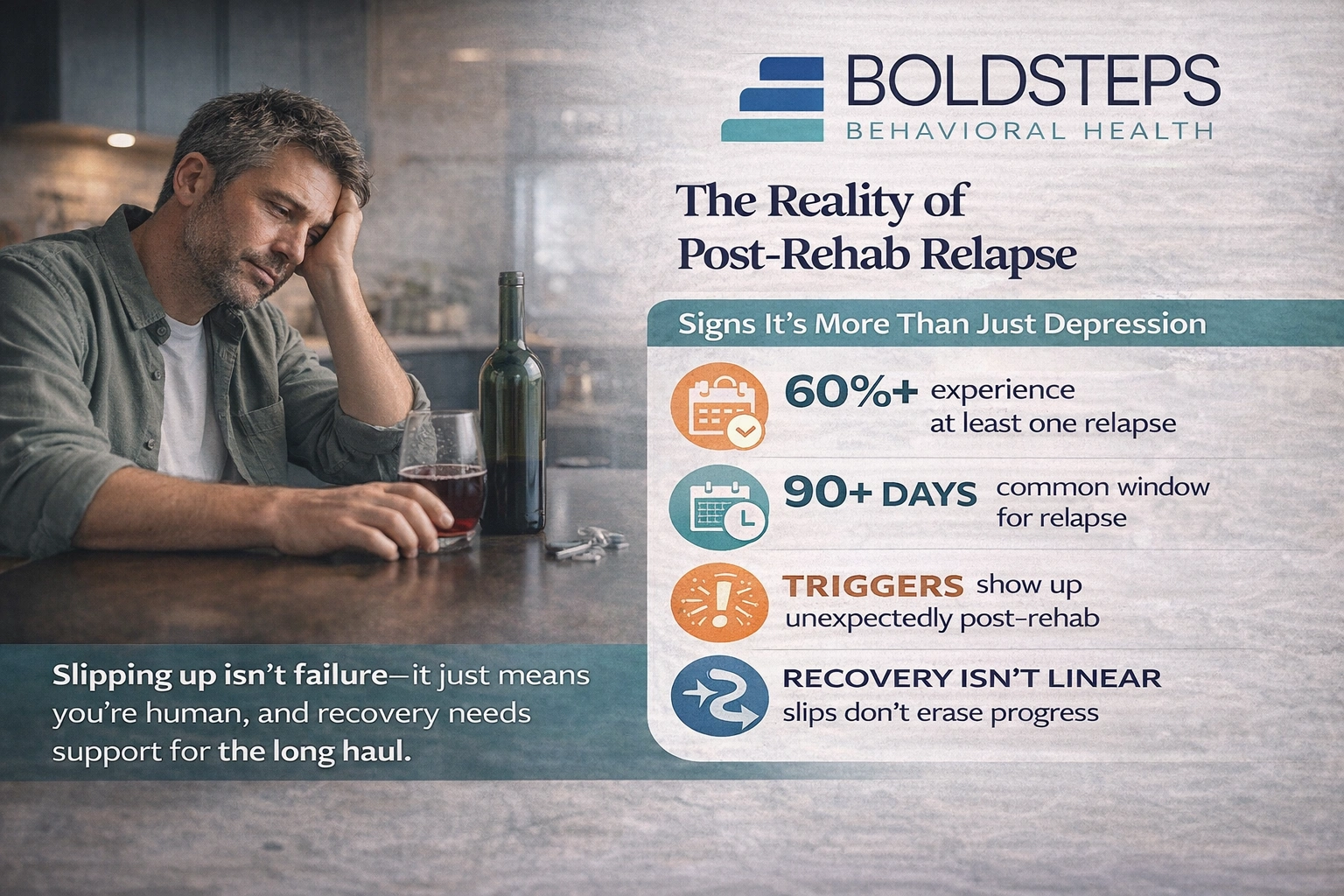
It’s estimated that over 60% of people in recovery will experience at least one relapse. That’s not failure—that’s frequency. That’s reality.
But most of those people don’t talk about it. Not online. Not at family dinners. Not even in group.
That silence breeds shame. And shame keeps people stuck longer than the substance ever could.
But if more people spoke up—if more of us said, “Yeah, I relapsed after 90 days, and I came back,”—we’d break that cycle.
So let me go first: I relapsed. And I came back.
You can, too.
The Real Work Starts After the Paperwork Ends
Treatment gives you tools—but discharge is where you learn to use them without someone watching over your shoulder.
It’s where triggers show up unexpectedly. Where boundaries get tested. Where emotions hit raw and fast.
It’s also where you find out what really sticks.
The daily walk. The journaling. The support group. The call to someone who gets it. The choice not to isolate even when every fiber of you wants to.
It’s not glamorous. But it’s real.
And every day you choose to keep going—no matter what yesterday looked like—is a day worth being proud of.
FAQs: After Discharge and After a Slip
Is it normal to relapse after 90+ days sober?
Yes. It’s more common than most people realize. Many people relapse between 90–120 days when initial momentum fades and life starts to feel “normal” again—but without fully developed support systems.
Should I go back to treatment if I relapsed once?
Not always—but don’t rule it out. One slip doesn’t mean you need to start from scratch, but it does mean something in your recovery plan needs adjusting. That could be more structure, more accountability, or more connection.
Will the treatment center judge me if I come back?
No. At Bold Steps and other recovery-focused facilities, relapse is met with open arms—not judgment. They’re prepared for it. You’re not the first. You won’t be the last. You are welcome.
How do I rebuild trust with loved ones after relapse?
Start with honesty. Let them know what happened—not with excuses, but with ownership. And then let your actions rebuild the rest. Consistency, follow-through, and humility go a long way.
Can I still count my sober days?
That’s up to you. Some people restart the clock. Others track “days since last use.” Both are valid. Sobriety isn’t a scoreboard—it’s a process. What matters most is what you choose today.
You Can Come Back Stronger
If this is where you are—hiding the bottle, avoiding the alumni emails, wondering if you even deserve another chance—pause.
Take a breath.
You’re not broken.
You’re not back at zero.
You’re someone who tried, stumbled, and is still here, reading this, wondering what now.
That wonder? That’s hope. That’s the quiet pull forward.
Let it guide you.
Let’s talk when you’re ready
Call 717-896-1880 or explore our alcohol addiction treatment in in Harrisburg, Pennsylvania. Whether it’s your first step or your next, we’re here.