

A lot of people come to us not because they don’t want help—but because they’re afraid of what getting better might cost them.
It’s not always about the substances. It’s not even always about the symptoms. Sometimes, the deepest fear hiding under the decision to seek care is this:
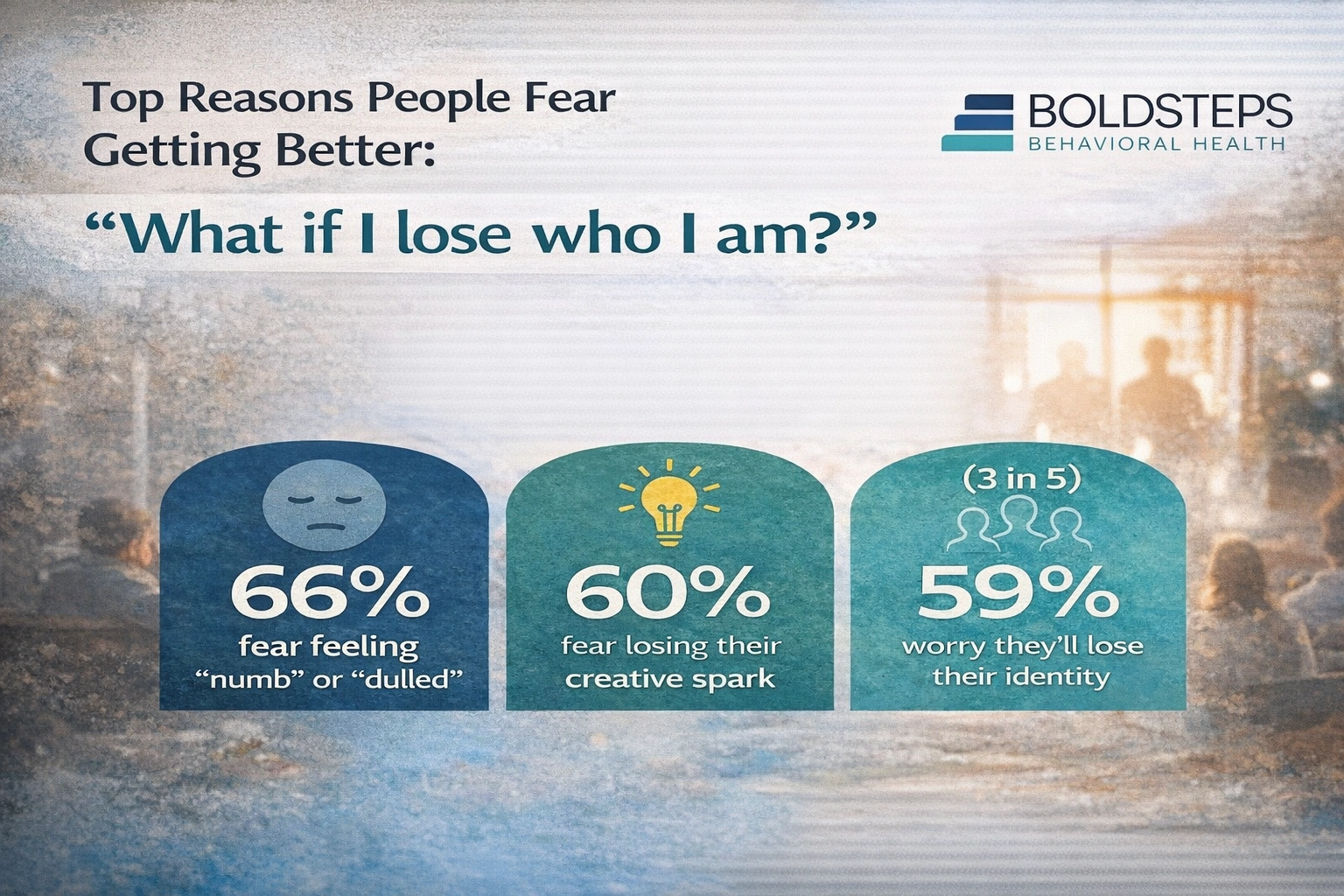
“What if I lose who I am?”
We hear that. And we take it seriously. Because for many creative, emotionally attuned, or expressive people, their identity and their intensity have always gone hand in hand. If you’ve used substances to write, connect, feel, or survive—it makes sense that you might worry treatment will erase more than it heals.
So when someone asks whether medication assisted treatment might make them feel flat or not themselves, we don’t rush to reassure. We slow down and make space. Because fear of losing yourself is a fear rooted in self-awareness—not weakness.
This Fear Is More Common Than You Think
You’re not the only one asking, “But what if I disappear?”
In fact, we hear this worry most often from people who feel deeply—those who’ve built their lives around creative work, emotional connection, or simply showing up as their full, passionate selves. They don’t want to be dulled. They don’t want to be someone new. They just want to feel better without fading out.
And that’s not selfish. That’s human.
Many of our patients have lived with pain for so long that they’ve grown attached to the things they created from it. The poems. The music. The late-night talks. The spontaneous bursts of feeling. The truth is, your feelings matter—and your fear of losing them in the process of healing deserves respect.
Let’s Be Honest About What Substances Have Given You
Sometimes, substances have felt like a friend.
They’ve made it easier to write. To speak. To cry. To be seen. Maybe they made you feel like more of yourself, not less. And that memory sticks—especially when the alternative feels unknown.
But the same thing that once unlocked expression can eventually trap it. What started as a source of connection can become a wall between you and your clarity.
One client told us, “I was afraid sobriety would take away my edge. But eventually, I realized the edge wasn’t sharp anymore—it was just cutting me.”
That kind of shift doesn’t happen all at once. It happens gently, in moments of regained control, emotional presence, and subtle rediscovery.
Medications Don’t Flatten People—They Support Functioning
There’s a stereotype that psychiatric medication makes people feel numb or robotic. And sometimes, in the early stages of adjustment or when medication isn’t quite the right fit, people do feel off. That’s real, and we take that feedback seriously.
But when medication is thoughtfully prescribed and carefully monitored, it’s not about suppressing who you are. It’s about helping you access yourself without being overrun by your symptoms.
What we often see is this: people who were drowning in emotional noise begin to notice quiet again—and in that quiet, they find room to feel in a way that doesn’t flood them.
And if a medication does feel like it’s dulling something essential? We adjust. You’re never stuck. You’re never voiceless in your own care.
Identity Isn’t a Switch—It’s a Spectrum You Can Still Move Within
We don’t believe healing means trading your personality for peace.
You can still be intense, silly, passionate, melancholic, driven, spontaneous, or soulful. You can still create. You can still feel the kind of beauty and grief that moves you to paint or cry or play your favorite record on loop at 2AM.
Recovery doesn’t erase you. It gives you a steadier lens. So that when the emotion comes, it’s not overwhelming. And when the blank space comes, it’s not terrifying.
We’ve watched clients go from fearing they’d lose their voice in treatment to writing music that finally felt like them again—just without the aftermath. No blackout. No crash. Just clarity.
Where You Are and Who You Are Are Connected
In places like York County, Pennsylvania, we often meet people who’ve felt their identity tied to roles in their communities—artists, teachers, musicians, friends who are known for being the passionate one, the funny one, the real one. They fear that letting go of substances or seeking medication will change how others see them—or worse, how they see themselves.
But what we’ve witnessed time and again is this: those same people come back into their communities with more to offer. They reconnect with purpose. They show up with more presence. They feel their creativity returning in ways that feel authentic—and sustainable.
Similarly, patients from Harrisburg, Pennsylvania often carry the pressure of trying to keep everything together while falling apart inside. In those cases, the fear isn’t just about losing self—it’s about finally being seen for who they truly are, without the mask. That’s a vulnerable and courageous step. And it’s one we hold with care.
What We Want You to Know as Clinicians
You will not scare us. Your sadness, your intensity, your skepticism—they belong here. In fact, we welcome them.
We don’t believe in flattening pain to make it more palatable. We believe in building support around you so that you don’t have to perform your way through recovery.
And if you’re not ready to commit to anything right now? That’s okay, too. Opening this page is a beginning. Curiosity counts.
What Patients Often Discover in Recovery
Let’s be clear: we’re not going to pretend recovery is always easy or beautiful. Sometimes, it’s uncomfortable. Sometimes, it’s confusing. Sometimes, it’s just… quiet in a way that feels strange.
But over time, that quiet turns into clarity.
Patients often describe moments like:
- Laughing without feeling like they’re faking it
- Sitting with emotion without being consumed by it
- Writing something powerful and realizing it came from them, not from chaos
- Feeling music again—and not needing anything to amplify it
- Noticing the beauty in ordinary things, like light through a window or the smell of coffee
It’s not dramatic. It’s not a movie scene. But it’s real. And it builds.
FAQs: Identity, Medication, and the Fear of Change
Will I still be myself if I stop using?
Yes—and probably more of yourself than you’ve been able to access in a long time. Sobriety doesn’t erase you. It removes the noise that’s been drowning you out. What’s left is real, and it’s you.
Can medication really help without changing who I am?
When it’s the right fit and carefully managed, yes. Medication is designed to support your brain’s ability to regulate itself—not override your personality. And if something feels off, we work with you to make it better.
I’m scared I’ll lose my creativity. Is that a real risk?
It’s a valid fear—but in our experience, most patients rediscover their creativity in deeper and more sustainable ways. The chaos may have fueled expression, but clarity often refines it.
What if I feel worse before I feel better?
That can happen, especially in early recovery or during medication adjustment. But you’re not doing it alone. We monitor your progress, check in, and make changes when needed. You’ll have support every step of the way.
Is it okay if I’m not ready to start?
Absolutely. You don’t have to be ready to commit to anything right now. Exploring your options and asking honest questions is a powerful first step—and we’re here to meet you where you are.
You Don’t Have to Choose Between Feeling Better and Being Yourself
If you’ve ever whispered, “I want help, but I don’t want to lose myself,” please know this:
That’s not resistance. That’s insight.
You already know how much your identity matters. You’ve worked hard to hold onto it through the chaos, the highs, the lows, and the in-between. And you deserve care that honors that—not tries to replace it.
You’re not being dramatic. You’re being thoughtful.
And that tells us something important: you’re ready to do this in a way that makes space for you—your voice, your rhythm, your process.
Call 717-896-1880 to learn more about our medication assisted treatment in Harrisburg, Pennsylvania.