

You’re trying to hold it all together.
You keep their secrets. You make the excuses. You clean up the messes, emotional or otherwise. Some days you can almost pretend it’s normal. Other days it feels like the person you love is slipping through your fingers, and there’s nothing you can do to stop it.
Loving someone who is actively using—or struggling with severe mental health symptoms—doesn’t come with a handbook. It’s lonely. It’s confusing. And even when help finally arrives, like a partial hospitalization program, it can feel like you’re being left out of the solution.
But here’s what most partners don’t hear enough: you deserve support, too. You don’t have to fix this alone.
At Bold Steps in Harrisburg, PA, our PHP care teams are built to serve not just the person in crisis—but the system around them. That includes you.
What Is a Partial Hospitalization Program, Really?
A partial hospitalization program (PHP) is a structured level of treatment designed for people who need more than outpatient care but don’t require 24/7 residential support. It typically includes:
- 5 days per week of structured therapy
- Group and individual sessions
- Medication support and psychiatric care
- Skill-building, relapse prevention, and emotional regulation work
- Daytime programming with the ability to return home at night
It’s often the right fit when someone has just left inpatient rehab, needs more help than weekly therapy can provide, or is trying to avoid hospitalization.
At Bold Steps, our PHP in Harrisburg helps clients stabilize, heal, and reconnect with themselves—without uprooting their entire life.
And critically, it opens the door for partners and spouses to stop carrying the burden alone.
Why Partners Often Feel Left Behind
When your loved one enters treatment, the attention naturally shifts to them. And while you’re glad they’re getting help, there’s a subtle (and sometimes not-so-subtle) message that your experience doesn’t matter as much.
But you’ve been living in survival mode, too. You’ve been:
- Managing the emotional fallout of their highs and lows
- Wondering whether you’re enabling or helping
- Holding onto hope while bracing for disappointment
- Carrying grief for the version of them you miss
- Feeling like you’re walking on eggshells in your own home
You didn’t choose the symptoms. But they shaped your world all the same.
That’s why PHP support that centers the whole family system—not just the client—isn’t just helpful. It’s necessary.
PHP Is the First Step in Giving the Fixing Back to the Professionals
In relationships where one partner is actively using, it’s common for the other to become the emotional caretaker. You might be:
- Monitoring their moods
- Hiding the evidence
- Managing crisis after crisis
- Pretending things are fine to the outside world
That’s not love. That’s emergency response. And it’s not sustainable.
When your loved one enters a partial hospitalization program, you finally get a chance to step back. You’re no longer the only one trying to “manage” them.
Our team handles the heavy lifting—therapy, safety planning, medication support, daily accountability—so you can focus on being a partner again, instead of a lifeline.
You’ll Be Invited In—But Never Forced
One of the most common fears we hear from spouses and partners is: “Am I going to be shut out now that they’re in treatment?”
The opposite is true—at least at Bold Steps.
You’ll be invited into the process thoughtfully. Not to take over, but to feel included, informed, and supported.
That often includes:
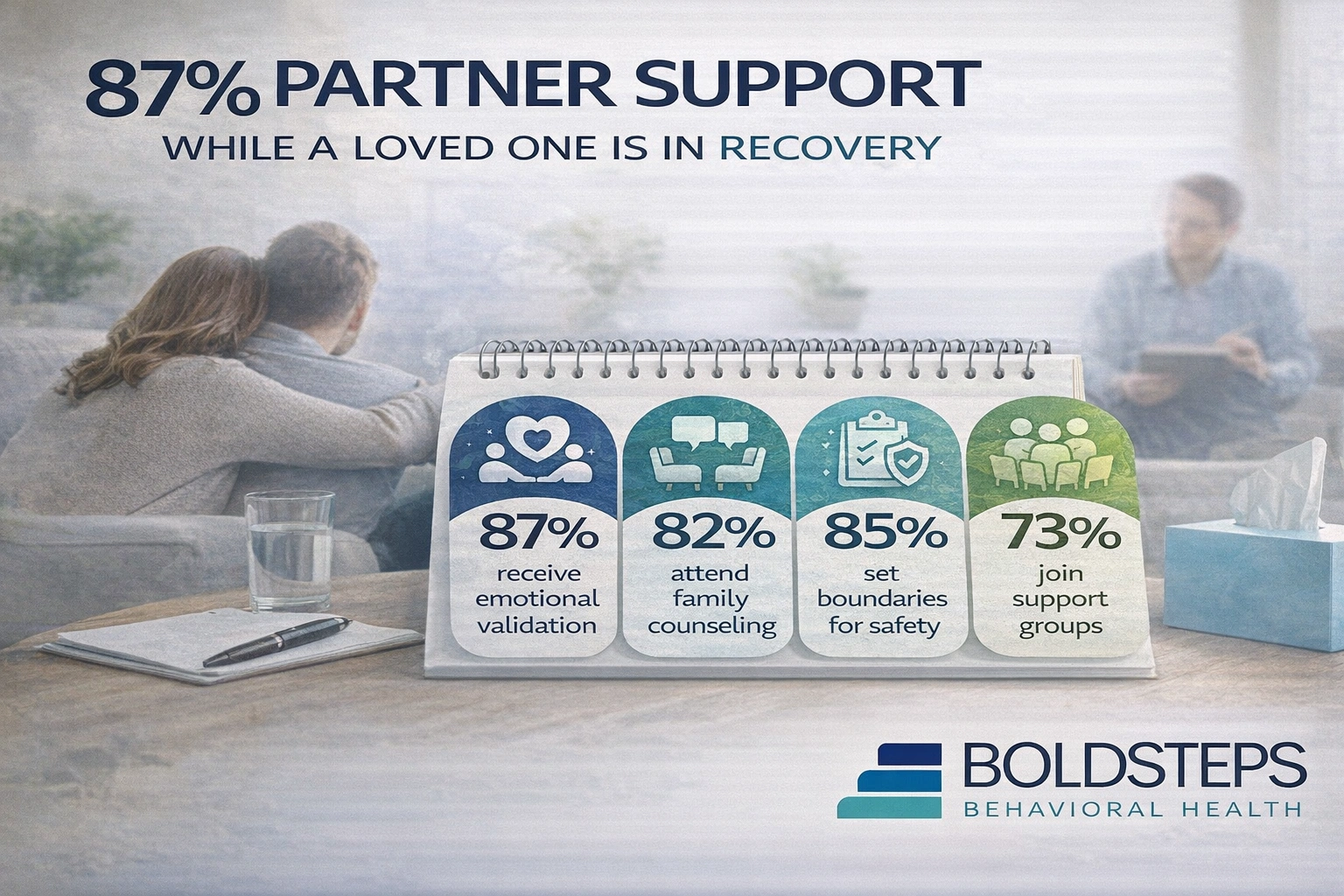
- Family therapy sessions with a licensed clinician
- Communication coaching to rebuild trust and honesty
- Boundary-setting work that supports both of you
- Updates on treatment progress, with consent
- Emotional validation for everything you’ve been carrying
You’re not an observer. You’re part of the team.
What If You’re Not Sure You Want to Stay?
Let’s name it:
Not every partner is sure this relationship can or should continue.
Maybe you’ve been hurt deeply. Maybe trust feels broken beyond repair. Maybe you’ve reached a point where you need space to breathe and decide what’s next.
That’s okay. You don’t have to pretend everything is fine now that they’re getting help.
Our care teams respect the complexity of these moments. We’ll never pressure you to stay. What we offer is clarity. Space to process. And a nonjudgmental environment where your truth is safe—even if it’s messy.
You’re allowed to make whatever choice is healthiest for you.
PHP Helps You See Them More Clearly—And See Yourself Again
Substance use and mental health crises distort everything. You start to doubt what’s real. You minimize your needs. You become reactive instead of connected.
But when your partner begins to stabilize in PHP, you may start to see parts of them come back—clarity, emotion, engagement. Or you may realize just how long you’ve been surviving their chaos.
Both revelations are valid. And both can guide your next steps.
Our role isn’t to tell you how to feel. It’s to walk with you as the fog begins to lift.
You’re Allowed to Be Angry. And Tired. And Still Hopeful.
Partners often think they have to choose:
- Love or boundaries
- Loyalty or sanity
- Hope or realism
But real healing includes all of it. Anger, grief, tenderness, fear. At Bold Steps, we don’t flinch at those feelings. We welcome them. We help you name what’s been buried. And we remind you that love isn’t about absorbing someone else’s pain—it’s about learning how to stop drowning in it.
If you’re looking for a partial hospitalization program in Harrisburg & Dauphin County, PA, our team understands this balance. We don’t just help the person in treatment. We hold space for the person who’s been holding everything together.
FAQs About PHP and Family Support
Is PHP inpatient or outpatient?
PHP is an outpatient day program. Your partner will attend treatment for several hours a day (usually 5 days a week), but return home in the evenings.
Will I be expected to attend sessions?
You’ll be invited—but never required. We offer family therapy and partner sessions when it feels appropriate and helpful. Your participation is respected, not assumed.
What if I can’t forgive them yet?
That’s okay. Forgiveness isn’t a requirement for involvement. We support you in being honest about where you are emotionally—even if it’s conflicted.
Can I get help for myself while they’re in PHP?
Yes. We strongly encourage it. Our team can help connect you to individual therapy, family support groups, or counseling for loved ones of those in treatment.
Is it normal to feel resentful, even when they’re finally getting help?
Absolutely. Resentment is often a sign of emotional exhaustion. It’s not cruelty—it’s a signal that you’ve been stretched too thin for too long. You deserve a place to unpack that.
You Don’t Have to Keep Carrying This Alone
You’re not the backup plan. You’re not the fixer. You’re not just part of the problem or the pressure.
You’re a person who has been loving someone through one of the hardest seasons of both your lives.
Now, it’s time for you to have support, too.
Call 717-896-1880 to learn more about our partial hospitalization program services in Harrisburg, PA. You don’t have to figure this out alone. We’re here—for them, and for you.